The most revealing number in this story is not the $45 billion the administration is advertising. It is five percent.
According to the satellite data cited in coverage of the proposal, marginal wells produce roughly half of the oil and gas sector's methane emissions while accounting for about 5% of production. So the wells that leak the most and contribute the least are the ones the administration wants to monitor and repair less often. That is not a coincidence or a rounding error. It is the whole rule.
The case for rolling back, as delivered, is that the 2024 standards burdened small operators and delivered no meaningful environmental benefit. The second claim is hard to square with the first. If small, low-producing wells emit half the methane, then the rules were aimed at the largest source of the problem. Calling that a burden without a benefit assumes the atmosphere is not a stakeholder.
Methane is more than 80 times as potent as carbon dioxide over twenty years and is responsible for a large share of warming to date. Cutting it is the fastest, cheapest lever available on near-term climate change. Leaks are also literally product escaping into the sky. The industry is paying to lose its own gas, and the rule asked it to stop. The administration's answer is to allow routine flaring and let the leaks continue, then count the foregone compliance spending as a $45 billion gift to consumers. Those are the administration's numbers. Based on what has been reported, they weigh paperwork and repair costs and leave out what the pollution costs the people who breathe it and the climate that absorbs it.
The people downwind matter here too. Leaks and flaring do not release methane alone. They come with the other gases of the oil patch, including smog precursors and toxic compounds. Those do not drift politely toward the executives' homes. They settle over West Texas and New Mexico, over ranchers, oilfield workers and families who live beside wellpads they never chose. The public absorbs the damage while the operator keeps the savings. That is not deregulation. It is cost-shifting.
Then there is the Super Emitter Program. It uses third parties to find the biggest releases, the kind of blowouts and persistent leaks that satellites can see from orbit. Ending it does not make the leaks disappear. It makes them harder to prove. If you are confident that the problem is exaggerated, you keep the cameras on. You shut them off when you would rather not know.
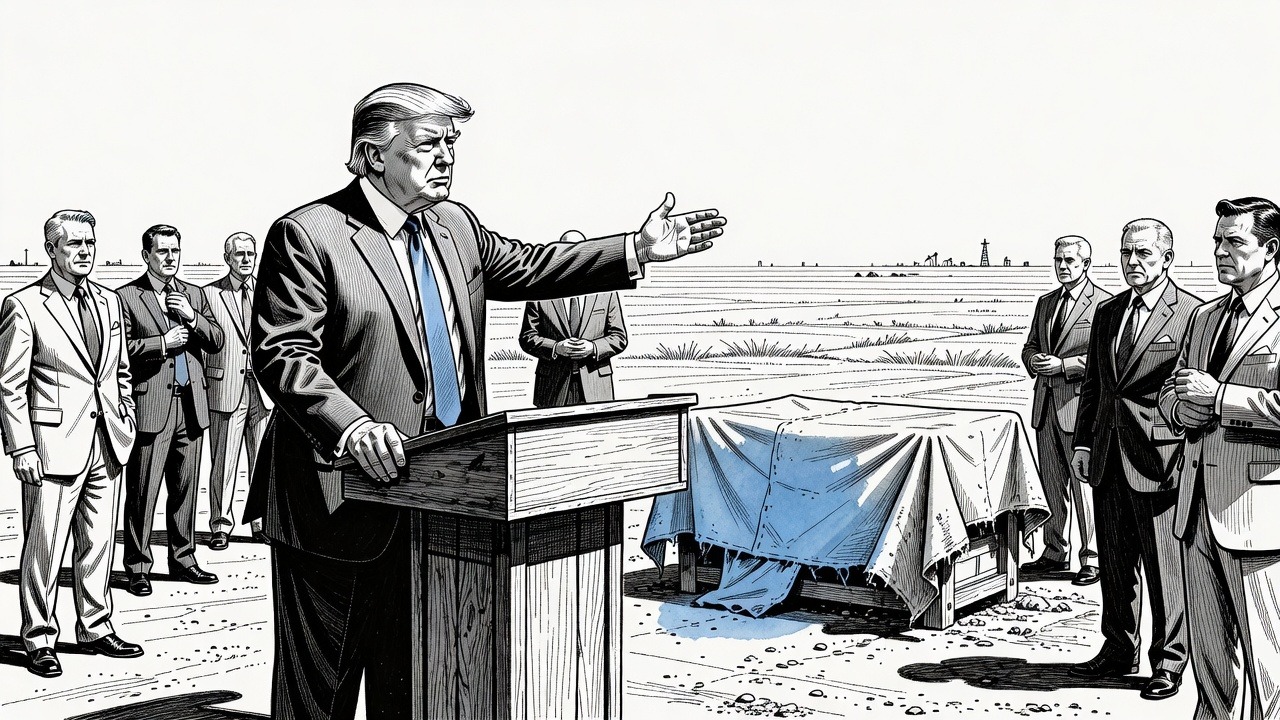
The setting says the rest. Trump unveiled an EPA rule at a campaign rally for Ken Paxton. Rulemaking is supposed to rest on a record, with comment, science and legal justification. Here it was staged as a prop, a favor handed to a donor class before a Senate race. The public comment process still has to happen, and it should be flooded with the satellite data the administration prefers not to discuss.
Democrats should not escape this either. The 2024 rules arrived late in a presidency that spent years promising climate leadership while approving record production. Congress has already delayed the methane fee that was meant to back these standards, and Democrats did too little to build protections that could survive a change of administration. The lesson is not complicated. Rules written to last only until the next election are an invitation to exactly this kind of reversal.
The small-operator argument deserves a serious answer, and the answer is not to excuse the leaks. A well that cannot afford to stop venting a potent greenhouse gas is a well that may not be viable. It may be better closed and properly plugged than propped up by public tolerance for pollution. Marginal wells often become orphaned wells, with cleanup left to taxpayers. Subsidizing their emissions in the name of helping the little guy gets the economics backward.
The administration says it is cutting red tape. What it is cutting is the measurement of a problem it would rather not have to solve.
How it may affect me
If you live near oil and gas operations, especially in the Permian Basin, the rollback could mean less monitoring of nearby leaks and more routine flaring. The proposal is still a draft, so the public comment period is the main opportunity to weigh in. Comments filed on the EPA's docket become part of the legal record the agency must answer.