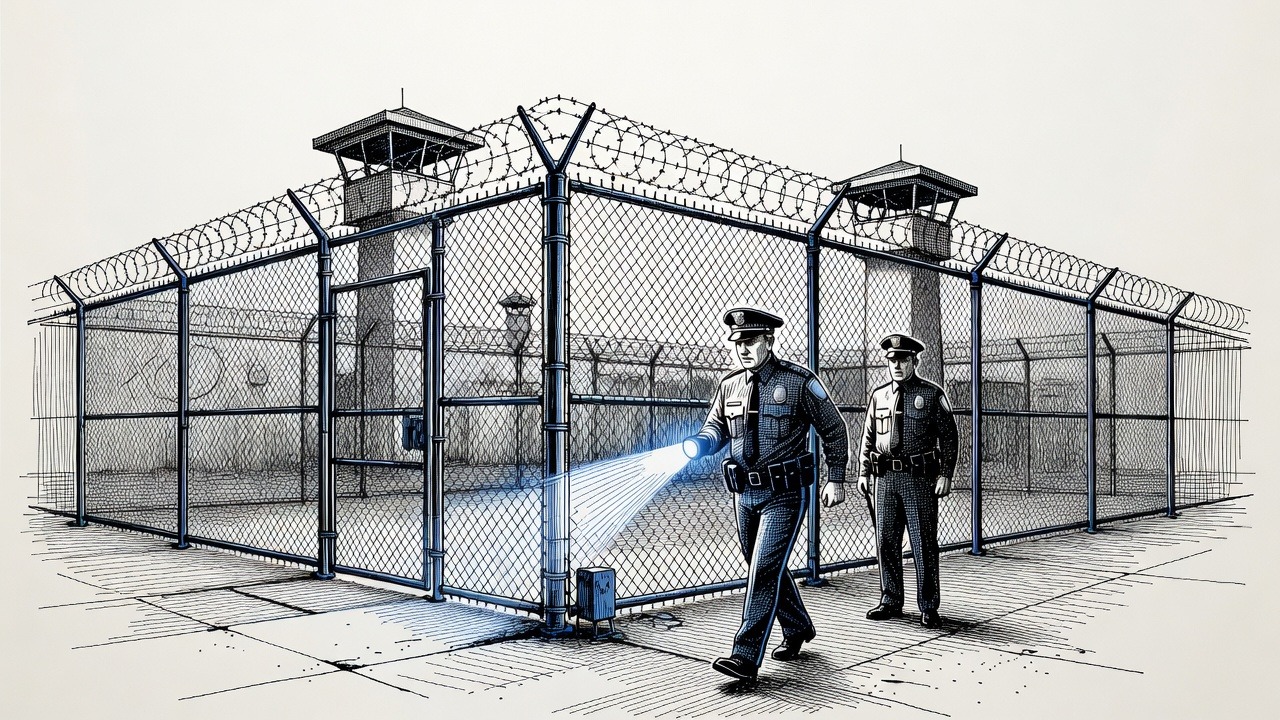
Every politician in Tennessee who has ever campaigned as the law-and-order candidate now owes the public an answer. A 28-year-old serving life for first-degree murder walked out of a state prison, crossed the perimeter fence in prison clothes, and was not missed until 11:30 p.m. Surveillance video recorded him doing it, but no one stopped him. The camera did its job. Whether anything else did is the question.
We don't yet know how he got over that fence, and the investigation should be allowed to answer that. But we know the setting. Tennessee's prisons have been short of correctional officers for years. State audits and the department's own admissions have pointed to vacancies, unfilled posts and security-equipment problems. The state has known about this and has treated it as an HR inconvenience rather than a public-safety emergency. A prison with too few people on shift is a prison whose walls and fences are just suggestions.
The Right's brand is that it takes dangerous people seriously. It promises long sentences, no parole and no mercy. But a life sentence is a promise the state makes to the victim's family and to the neighbors of the prison: this person will be kept away from you. That promise is carried out by the people who work the towers, run the counts and watch the monitors. They are paid too little, worked too much, and in many places are too few. Sentencing is the cheap part of being tough, because it requires only a vote and a press conference. Custody is the expensive part, and it requires a payroll.
Those who bear the cost of that gap are not the politicians. The first are the officers themselves, who work mandatory overtime in understaffed facilities and are blamed whenever the system fails. The second are the people living around Tiptonville, in one of the poorest corners of the state, who are now locking their doors and watching their driveways. Morley reportedly took a pickup marked with a local planting company's logo. That truck belonged to someone's business, in a place where a lost vehicle matters. The third is the family of Cody Birchfield, who sat through a trial in 2025 and was told it was over.
The fair objection is that escapes happen everywhere, that no system is perfect, and that fixating on one failure is opportunism. That is true as far as it goes. Individual officers make mistakes, and determined people find gaps. But a pattern of failures is different from bad luck. If a state can cut taxes, boast of surplus and fund new prison construction, it can pay people enough to staff the prisons it already has. When it doesn't, that is a decision, and the public ends up paying for it.
Liberals should resist two temptations. One is smugness, as if this story is merely proof that incarceration is rotten. The other is silence, as if public safety were the Right's issue. It isn't. A functioning public sector that does the basic things it claims to do is the Left's case. Running a secure prison is among the oldest and least glamorous of those things, and the Left is entitled to demand it be done properly and funded accordingly.
Find Morley. Then open the books. How many posts were vacant that night? How many cameras and alarms worked? Who was monitoring the feed? If the answers are ugly, and the record suggests they may be, nobody should accept a shrug and a pledge to review procedures. The state said it would keep this man locked up. It owes the public proof that it was ever really trying.
How it may affect me
If you live near Tiptonville or in northwest Tennessee, authorities say Morley should be considered dangerous. Do not approach him; call 911 or the TBI with any sighting. Lock vehicles and outbuildings, and report missing trucks or equipment promptly.