Read the Justice Department's lawsuit slowly, because the trick is in the conditional. The government does not ask a court to remove Daniel J. Sullivan Jr. from the ballot. It asks a court to block certification of Alaska's Senate race only if Republican incumbent Dan Sullivan loses, and only if he would have won had Daniel J.'s votes gone to him instead.
In other words: if our guy wins, the name confusion was harmless. If he loses, the election is defective. That is not a legal theory about ballot integrity. It is a pre-written excuse waiting for a result.
The strongest version of the other side's case deserves a hearing. Near-identical names on a ballot can mislead people, and decoy candidates are a real tactic in American politics. If the government had gone to court in the spring and said this ballot invites mistakes, I'd expect a serious hearing, and that would be a fair fight.
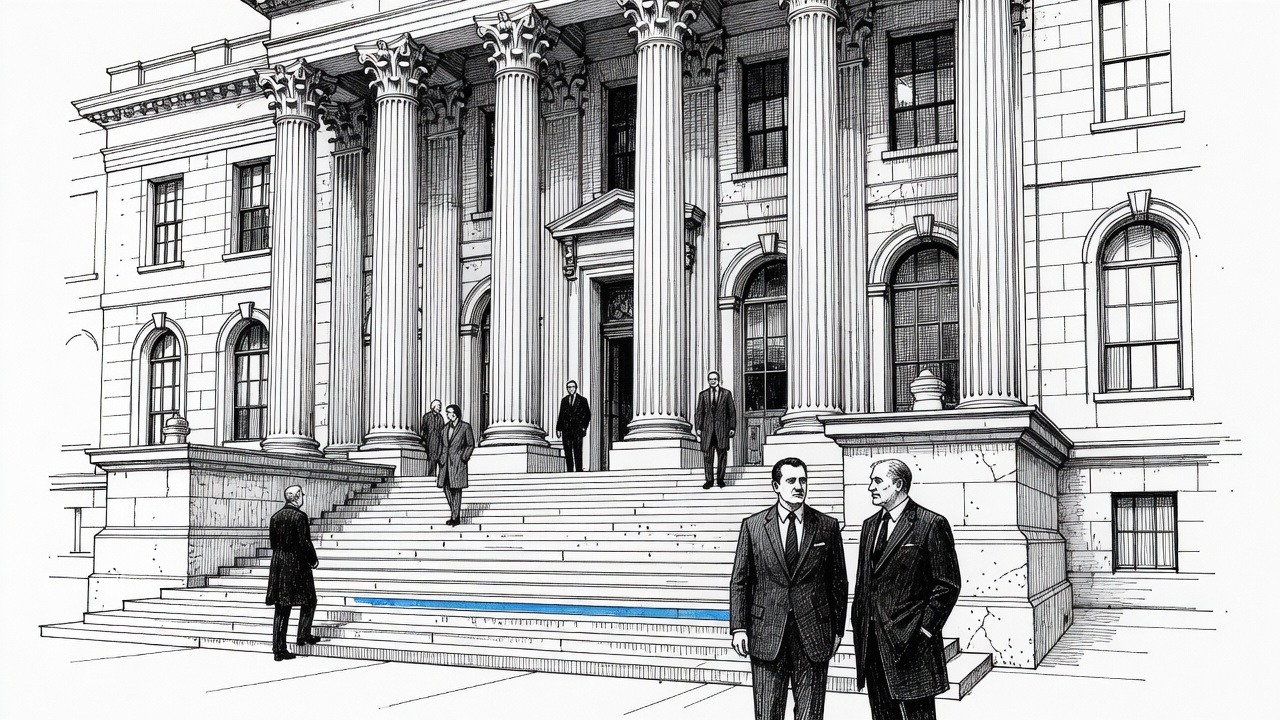
But that isn't what happened. As Judge Sharon Gleason noted, the Alaska Supreme Court directed election officials to put Daniel J. Sullivan on the ballot months ago. The Justice Department filed on Oct. 22, after voting had begun. Whatever the harm, the government had months to raise it and instead waited until Alaskans were casting ballots. Courts have a name for that: sitting on your rights. The conservative legal movement invokes a version of it constantly. The Purcell principle says federal courts should keep their hands off election rules as voting nears, because last-minute changes breed chaos and distrust. It has been used to block voting-rights remedies with little embarrassment. Now the same movement's Justice Department wants a federal court to intervene after the ballots are in the mail.
Then there is the premise, which treats voters as interchangeable units of confusion. The ballot lists the incumbent as "Dan S. Sullivan," with his party and incumbent designation beside his name. The challenger is unaffiliated. The suit assumes that every vote for Daniel J. was a mistake meant for Dan S., and that a court can sort it out afterward. Nothing in the story suggests the government can show that, and no one can know it without reading minds. Some people voted for the unaffiliated candidate on purpose. Under ranked-choice voting, voters also rank their choices, which makes the "he would have won" counterfactual even shakier. Alaskans narrowly voted in 2024 to keep that system. A federal lawsuit that treats its results as suspect whenever they disappoint the incumbent's party is a poor way to respect that decision.
The remedy is the real scandal. Blocking certification would not fix a ballot. It would hold a Senate seat, and the voters' verdict, hostage to a litigation fantasy. The government's own request reveals what it thinks the problem is: not confusion, but an outcome.
There is also the question of who the Justice Department works for. It is not the incumbent's campaign counsel. Its job is to protect voters' access to the ballot and the integrity of the count. Pressing a conditional claim to void an election that a sitting senator might lose turns that office into a campaign asset. Many on the right spent years warning about the weaponization of federal power. This is what it looks like when it's pointed at a state's vote count.
Judge Gleason's skepticism about timing is the right instinct, and she should follow it. Alaska's election officials, who were already ordered by their own state's highest court to run this race a certain way, should be allowed to count the votes and certify the winner. The standard shouldn't bend depending on who finishes first. A democracy cannot function if a government lawyer's filing can serve as a standing alternative to the result, and the voters should not have to find out after the count whether the result was real.