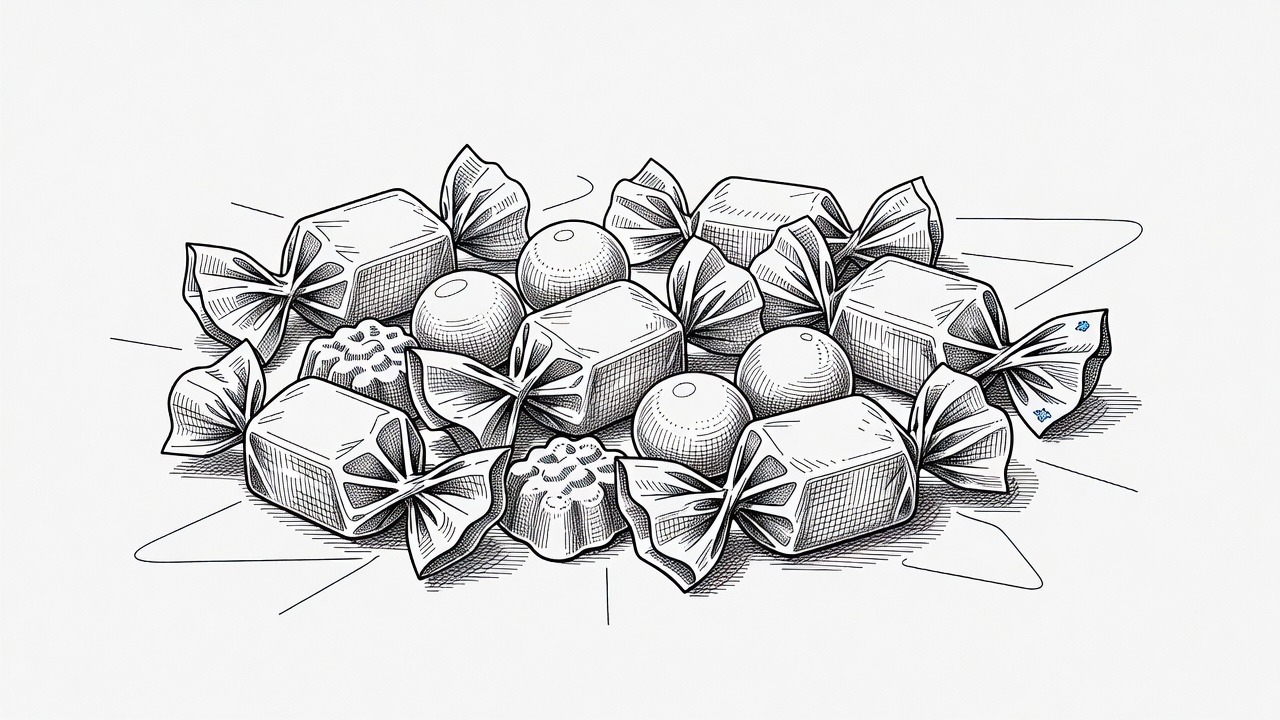
Call it the Halloween Paradox: the industry says Americans are spending a record $13.5 billion, and the same industry admits that people are comparing prices, hunting coupons and making extra trips to find a better deal. That is not a boom. It is a squeeze with good PR.
Do the arithmetic the headline skips. A $400 million increase on last year's total is roughly 3 percent. Overall inflation over the period was 3.7 percent, and candy rose 7.7 percent. In real terms, Americans are spending less, and they are getting less for it. A "record" in nominal dollars is what inflation produces when families keep buying the same ritual at a higher price. Nobody is splurging. They are paying more to avoid being the house that hands out raisins.
The explanations we are given are the usual fog: cocoa, shipping, transportation, fulfillment. Some of it is real. Cocoa prices surged after crop failures in West Africa, and that cost is not invented. But look at who is absorbing it. Not the farmers in Ivory Coast and Ghana, who grow the crop and have long lived in poverty despite feeding a global confectionery industry. Not the giant manufacturers, who have the market power to pass costs straight through to a parent standing in a checkout aisle, and who have mostly done so. The chain is built so that risk flows downhill, to the people with the least ability to refuse it.
Then comes the advice. The National Retail Federation's survey notes, almost cheerfully, that 31 percent of shoppers will compare prices and 26 percent will chase coupons. Analysts describe shoppers "weighing purchases more carefully." Read that as a policy outcome: households are being asked to do unpaid labor to manage a cost increase they did not cause. When prices climb, the answer from the market is always that the consumer should be more vigilant. Rarely does anyone ask why the market for something as simple as sugar and chocolate is concentrated enough to make vigilance the only defense.
Part of the answer is government, and the Left should say so. The U.S. sugar program, with its quotas and tariffs, has long kept domestic sugar prices above world levels, and it survives on bipartisan deference to a handful of producers. Tariffs on imported goods, much of which includes the costumes and decorations in the other $9.4 billion of this forecast, are a tax on shoppers dressed up as toughness. If you want to understand why a bag of fun-size candy costs what it does, follow the lobbying, not the pumpkin spice.
None of this is a moral panic about candy. Halloween is cheap civic joy: strangers' porches, kids in the street, a night when a neighborhood actually functions as one. That is exactly why it is such a clean test. If a holiday built on handing out small sweets now requires a price-comparison strategy, then the "affordability" problem Democrats are accused of ignoring, and Republicans promise to fix, is not abstract. It sits in a plastic cauldron by the door.
The lesson is not that families should cut back or that the Left should scold. It is that pricing power, trade policy and commodity shocks land on ordinary households first and on corporate margins last. Antitrust enforcement, scrutiny of food and consumer-goods pricing, an end to the sugar protectionism both parties tolerate, and trade policy that does not tax every imported pumpkin are not luxuries. They are how you keep a record-spending headline from meaning a record squeeze.
The industry wants you to read this as a story of enthusiasm. It is a story of Americans paying more to hold on to something small.
How it may affect me
Candy is rising about twice as fast as overall prices, so expect to pay noticeably more per bag. Buying earlier, choosing store brands, comparing per-ounce prices rather than bag prices, and watching for shrinking package sizes can help. Post-Halloween clearance sales are also the cheapest time to stock up for next year.