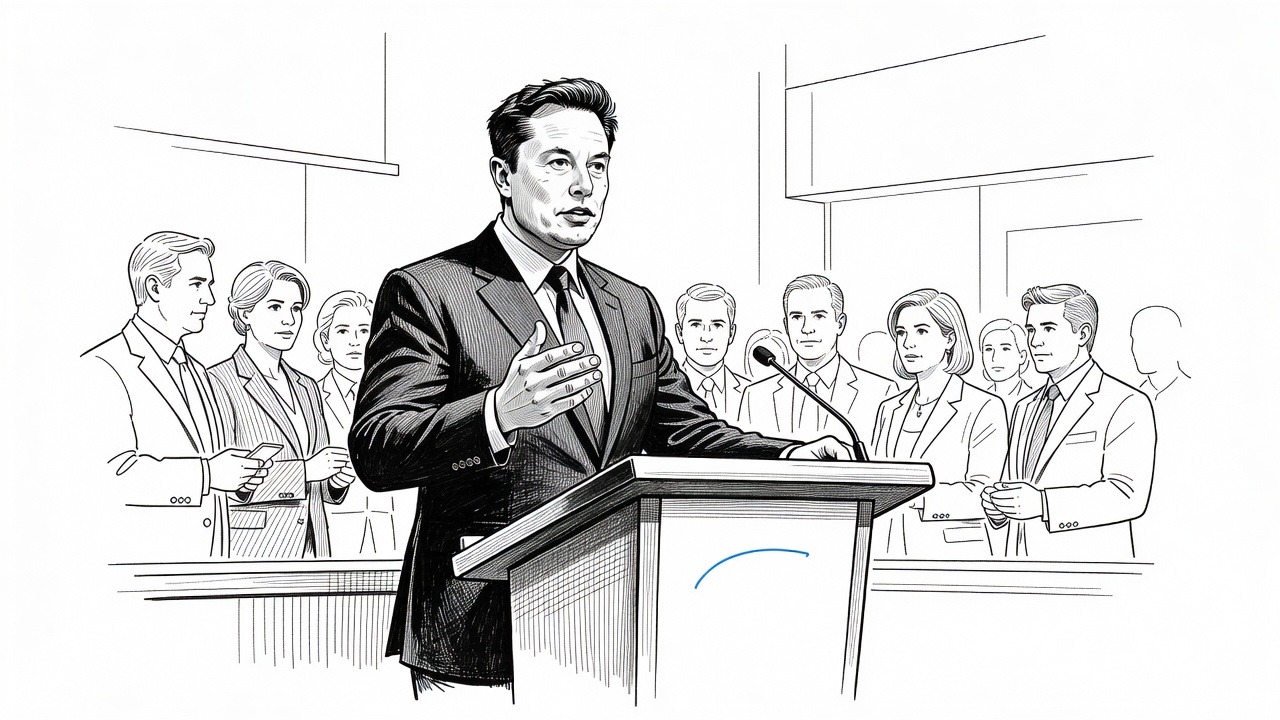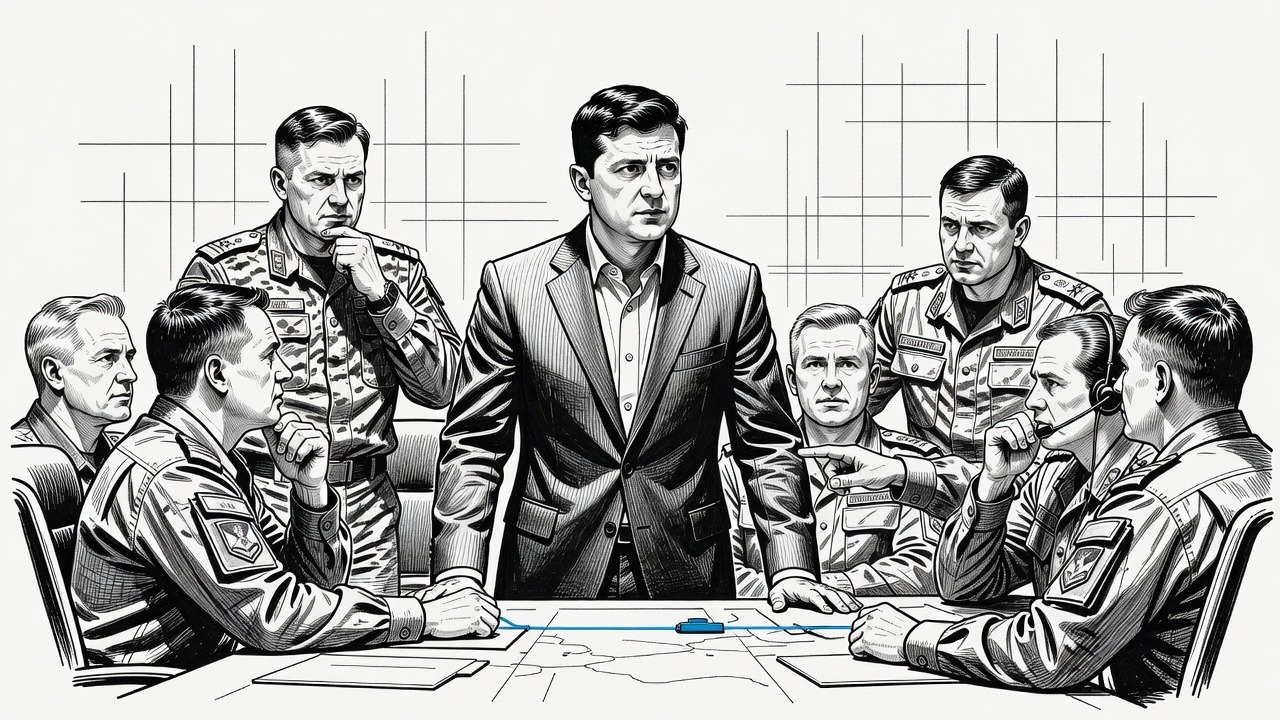
The most revealing sentence in this story is the Trump administration's defense: we didn't order it, SpaceX did.
That is supposed to be an alibi. It is an indictment.
Ukrainian drones went down and missions were disrupted for more than a week because a private company changed how its network treated fast-moving equipment. The speed limit is now lifted, and Kyiv is grateful. But Ukraine's defense of its territory depended on a corporate settings menu, and no one with democratic accountability can say who made the choice or why. Washington says it wasn't us. SpaceX, as far as the story shows, has explained nothing. Meanwhile, a president says he'll call Elon Musk if the problems continue, as though he were asking a neighbor to turn down the music.
We should be precise about what we don't know. We don't know whether this was a technical decision, a compliance measure aimed at Russian misuse, a commercial dispute or something more political. That uncertainty is the scandal. In a functioning democracy, a decision that degrades a U.S.-backed ally's ability to fight a war should be traceable to someone who can be questioned, overruled and voted out. Here the trail ends at a company run by a man who has already shown how he treats the power he holds.
We have seen this before. In 2022, Musk reportedly declined to enable Starlink coverage near Crimea during a Ukrainian operation against Russian naval forces, and the episode became a case study in what happens when a billionaire becomes an unelected arbiter of escalation. Washington, then and now, treated it as a curiosity rather than a warning. That was the moment to ask why the connective tissue of a NATO-adjacent war effort was a single person's property. Instead we shrugged, kept signing contracts and let the dependency deepen.
The contracts are the part conservatives should find hardest to defend. SpaceX isn't a scrappy startup surviving on its own. It is a major recipient of public money, a launch provider to NASA and the Pentagon, and the maker of Starshield, a product built explicitly for government and military use. Taxpayers helped build this leverage. We are now discovering that the leverage points at our allies when its owner's mood, interests or lawyers shift. The bipartisan demand for investigation is right, and it shouldn't end with a hearing where executives are thanked for their service.
The Right's usual answer is that private companies should be free to set their terms, and that the market, not government, delivers innovation. Fine, as long as the product is a phone plan. When the product is the nervous system of a war, 'it's their company' stops being a principle and becomes a surrender. No one would accept a defense contractor that could cancel a missile delivery based on a vibe. Why is a satellite network different?
Liberals deserve their share of the blame. Europe talks endlessly about strategic autonomy and has been slow, fragmented and underfunded in building sovereign alternatives. Democratic administrations were happy to outsource when outsourcing was convenient. It is easy to condemn Musk now. It would have been braver to build a public option before the crisis.
The solution isn't to wish Musk away. It is to make critical wartime infrastructure subject to enforceable public rules: transparency about throttling decisions, notification requirements for service changes affecting allies, contractual guarantees tied to public funding, and real investment in alternatives so no single owner can hold a veto. If a company wants the revenue and prestige of national security work, it accepts national security obligations.
Ukraine's speeds are back. That should reassure no one. A lever that can be pulled once can be pulled again, and the next time the explanation may be just as hard to find.