Read the White House's tariff proclamation closely and you will not find an economic strategy. You will find a price list, and a reminder of who gets to negotiate it.
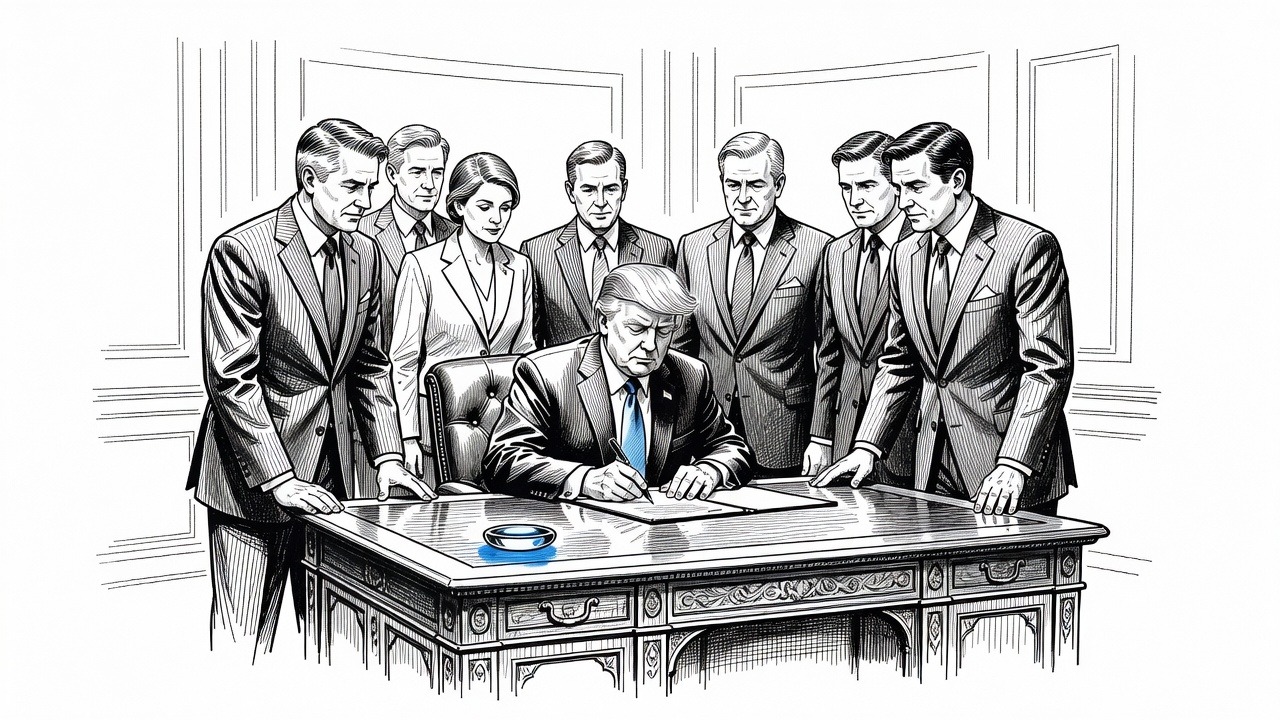
The administration is using Section 338 of the 1930 Tariff Act, a Depression-era provision that presidents left in the drawer for ninety years because it hands one person sweeping power to punish countries for "discrimination" against American commerce. Now the provision is aimed at Canada, our largest customer and closest ally. The new duties will fall on valves, carpets and waste products, while other goods are quietly dropped from the penalty box. Ask what coherent theory of national renewal connects carpets to valves to scrap, and the answer is that there isn't one. There is a president with a dial and a lot of people trying to reach him.
Some got through. Sen. Susan Collins announced that after calling trade and commerce officials, she won exemptions for nine product categories vital to Maine: corrugated paper, plastic boxes, packing bags, refrigeration equipment, machinery, seaweed. Good for Maine. But look at what that list admits. These are the inputs of American farmers, fishermen and packers. Collins did not rescue Canadians from the tariffs. She rescued her constituents from their own government's tax on their own businesses. If the policy were working, no one would need an emergency phone call.
That is the part of the story that should anger anyone who works for a living. A tariff regime run by exception becomes a patronage machine. The company with a senator in a tough election year, a trade association with a Washington office, or a CEO who can get a meeting gets relief. The machine shop in Ohio, the regional carpet retailer and the family plumbing-supply distributor eat the cost, or pass it to customers who never had a vote on any of this. Call it protection if you like. It looks a lot like a toll booth, and the toll depends on who you know.
The Left should be honest about what it is arguing. We are not required to worship the old free-trade consensus that hollowed out Midwestern towns and then told them to retrain. Industrial policy is legitimate. So is protecting strategic sectors, and so is using leverage to get better deals for workers. But real industrial policy has criteria, timelines, conditions and a Congress that writes the rules. It says what the protected industry owes in return: wages, investment, jobs. This proclamation asks for nothing from anyone except deference.
Meanwhile, the Bank of Canada's numbers show what the leverage is doing. Canadian steel exports are down by about half. Lumber is roughly 20 percent below 2024 levels. Behind those figures are mill towns and auto plants across the border, and American builders and manufacturers who bought from them because the supply chains were integrated across decades. Integrated is the key word. You cannot slash an economy stitched together over generations and expect only the other side to bleed.
Democrats have a job here that goes beyond condemning tariffs. Congress handed away its power over trade through decades of broad delegations, and Democrats helped. Now they should say plainly that a tariff schedule revised by proclamation, softened by phone calls and justified by claims of "discrimination" is no way to govern a continental economy. Reclaim the authority. Demand that exemptions be public, rule-based and available to the small business as readily as to the senator's favorite industry.
The lesson of Collins's nine categories is that the administration knows these tariffs hurt Americans. The only open question is whether relief goes to everyone or only to those with access.
How it may affect me
If you or your employer import valves, carpets or waste and scrap products from Canada, expect higher costs once the changes take effect Oct. 30, and check whether your products fall under the new duties or the exemptions. Consumers may see higher prices on those goods over time. Maine producers of the exempted items face less risk.