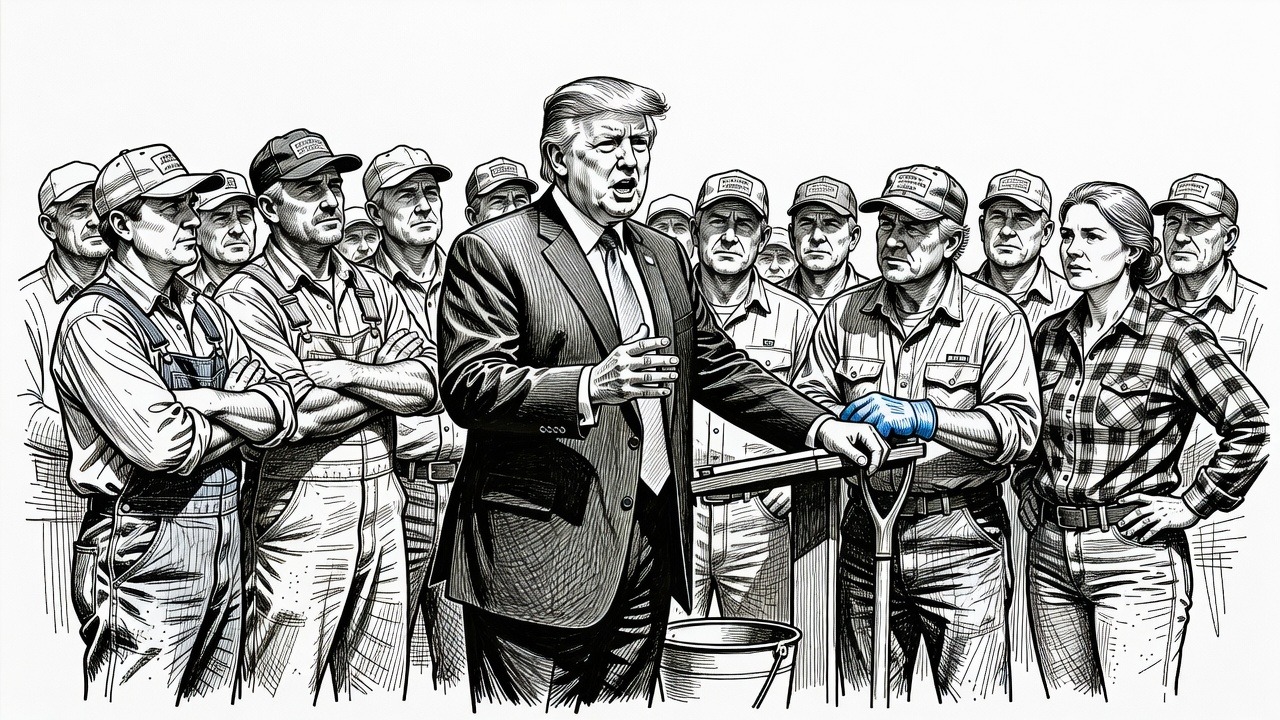
There is a particular kind of political arsonist who arrives at the fire with a bucket and expects applause. Donald Trump in Sioux City, in the middle of harvest, is that figure.
Consider the sequence. The administration takes the country into a war with Iran. Fuel and fertilizer costs climb. Iowa farmers, already battered by September rains that delayed the harvest, find their margins squeezed from both ends. Then the president flies in, touts an $8 billion harvest-fuel program, a diesel tax waiver and refinery funding, and asks the people who absorbed the cost to credit him for the relief. Fix what you broke, and you get to call it a gift.
This is a pattern, not an accident. Iowa farmers lived through the tariff fights that cost them export markets, particularly in soybeans, and that were followed by a multibillion-dollar federal rescue package. The model is to create the damage by executive choice, then spend public money to soften it, then hold a rally to be thanked. The farmer is treated as a client, not a constituent. A client waits for the check. A constituent gets a say in the decision that made the check necessary.
And on this decision, who got a say? Trump defends the Iran intervention as necessary to stop a nuclear weapon, and some Americans, including some Democrats, believe the nuclear threat is real. That argument deserves a serious hearing, which means in Congress, on the record, with a vote. Ashley Hinson wants to be one of 100 senators. She should be asked plainly whether she believes a war that is reshaping Iowa's cost of production should have been authorized by the body she wants to join, and what she will say when the next one is launched without it. "I support the president" is a loyalty oath, not an answer.
Then there is the promise at the center of the speech: oil prices will fall after the war ends. After. No date, no definition of ending, no accounting for what happens to a fertilizer bill in the meantime. A farmer buys inputs on a calendar, not on a presidential timeline. You cannot plant on a rhetorical promise.
Here is where Democrats, and Josh Turek, need to do more than point at the pump. Blaming the war is fair and necessary, and he is right to do it. But the Left's argument has to go deeper than "he did this." Farmers know that a handful of companies dominate fertilizer, that input prices tend to rise quickly and fall slowly, and that every crisis seems to leave somebody richer. If Turek wants to win rural Iowa, he should ask who profits when a war pushes up costs, and whether an $8 billion program is a lifeline for farmers or a pipeline to the firms that sell them fuel and fertilizer. Public money should come with public questions. Democrats who go quiet about concentrated corporate power in agriculture, because it feels too wonky or too hostile to business, are leaving the best rural argument they have on the table.
The rally crowd's worries about fuel costs, gridlock and turnout are the tell. These are people who like Trump and Hinson, and they are still anxious about what comes next. Their anxiety is not a messaging problem. It is a bill.
That is the real test of this race. Iowa voters are being asked to believe that the same hands that raised their costs are the ones best placed to lower them. Relief is not the same as responsibility. A senator's job is to demand the second, not to hand out the first and hope no one remembers where the fire started.