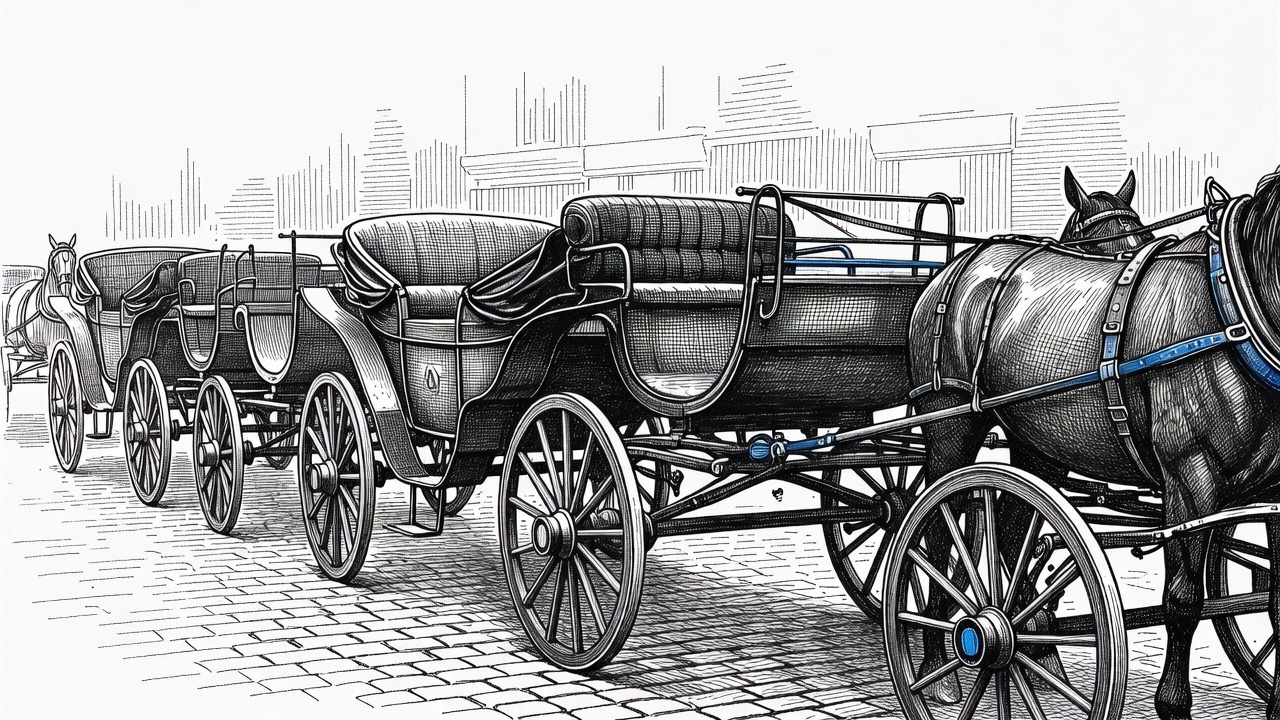
Let's start with what the Left should not do: pretend this is an easy call. For years, progressives have said they stand with workers and with the vulnerable, and with the carriage ban those commitments collide. The right response is to end the trade and then be judged by how we treat the people who lose their living.
The case for ending it is strong. Horses are prey animals, built for open land, and we have been asking them to stand in exhaust, heat and honking traffic so tourists can have a photo. That was always hard to defend. Now there's a dead 18-year-old visitor and, by the Central Park Conservancy's count, nine carriage-related incidents in just over a year. This isn't sentimentality. It's a licensed business that keeps producing danger, and the city is the licensing authority. When a city profits from a hazard it can end, the word "tradition" doesn't do much work.
The Council deserves credit for the provision on slaughter. Anyone who has watched animal-welfare campaigns knows the cruelest outcome of a ban is the quiet one, where retired animals are sold off the books to a worse fate. Barring sales to slaughterhouses closes that door. The horses have no union and no lawyer, and somebody has to speak for them.
But the horses are not the only ones who will pay, and my side's squeamishness on this point is not admirable. Carriage drivers are workers, and the owners who hold the licenses and horses are in a different position from the people holding the reins. A 2028 deadline gives everyone time to plan. It does not, by itself, pay a mortgage. "Job placement, career counseling and training" is the language of a city that has never had to live on it. We all know what these programs usually deliver: a pamphlet, a waitlist and a six-week certificate for a job that pays less than the one you lost.
Transport Workers Union Local 100 says the protections are insufficient. Its constitutional argument may or may not hold up in court, but the complaint underneath is one the Left should treat as serious, not as an obstacle to be managed. If the city can pass a law in the name of conscience, it can fund that conscience. That means real wage replacement for a defined period, training tied to actual employers, and an honest accounting of what drivers earn now, so "transition" is measured against something. If owners have a legitimate claim to compensation for licenses the city created and is now cancelling, that should be negotiated, not litigated into the ground.
There's history here. Bill de Blasio promised to ban the carriages in 2014 and couldn't deliver, in part because he never built a coalition that included the workers. Mayor Zohran Mamdani now inherits that failure and a rare opening. His politics are built on the idea that dignity for working people is not an afterthought. A 40-7 Council vote gives him political cover to do the humane thing, and the union fight gives him a chance to prove that humane doesn't mean careless.
The Right will say this is what happens when affluent progressives get a cause: a symbolic ban, paid for by working people who didn't get a vote. That criticism has teeth, and the only answer is to make it untrue. If the transition program collapses into press-release mush, the critics will be right, and the next worker-hostile cause will inherit our credibility problem.
End the carriages. Protect the horses. Then show up for the drivers with money, not slogans. A left that can only do the first two is just another manager of other people's losses.
How it may affect me
Carriage rides should remain available until the June 1, 2028 deadline, though no new operating licenses will be issued. The union plans to seek a restraining order and challenge the law, so the timeline could change if a court intervenes.