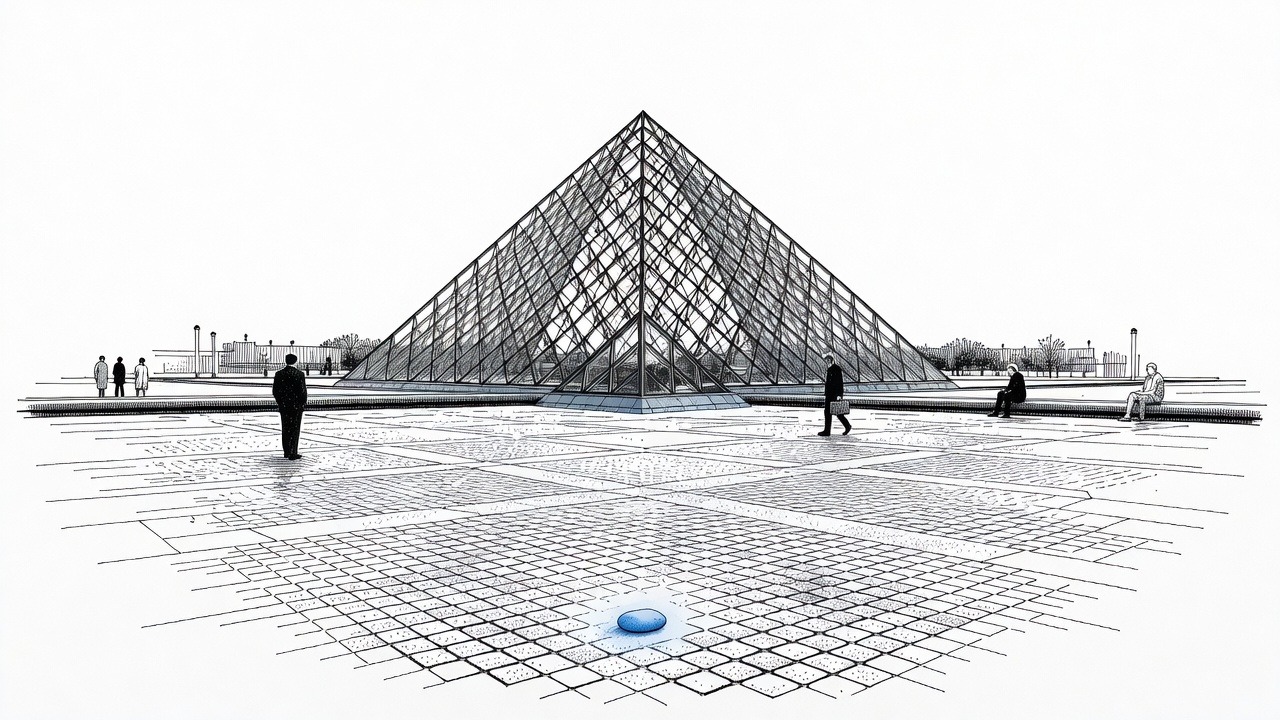
The Louvre did not close because France ran out of paintings. It closed because the French state could not keep a door open.
Sit with that. The museum that is supposed to tell the world what France is shut its entrances on a Monday because a crowd decided the national collection would stay inaccessible until the political mood improved. No timetable. A civilization reduced to a blocked doorway.
Over the weekend the country did what it now does with dreary regularity. Demonstrations over living costs and public services — real subjects, badly governed for years — turned violent in Paris, Bordeaux, Marseille and Lyon. Businesses and public buildings damaged. Fires. Nearly 2,400 people arrested. And the figure that should have led every account: nearly a thousand police officers and gendarmes injured. One protester died of cardiac arrest in Paris. That death deserves an inquiry, not a slogan. It does not convert arson into a social program.
French households are being squeezed, and a government that pretends otherwise will keep meeting crowds it claims not to understand. France levies one of the heaviest tax burdens in the developed world and still cannot make daily life feel affordable or competently run. Hospitals strain, services disappoint, energy and housing costs bite, and the political class answers with process. The anger is intelligible. Holding the Louvre hostage is not.
A republic may denounce its government. It is not obliged to treat the shutdown of its institutions as a dialect of democracy. You can march against prices without setting a street on fire. You can despise a minister without injuring the gendarme who did not write the tariff. Once “living costs” becomes a permission slip for blockade and assault, the subject is no longer purchasing power. It is whether France is governed by law or by whoever can put enough bodies in a doorway.
The captions arrived on time, as they always do. The Interior Ministry pointed at the far left. Other political figures pointed at immigration. On the evidence now public, both are characterizations in search of a completed inquiry — and parts of the French Right embarrass themselves when they reach for immigration the way a minister reaches for extremists: a sentence already printed, sparing them the harder admission. This country has swallowed political violence under left, right and center. Yellow Vests, pension riots, student blockades, nights of burning cars. The recurring fact is not one ideology. It is impunity, and a governing instinct that would rather narrate a mob than stop one.
Macron’s France is fluent in the Republic and late in enforcing it. Order is announced after the glass is gone. Heritage is praised in speeches and then abandoned to the better crowd. A thousand injured officers is not a communications failure. It is a confession that the only functions that justify this state’s appetite — security, continuity, the ordinary running of public life — are being performed as cleanup.
Tourists will rebook. Not every shopkeeper will reopen. Officers will go back out knowing their injuries are a footnote in someone else’s morality play. And the French who did not vote to have their capital used as a stage will be told, again, that this is simply how passion speaks in a great democracy.
It is not. It is how a country teaches the violent that the Louvre will blink first.
How it may affect me
If you are in France or heading there, do not assume museums, shops or transit will run normally. The Louvre closed Monday with no reopening time after its entrances were blocked, and authorities reported violence, fires and mass arrests in Paris, Lyon, Marseille and Bordeaux, with nearly a thousand officers injured. Check the museum, your rail operator and local police notices before you travel, and stay clear of protest zones.