France did not discover on October 17 that life has become too expensive. It discovered, again, what a weakened republic does with that fact: it lets a demonstration become a riot, then offers a speech in which punishment and sympathy are poured into the same glass.
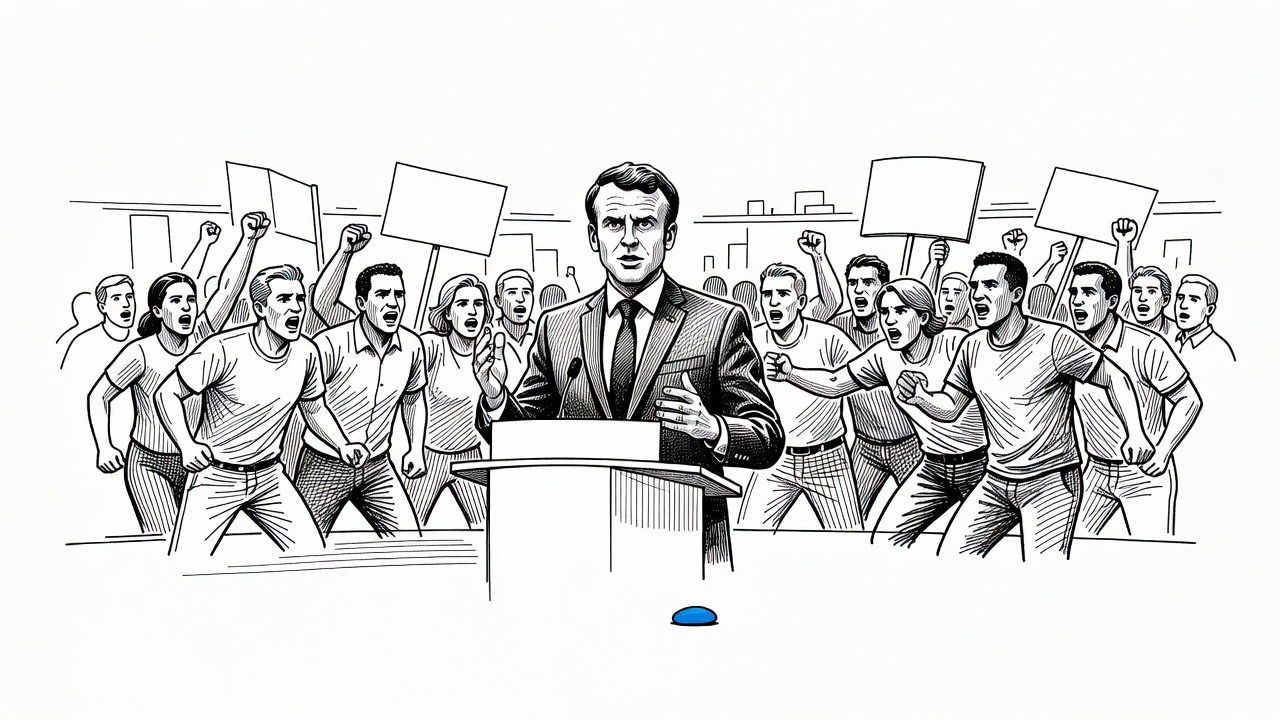
Hundreds of thousands marched over living costs and public services. The anger is not a myth. French households have been squeezed by prices, housing, and the particular insult of a country that takes more from its citizens than almost any peer and still feels, year after year, as if it delivers less. Then came the part that is not a social critique. Fires. Looting. Clashes in Paris, Lyon and elsewhere. A town hall in Limoges extensively burned. Nearly 2,400 arrests. Businesses and public buildings damaged by people who decided that someone else's property was a megaphone.
President Macron condemned the violence, promised legal consequences for looters, and ordered more security around businesses and public buildings. Local authorities may restrict gatherings. So far, the minimum. Then the familiar Macronist swerve: the economic anxieties of the young must be taken into account. Concerns are real. A burned town hall is not how a serious country takes them into account. Pairing the two in one breath tells every subsequent crowd that the price of being heard is a little wreckage, provided the wreckage comes wrapped in a grievance the Élysée already finds rhetorically useful.
The opposing case deserves an honest hearing, because it is not stupid. Young French people are staring at precarious work, impossible rents and public services that absorb fortunes without inspiring confidence. Crush the disorder and change nothing, and the despair remains. Jean-Luc Mélenchon will say the scandal is the government's deafness, not the street. That argument fails at the threshold of a republic. Once arson and looting become a negotiating style, the people who pay are not ministers. They are the shopkeeper with no window and the citizen who came to march and left a crime scene. Authority that explains itself while the fires are still warm is not compassion. It is an invitation.
Nor is the economic diagnosis the one the Left prefers. France is not suffering from an absent state. It is suffering from an enormous one that still cannot keep order, build housing, or make energy cheap and reliable. High taxes, a labor market that punishes hiring, rules that make building slow and scarce, and an energy policy that spent years doubting the nuclear fleet before the bills arrived: that is a machine for manufacturing pessimism. Another round of exemptions, subsidies and solemn listening sessions will produce another receipt. Roland Lescure can promise support for smashed businesses. A cleanup fund is not a model.
Marine Le Pen and Mélenchon both attacked the government's handling of the unrest. Do not file that under bipartisan concern. One political family has long treated the street as a moral instrument and the police as the embarrassment. The other has argued, with uneven discipline, that purchasing power and public order are the same question: a state that cannot protect a town hall cannot credibly sell a future. The Right should not blur those critiques to sound statesmanlike. It should refuse the bargain always on offer in these hours — firmness now, in exchange for adopting the riot's program later.
The Yellow Vests already delivered this message. The pension battles delivered it again. Each time Paris performs the same sequence: shock, a paragraph of condemnation, a paragraph of understanding, and the underlying model left standing. If the French Right wants to be more than a collection point for anger, it has to restore the order a serious country never reverses. Stop the violence without sociological garnish. Then attack the causes actually inside the government's power — the cost of energy, the blockade on building, the charges that make work a bad deal, the services that cost a fortune and still fail the people who fund them.
The fires are not the argument. They are what happens when a government spends years proving it will negotiate with the argument's most lawless version.
How it may affect me
If you are in France or traveling there, expect tighter security around shops and public buildings and possible local bans or limits on gatherings, especially in cities already hit, including Paris, Lyon and Limoges. City centers may stay disrupted while damage is repaired. Businesses that were looted or burned have been promised state support; document losses, but do not assume compensation will be quick or complete.