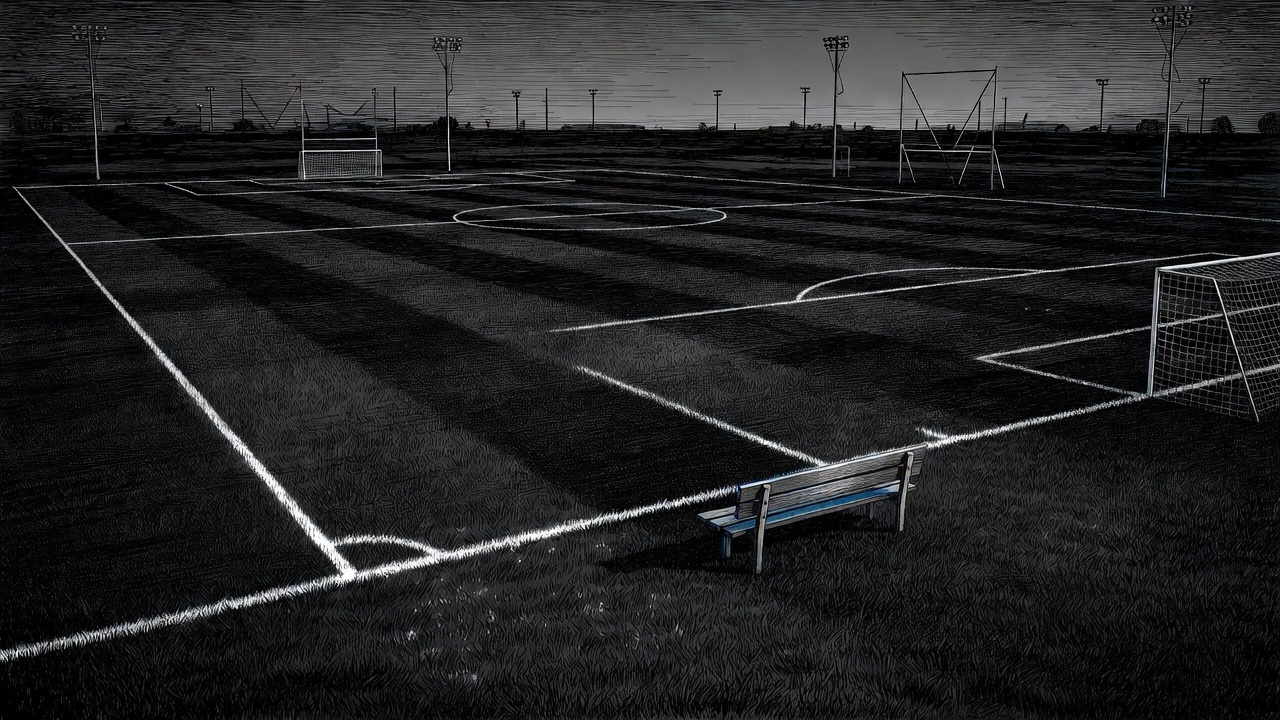
We don't yet know why a vehicle left the road and crossed a soccer field in Wichita, and the first rule on a day like this is to say so. Police haven't said whether the driver meant to do it. Two people are dead, one of them a child, and the people who will pretend to know the motive by Sunday morning are already composing their posts. Let them. Everyone else should hold off.
But there is a question that doesn't depend on motive. Why can a moving car reach a field full of children at all?
Intent will matter to a prosecutor. It matters much less to the physics. A two-ton vehicle that crosses a boundary and meets a crowd does the same damage whether the driver was malicious, impaired, medically incapacitated, or simply wrong about which pedal was which. We understand this when we protect things we have decided are valuable. Stadiums have barriers. Airports have bollards. Presidential motorcades get concrete. After every vehicle attack abroad, we install steel at Christmas markets within weeks. The unspoken message is that some gatherings are worth protecting and others are not.
A Saturday youth tournament belongs on the protected list. Parents sit at the edge of the field. Siblings run around on the grass. These places are built cheaply, on land beside parking lots and arterial roads, and we treat the absence of a crash as proof they are safe. Maybe this complex was laid out carefully. The investigation will say. But across the country, the places where kids play are designed around the convenience of cars, not the bodies of children.
This is the part of the American conversation about safety that never quite arrives. We lose roughly 40,000 people a year on our roads, and thousands of them are pedestrians. Because it happens one family at a time, in ordinary traffic, we file it under misfortune. A vehicle on a soccer field gets the headline because the setting is so unbearable. The same machinery kills in smaller, quieter ways every day, and almost nothing about our politics treats it as a problem we chose.
We did choose it. Cities fight over cheap protective infrastructure like bollards, setbacks, guardrails, and lower speeds near places where people gather. They are told they can't afford it. Parks and recreation budgets are among the first things trimmed and the last things defended. Meanwhile we find the money for plenty of other things. The conservative instinct, which treats every dollar spent on public space as waste until the day it is needed, deserves to be asked about this. So does the liberal instinct to announce a safety initiative and then let it die in a committee.
There is a harder argument too, one my own side should make plainly. Public goods are not only about generosity. They are about foresight. A functioning city anticipates the worst afternoon and builds against it before it arrives, not after the vigil.
Wichita will now do what grieving towns do. It will mourn, it will hold a service, and officials will say the right things. The test comes in a few months, when the cameras are gone and someone proposes a line item for barriers at every city field. If the response is a shrug about cost, we will have learned nothing from two deaths.
Wait for the facts about the driver. But don't let the uncertainty about motive become an excuse for ignoring what we already know about design. A field of children should not be reachable by a car.
How it may affect me
If your child plays on a city or league field, look at how close the parking lot or road is and whether any barriers separate them. Ask the parks department or league officials what protections exist and whether any are planned. Where possible, set up sidelines and spectator areas away from vehicle lanes.