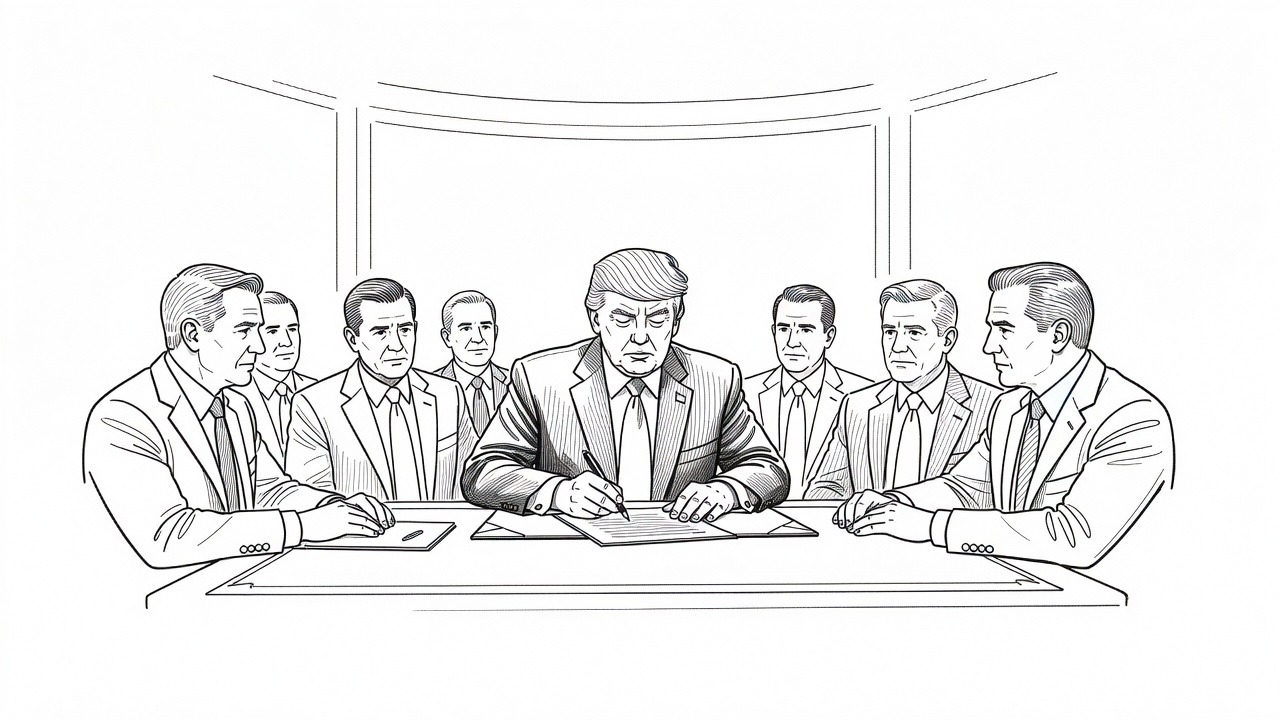
Congress passed a law to pressure Russia. The president read it, found the clause that lets him ignore it, and used it three weeks later, two days before it was to take effect. This is not a negotiating tactic. It is a refusal to be governed by anything he did not personally choose.
The administration says the waiver serves "national interests." That phrase has been stretched until it means nothing. Trump has used tariffs as a daily instrument of personal pique: against Canada, against Brazil, against allies who displeased him. When a tariff punishes a friend, it is a bold exercise of presidential power. When a bipartisan law requires tariffs on the biggest buyers of Putin's oil, suddenly the nuance is too delicate. The pattern is not hard to read. Trump is aggressive toward people who depend on America and cautious toward people who sell energy to Moscow.
The sequence matters. First came the easing of sanctions on Russian diesel. Then Trump announced a diesel import deal with Putin himself. Then came the waiver of the law's consequences. This is a policy of normalization carried out in installments, each step making the next look like a formality. An administration that wanted leverage over Moscow would be spending sanctions. This one is spending them down.
The strongest defense is that presidents need flexibility, and that 100% tariffs on large oil importers could hit American consumers and strain relationships with countries like India. There is something to that. Tariffs of that size are blunt, and my side has plenty of reasons to distrust Trump's tariff habit. But the argument cuts the wrong way. If the law was badly designed, the administration had a month to say so to Congress, ask for changes, or propose a better enforcement plan. It did none of that. It waived the pressure, kept the option to restore it, and told officials to "monitor." Monitoring is what governments do when they have decided not to act.
If the real concern is fuel prices, the president should say so plainly. Americans can handle the argument that the war has costs at home. What they should not accept is a quiet trade in which Russia is rewarded with market access and the price is hidden under the language of national interest. Ukrainian cities, which are still being hit by weapons paid for with energy revenue, bear the cost of that trade. So does every ally who was told that American commitments mean something.
Democrats should not treat the bipartisan Senate statement as enough. A letter calling for enforcement is the lowest form of congressional protest. If senators in both parties wrote this law, they should use the powers they have: hearings, subpoenas for the national-interest determination, and fights over spending and nominations. They should force Republicans to say on the record whether a Russia sanctions law that passed is a law or a suggestion. Lindsey Graham's name is on the statute. Does he want it to mean anything?
There is also a lesson for the opposition about accountability. Congress keeps writing laws with escape hatches for the executive, then acts surprised when a president walks through them. A waiver that rests on a president's own finding of "national interest" is a loophole, and it will be used by whoever holds office. Future sanctions bills should require congressional approval of waivers and public reasons for them.
The worst reading of this episode is the simplest one. Trump wants a deal with Putin, and the law was in the way. Everything else is paperwork.