Let's start with what nobody disputes. Noncitizens are not allowed to vote in federal elections, and doing so is already a crime. Any Democrat who answers this story by waving the whole subject away is making a mistake. Voters deserve rolls they can trust, and officials should verify eligibility.
But the Justice Department's letter to California is not verification. It is a pressure campaign in the costume of verification.
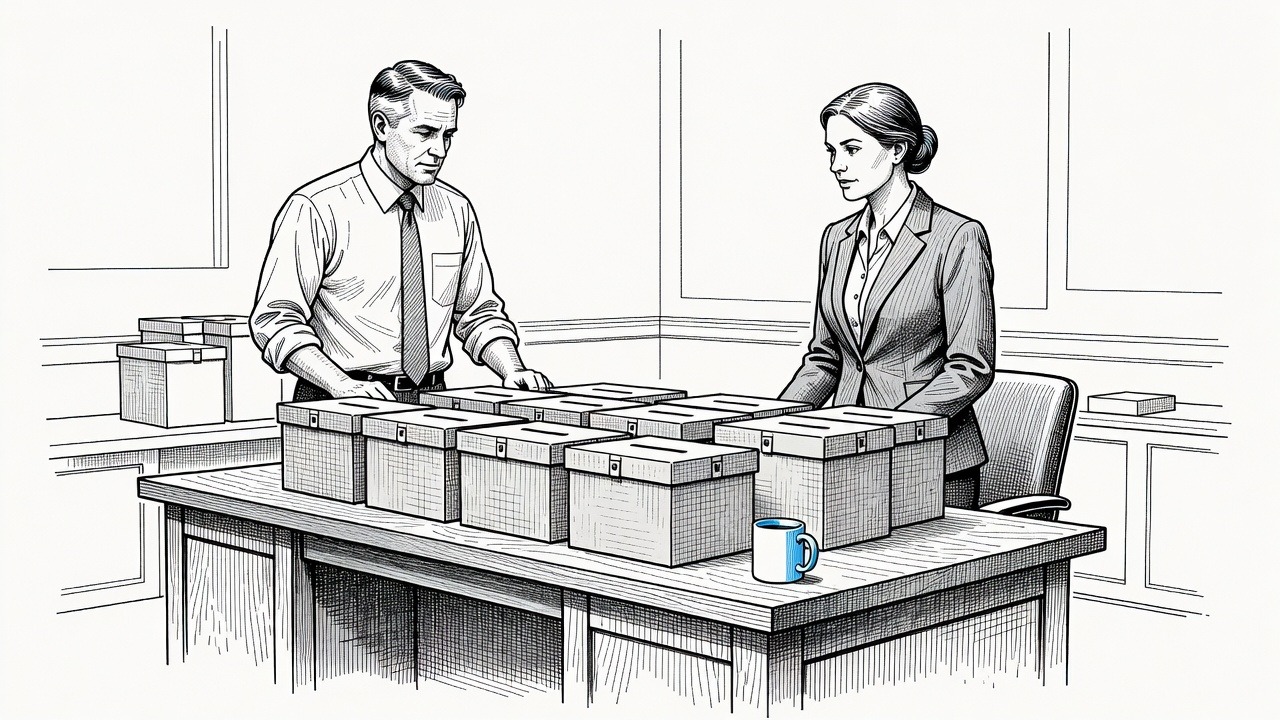
Look at what the department actually did. Weeks before a November election, it sent a password-protected USB drive to county officials. It did not say how many people were on it or what the records contained, and it gave 48 hours to act. The instruction was to segregate ballots from anyone whose citizenship cannot be "independently confirmed," and to hold back ballots not yet delivered. If officials balked, it threatened emergency court relief. Los Angeles County's registrar said the letter didn't even say how many names were involved. And the department has not shown that a single person on the list cast an illegal ballot.
So the burden has been flipped. A voter is presumed suspect unless a county clerk can clear them within two days, using data of unknown quality, during the busiest stretch of an election calendar. Ask who fails that test. It won't be the fraudster, who barely exists. It will be the naturalized citizen whose records lag behind her oath ceremony, the person with a common name, the clerical error nobody ever fixed.
We have seen this movie. Texas in 2019 announced roughly 95,000 registered voters as possible noncitizens. The claim collapsed when it turned out many had naturalized, and the state backed off in court. Florida's 2012 purge started with a list of about 180,000, shrank to a couple thousand, and ended with a few dozen actual removals. In each case the list was the headline, and the people wrongly flagged were the cost. Studies and audits, including Georgia's state review in 2024, keep finding noncitizen registration at a vanishingly small scale and almost no noncitizen ballots.
There is also federal law. The National Voter Registration Act bars systematic voter-roll purges within 90 days of a federal election. A demand to withhold ballots on a government-compiled list in October is, at minimum, in open tension with the spirit of that rule, and the department's own lawyers know it. The 48-hour clock isn't there to produce accurate answers. It exists to produce a refusal, so officials can be cast as obstructing and so the story becomes "California won't check."
The strongest counterargument deserves a fair hearing. The federal government has a legitimate interest in election integrity, and Los Angeles County not even opening the drive sounds like stonewalling. But the county's caution is sound practice. No competent official should load unexplained files of sensitive personal data onto county systems on the say-so of a deadline. If the Justice Department has real evidence of crimes, it has real tools: name the people, hand the cases to prosecutors, and give the state a workable process. Evidence and due process don't need a countdown.
Here is where Democrats should be tougher with themselves. "Fraud is rare" is true but not a strategy. California should offer a transparent, documented, lawful verification process, publish its own audit results, and invite scrutiny. That takes away the pretext without surrendering the principle. The principle is that no eligible citizen loses a vote because the government accused them first and checked later.
That is the real stake here. Administrations that want to contest elections no longer need to prove fraud. They only need to create enough doubt, enough lists, enough emergency filings, so that every close result carries an asterisk. Bonta is right to call this intimidation. The test of whether the department is serious is simple: show the evidence, name the crimes, and respect the law. If it won't, the 48-hour deadline answers the question of what this is really for.
How it may affect me
If you're a California voter, especially a naturalized citizen, check your registration status at voterstatus.sos.ca.gov, confirm your mail ballot was sent and received, and track it through BallotTrax. If officials contact you about your eligibility, respond promptly and keep your naturalization documents handy.