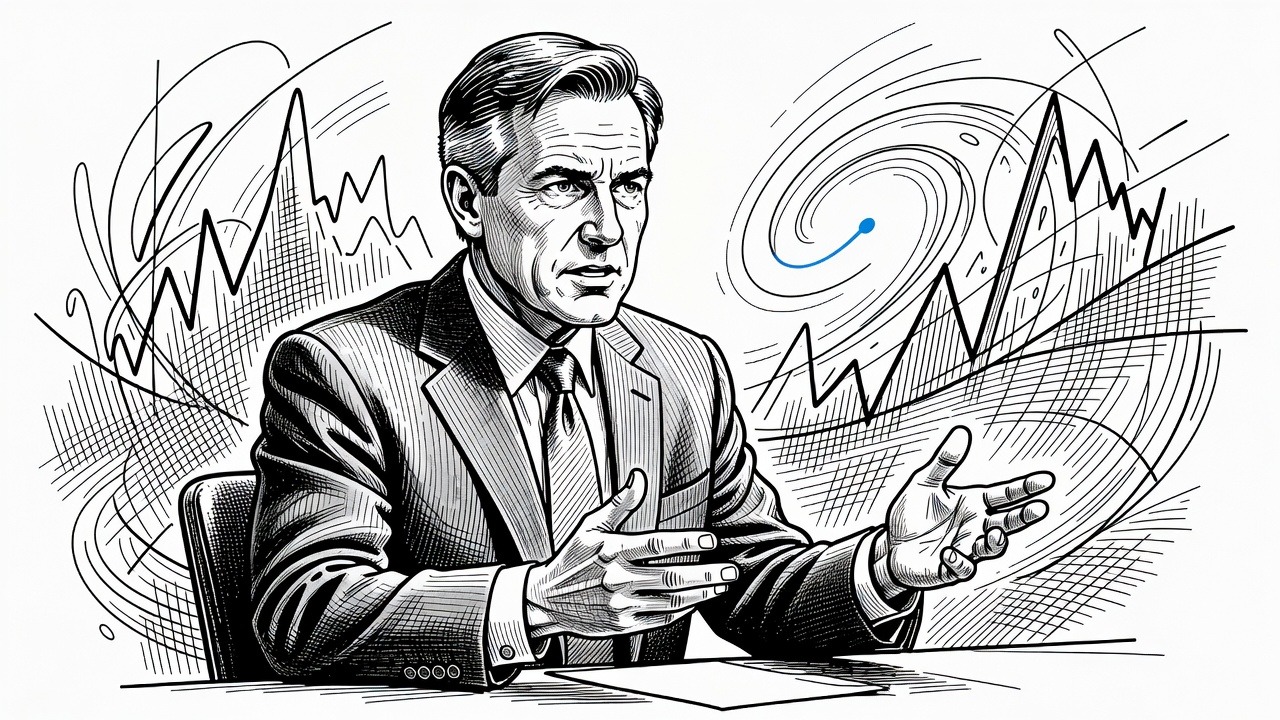
Paul Tudor Jones is not a doomsayer. He is a man who gets paid to be early, and what he is telling us is that 2027 will be a year in which the public is asked to buy what the insiders are selling, and to pay more at the pump while it happens.
Start with the stock market warning. Jones says the weakest market-flow conditions since 2002 are coming, driven by a flood of new equity: AI-related IPOs, reportedly including Anthropic and OpenAI, plus secondary offerings from companies funding the AI buildout. At the same time, buybacks and merger activity are drying up. Put plainly, the buyers who propped up prices are leaving as the sellers arrive.
We have seen this before. In 1999 and 2000, the people who made fortunes on dot-com listings were the founders, venture backers and underwriters who sold into public enthusiasm. The people who held the bag were teachers' pension funds and ordinary households with a mutual fund and a dream. Jones himself compares today with the run-up to that decline. When someone with his record says he is staying short, he is describing a transfer in advance.
That should make the Left deeply skeptical of the way Washington has spent the past year pushing retail money toward exactly these risks. The administration has moved to open 401(k)s to private-market and alternative assets. Index funds, which hold nearly every American worker's retirement savings, must own whatever the market becomes, including newly listed AI giants at valuations set by the people cashing out. Workers don't pick this. It happens to them by default.
To be fair, there is a case on the other side. Raising capital in public markets is how companies fund real investment, and a hedge fund legend's forecast is not a prophecy. Jones has been wrong before. Shorting is not a crime either. But the question isn't whether an AI company may sell shares. It is who is positioned to survive the price, and whether regulators will demand disclosure serious enough for ordinary investors to see what they are buying. A booming sector that needs the public's savings the moment insiders want liquidity deserves hard questions, not applause.
Then comes oil. Jones is bullish, projecting another $20 to $25 a barrel amid the conflict between the United States and Iran. For him that is a trade. For a nurse commuting forty miles, it is a tax with no vote attached. A war that lifts crude hands its gains to producers and traders and its costs to everyone who drives, heats a home or buys anything shipped by truck. Jones also says higher energy prices would further hurt equities, so the same event would hit paychecks and portfolios together.
And he lists inflation, bond yields, the Fed and the fiscal deficit as headwinds. Democrats shouldn't miss the irony. The deficit worry is real, but it was deepened by a tax bill that sent its largest benefits to people in Jones's tax bracket, and tariffs have been feeding the price pressures he fears. The same political project is now handing the bill to the public.
The lesson is not to cheer a crash. Workers get hurt first and worst in downturns, and no one on the Left should treat a bear market as a moral victory. The lesson is that financial risk is being distributed by power, not by merit. Those who can short, hedge and time their exits will be fine. Everyone else needs real protections: honest disclosure on mega-IPOs, caution about steering retirement savings into opaque assets, and a government willing to tax war-driven windfalls and cushion households from price shocks.
When the smartest money in the room says the music is about to stop, the question isn't whether he's right. It's who's left standing without a chair.
How it may affect me
Most workers own AI-heavy stocks through 401(k) index or target-date funds, so a market drop would show up in retirement balances even without buying a single IPO. On fuel, a $20–$25 per-barrel rise typically adds roughly 50–60 cents per gallon at the pump, a meaningful monthly cost for long-distance commuters and anyone heating with oil.