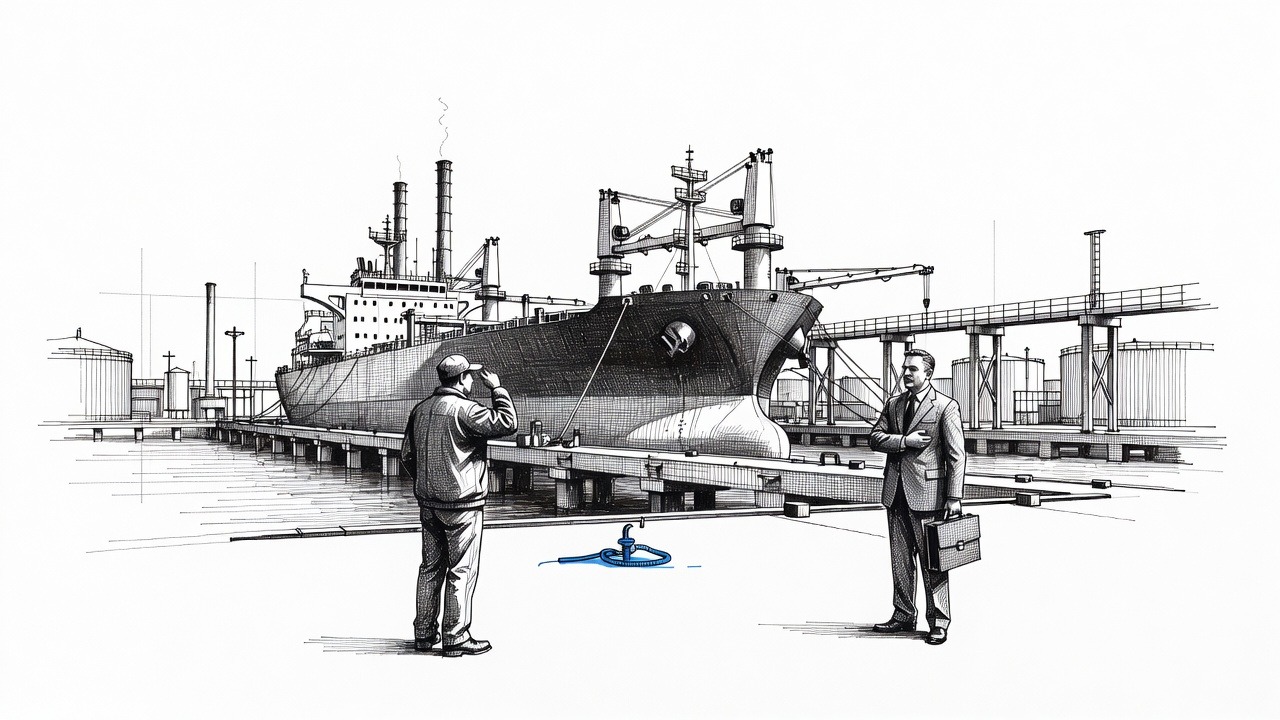
The easiest move in Washington is to gasp. President Trump has defended a plan to buy Russian diesel — 300,000 tons to start, with further shipments possible — and a bipartisan group of senators, a frustrated Europe, and Volodymyr Zelensky have all said the obvious thing: that is cash for a war. The gasp is not wrong. It is incomplete.
Europe’s outrage is not the argument Trump’s critics think it is. The continent now clutching its pearls was Russia’s premium energy customer for years, and it kept writing checks well after the tanks rolled into Ukraine. Trump says the European Union spent something like $250 billion on Russian energy. Quibble with the round number if you like. You cannot quibble with the history. Lecturing the United States about funding Vladimir Putin after underwriting his treasury is not a principle. It is a pose. A Republican president is entitled to say so out loud.
That does not make the tanker a good idea.
The case for the cargo is kitchen-table simple, and it deserves an answer rather than a sneer. Diesel moves freight, plants crops, and shows up in the grocery bill. Voters who watched prices spike are not moral failures for wanting relief, and a Republican White House that ignores that is volunteering to lose the fight it actually knows how to win. House Majority Whip Tom Emmer is pointing at something real when he says the president is answering fuel costs and looking for a path toward a settlement.
Here is what the gesture does not survive. Three hundred thousand tons is, in national terms, a token — on the order of half a day of American diesel use. It will not break a structural price. It might make a headline. The tell is the rest of the sentence: further shipments could follow. A one-off waiver can be defended as triage. A reopened commercial channel with Moscow is a policy.
It also collides with a line the United States drew for a reason. After the invasion, Washington restricted Russian energy imports so American money would not clear into a war budget. Senators from both parties have asked the administration to reverse course on exactly those grounds. Zelensky says the arrangement aids Russia’s military effort. You do not have to let Kyiv write American policy to admit the mechanism is not mysterious. Diesel is a cash export. Cash buys munitions. The conservative objection to open-ended aid was never “send Moscow a check instead.”
The sophisticated reply is that the barrel gets sold anyway — to India, to Turkey, to whoever takes the discount — so American purity is theater. There is truth in the leakage. Sanctions on a commodity this liquid were always porous, and pretending otherwise is how hawkish rhetoric curdles into self-congratulation. But porosity is an argument for enforcement, allied supply, and a cap that actually bites. It is not an argument for the United States stepping back into the buyer’s chair and blessing a trade its own restrictions forbade. Once Washington is a customer, the leak is no longer a failure of the regime. It is the regime.
Nor is this how you build leverage worth having. Leverage is alternative supply: American crude, American and allied refining, a market that does not need Russian molecules to clear. Paying the belligerent for fuel and calling it diplomacy inverts the incentive. You have purchased a relationship, not a concession. If there is a settlement to be had, it will come because Moscow needs an exit, not because a White House needed a cargo.
The failure closer to home belongs to both parties, and Republicans do not get a pass. The United States does not lack hydrocarbons. It has spent years shrinking the refining system that turns them into diesel, slow-walking permits, and making a new unit a legal pilgrimage. High diesel prices are what that looks like at the rack. The Right’s winning answer was abundance — produce it here so families are not forced to choose between the weekly bill and a hostile treasury. Importing Russian diesel is the confession that we would rather rent the adversary’s refinery than fight our own bureaucracy.
Say the European hypocrisy plainly. Then refuse to copy it. A movement that claims to put American interest first does not fund a war it says it wants ended, and it does not treat a token shipment as a substitute for the wells, pipes, and refineries it spent a decade promising. Prices are the constraint. Moscow is not the solution.
How it may affect me
If you run trucks, a farm, or a small fleet, do not budget on this cargo. A few hundred thousand tons will not reset the diesel market or your weekly fill-up. Any relief would be marginal unless shipments become a standing import channel — which is the policy problem, not a consumer windfall. What actually moves your price is domestic refining capacity, crude supply, and the global distillate balance. If that channel widens and politics later slam it shut, the practical risk is a sanctions whipsaw, not cheaper fuel.