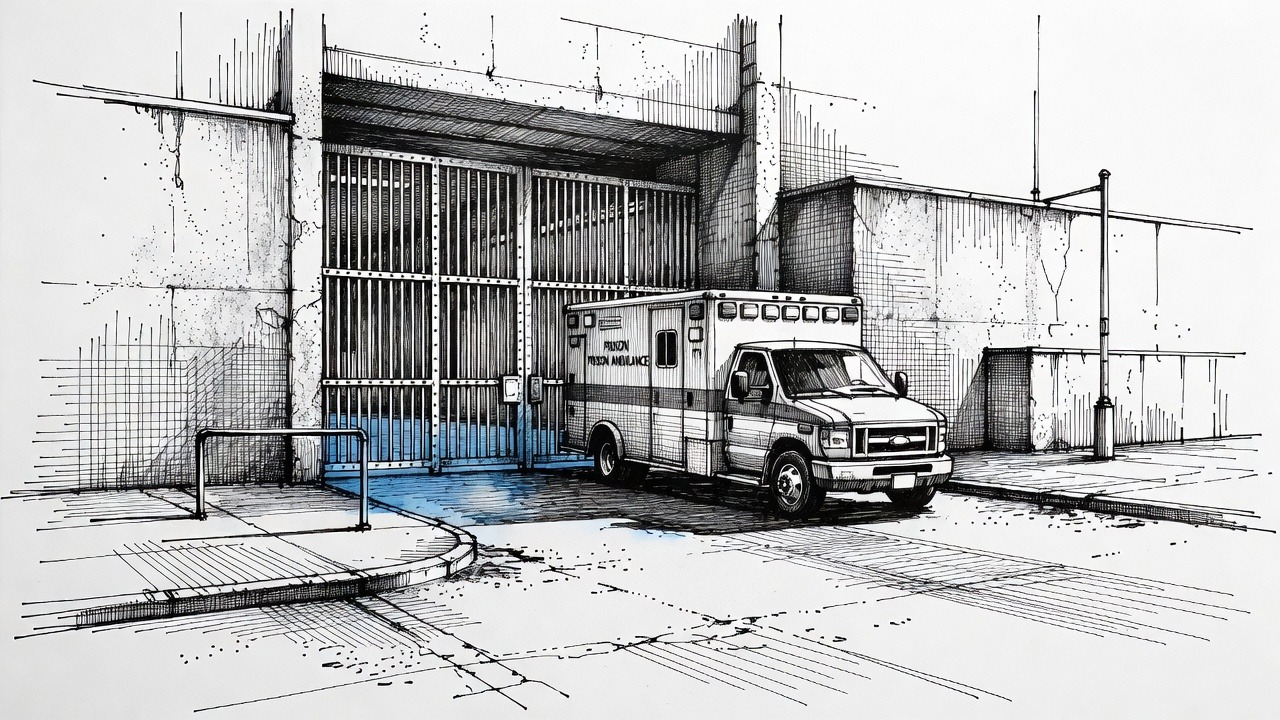
For more than thirty minutes, a woman lay alive after the state of Tennessee had tried to kill her, and the people responsible argued with a 911 dispatcher about whether anyone had actually called.
That is the image in the records released Monday. A caller said Christa Pike had received 10 grams of pentobarbital an hour earlier and was not dead. Dispatchers and prison officials then spent more than half an hour verifying the request and arranging access. Prison central control first said it had not made the call. Responders got in at about 9:11 p.m.
This was not a rogue hospital or a chaotic accident scene. It was a state facility, with a state-selected drug, a state-written protocol and a state witness list, carrying out the most solemn act a government can perform. Tennessee had every reason to expect an emergency, because the outcome of an execution is the one thing it claims to control. It had apparently planned for everything except the failure of its own plan.
Tennessee has been here before. In 2022, Gov. Bill Lee halted executions after the state acknowledged it had not tested its lethal injection drugs as its own protocol required. An outside review followed. The state resumed killing anyway, and its assurances have to be weighed against that record. The Department of Correction still has not explained why Pike didn't die. A government that cannot say what went wrong has no business trying again.
I know the objection, and I take it seriously. Pike was convicted of a brutal 1995 murder. Colleen Slemmer was beaten and killed, and her family has waited decades for finality. Nothing here diminishes that. But the crime was Pike's. The botched execution belongs to the state. Slemmer's family didn't need a ventilator and a 911 tape. They were promised an ending and got a spectacle.
The larger point is that capital punishment asks us to trust the state's competence at exactly the moment we have the least ability to check it. Secrecy laws shield the sourcing of drugs. Courts routinely refuse to halt executions over method challenges, on the theory that prisoners must propose an alternative. The condemned are denied the information they would need to prove the method is dangerous, then told they failed to prove it. When it goes wrong, the public learns the details only because a dispatcher's recording was eventually released.
Now comes the question the state would prefer to treat as administrative: what happens next? There is grim precedent. In 1946, Louisiana put Willie Francis in the electric chair, the equipment failed, and the Supreme Court let the state try again. He was executed in 1947. If Tennessee argues that Pike's survival is a technical setback and not a constitutional crisis, it is citing a shameful case as if it were a guide. The Eighth Amendment bars cruel and unusual punishment. Strapping someone down, injecting her, watching her fail to die and then asking her to go through it again fits that description under any honest reading.
Liberals who oppose the death penalty have too often relied on the argument that innocent people might be killed. That argument is sound, but Pike's case shows something simpler: even when guilt is not in doubt, the state can't be trusted to do this humanely, competently or transparently. Every honest observer who watches the record, as opposed to the press release, should reach that conclusion.
The immediate demands should not be controversial. Tennessee should halt any further attempt on Pike. It should release the full execution logs, drug records and communications. It should commission an independent investigation with subpoena power, not another review the department can manage. And lawmakers who wrote the secrecy statutes should explain why the public was kept in the dark about a procedure carried out in its name.
A state that wants the power to kill must at minimum be able to answer one question: what happened in that room? Tennessee can't, and that should end the experiment.