Consider the sequence. The White House bars several news organizations from the complex and takes their credentials. The networks that share the cost of putting a camera in the room stop sharing footage in response. And the Justice Department, rather than asking why reporters were expelled, opens an antitrust investigation into the response.
The Sherman Act was written to break up railroad and oil trusts. It is now being invoked against television producers for declining to serve a government that had just punished their colleagues. The theory seems to be that the press pool is a cartel and that solidarity is price-fixing.
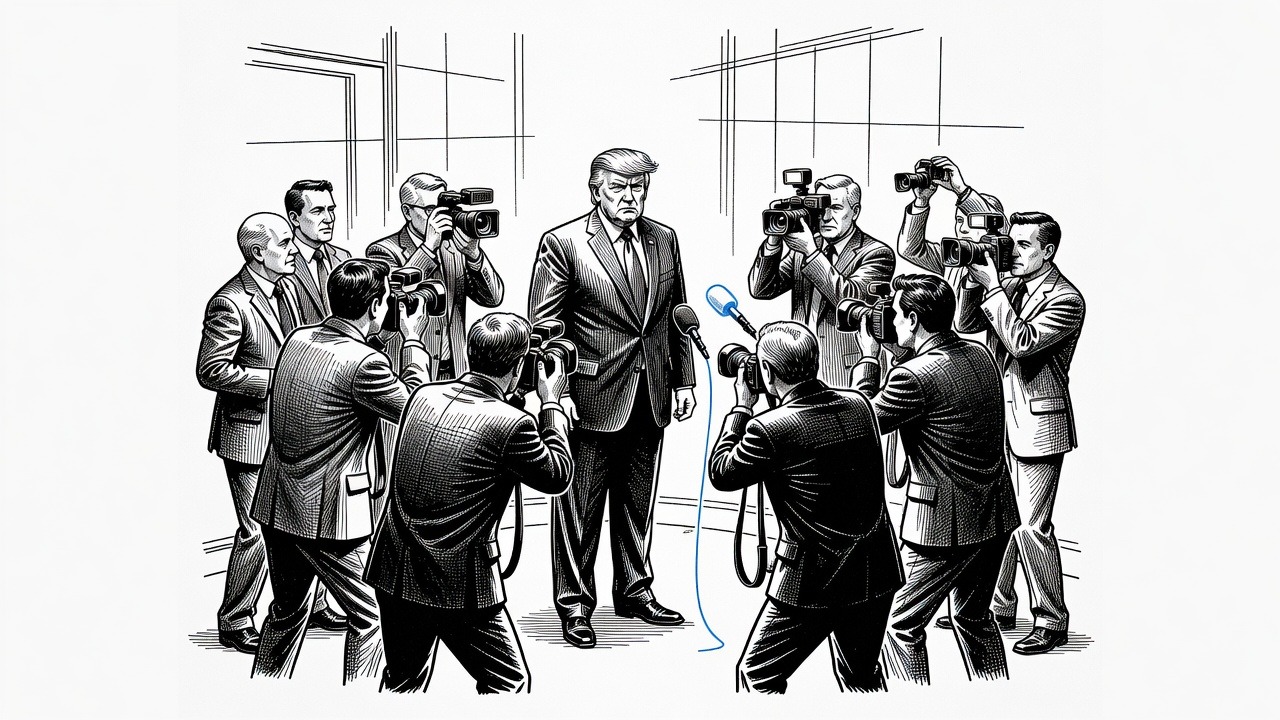
Start with what the pool is. It exists because one president cannot fit every camera crew into the Oval Office. The networks pool resources, rotate duties and share the footage. That arrangement is cooperation by design, and it serves the government's convenience as much as the press's. Pausing it did not raise a price, shut out a rival or squeeze a consumer. The only party arguably harmed was a White House that lost free, professionally produced video of its own events. A free-press advocate was right to say that no competitive harm exists here. The inquiry's real subject is that the government didn't like being refused.
The law also has a long answer to this. Courts have protected collective political refusals to deal, from civil rights boycotts onward, as expression and association. A group of news organizations deciding not to cooperate with an administration that expelled their peers is about as political a decision as exists. Treating it as a restraint of trade turns the antitrust statute into a loyalty test.
Now the part that should unsettle everyone, including people who dislike the press. The administration is not asking a court whether the pause was unlawful. It has opened an investigation, which is a process that costs money, consumes lawyers and hangs over a company with business before the government. Those parent companies have mergers, licenses and regulatory approvals pending, and several have already shown they will pay to make a presidential grievance go away. Paramount and ABC both settled lawsuits with Trump. An investigation like this does not have to end in a case to work. Its purpose is to make the next act of solidarity more expensive than the last.
I would like to say the networks have been models of courage, and they haven't. Their corporate owners have too often treated the First Amendment as a line item. A pause of pooled coverage is a modest act, and it took the exclusion of colleagues to produce it. But modest solidarity is still the thing worth defending. A press corps that can be picked apart one outlet at a time, with the others staying quiet to protect their own access, is the press corps this White House wants.
The judge who restored access on due-process grounds understood the underlying principle: the government can't hand out access as a reward and withdraw it as a punishment without rules. That case is still being litigated, and reporters remain barred from Air Force One. The pattern is plain. The administration decides who is in the room, then treats any collective response as an offense against it.
Trump said on social media that the barred outlets should not be allowed to report what he calls falsehoods. That sentence deserves more attention than the legal citation. A president can criticize coverage, mock reporters and refuse interviews. He cannot use the machinery of the state, whether credentials, travel access or antitrust investigators, to decide who gets to report on him. Democrats who spent years demanding that antitrust be taken seriously against concentrated media and tech power should be the first to say this: real antitrust enforcement protects competition, and this inquiry protects a president's feelings. Every honest defender of the law should say so loudly.
How it may affect me
Pool footage feeds local stations, newspapers and online outlets that can't afford their own White House crews. If access is controlled through credential bans and legal pressure, more of what you see of the president will come from the White House's own video, and less from independent journalists who can choose what to show.