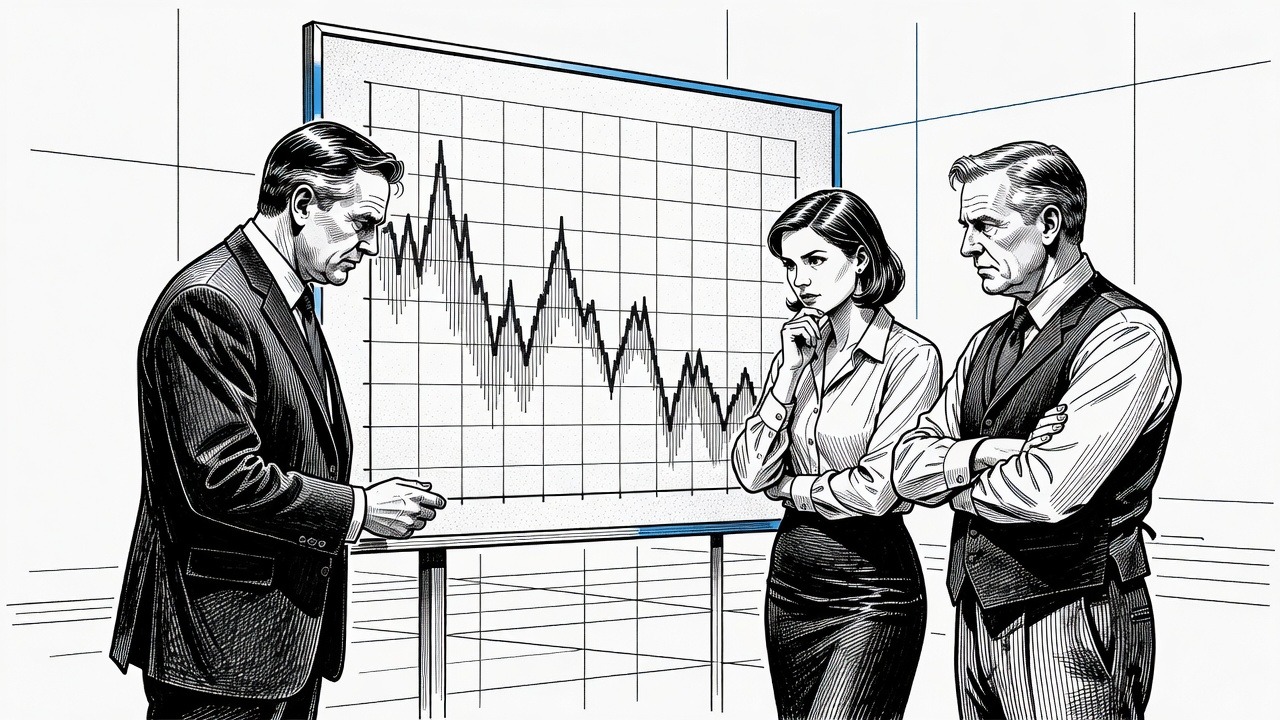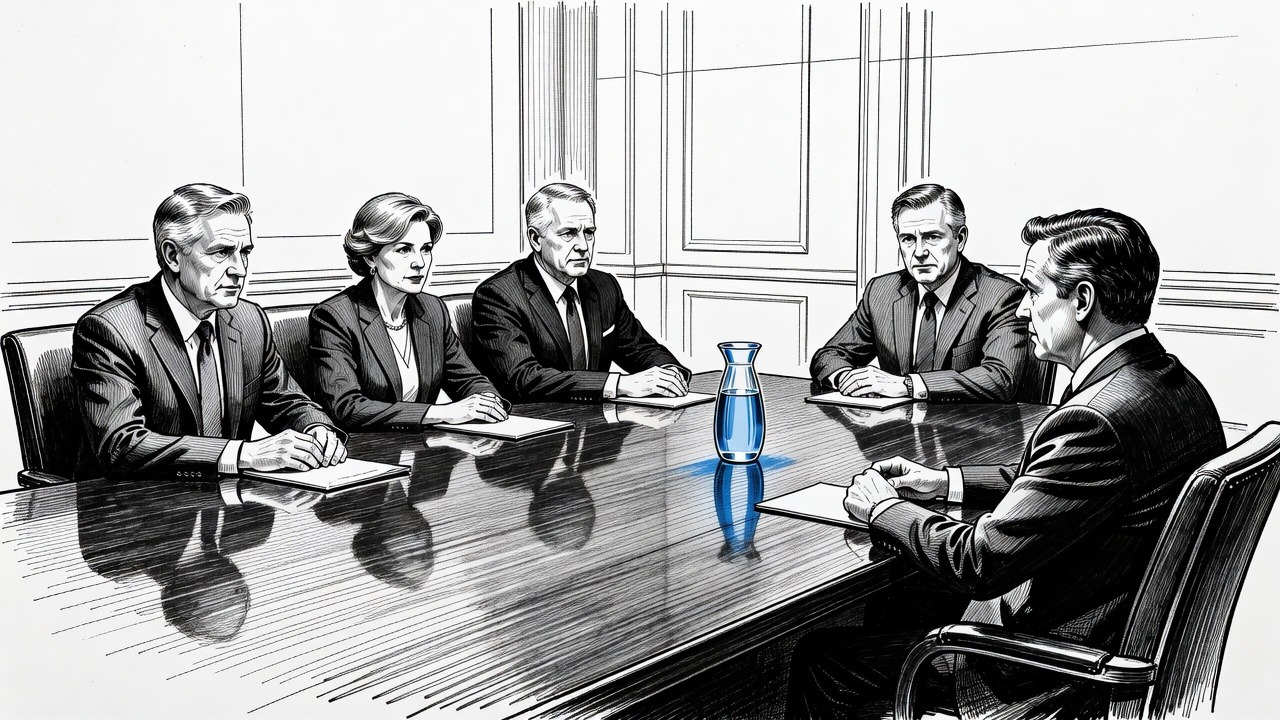
Look at who sits on the panel. Kevin Hassett runs the president's National Economic Council. Andrea Lucas chairs an agency whose leadership the president picked, and Keith Sonderling is the acting head of an ethics office that answers to the White House. The hearing will be closed, held at the White House, and the only product is advice to the man who has already said he wants Lisa Cook gone. The accuser, the jury and the judge all work for the same person.
This is what a procedural defeat looks like when the loser decides to comply in form only. The Supreme Court's 5-4 ruling said Cook had not been given adequate protections to answer the allegations. The administration has answered by building the minimum structure that can be described as an answer. A transcript will exist, Cook may speak, and the outcome is not in doubt. Due process is more than the presence of a hearing. It requires a decider who could plausibly rule the other way.
The strongest case for the White House deserves a hearing of its own. A Fed governor helps supervise the banking system, and a governor who lied on mortgage paperwork would have a real integrity problem. "For cause" protection should not shield actual fraud. If Cook did what is alleged, a serious process could say so.
But the record offers little reason to think this is one. The allegation is that she listed two properties inconsistently as primary residences. It reached the public through Bill Pulte, the housing-finance director who has made similar referrals about other Trump adversaries, including Adam Schiff and Letitia James. The case against James collapsed on a defective prosecutor appointment. As far as the public record shows, no charge has been brought against Cook. Ordinary homeowners with a disputed occupancy box are not removed from office on the strength of a political appointee's referral. The standard is being applied to one person who happens to sit in the way of a president who wants lower rates.
The Left has no reason to romanticize the Federal Reserve. Its insulation from voters has long served creditors and asset holders, and its mistakes, from tolerating mass unemployment to fighting inflation on workers' backs, have fallen hardest on people with no say in them. A left worth the name should want the Fed more accountable, with more labor voices, more regional diversity and a broader reading of the full-employment mandate. But that is a case to make to Congress, through statute, in public. It is not made by a president who tests whether any governor can be removed once he finds a pretext. A Fed that answers to whoever holds the White House is no more democratic. It is only more convenient for the next person who wants cheap money before an election, and for the markets that would profit from guessing his moods.
There is a quieter stake too. Cook is the first Black woman to serve on the Board. Many Americans of her background have learned that institutions can discover technical violations when it suits them. Whatever her case turns out to be, the pattern of enforcement should worry anyone who believes the law should apply evenly.
The real test comes after Nov. 5. If the panel finds cause, the courts will again have to decide whether this is the process the Constitution and the Court's ruling demanded. They should look at its composition and ask whether anyone involved was free to reach a different conclusion.
How it may affect me
Most people will feel this indirectly, through interest rates. If investors come to see the Fed as answerable to the president, they may demand higher yields on long-term bonds to cover the risk of politically driven inflation, which could push up mortgage and loan costs. That outcome is uncertain and would unfold over months or years, and it depends on whether markets read this as a one-off or a precedent.