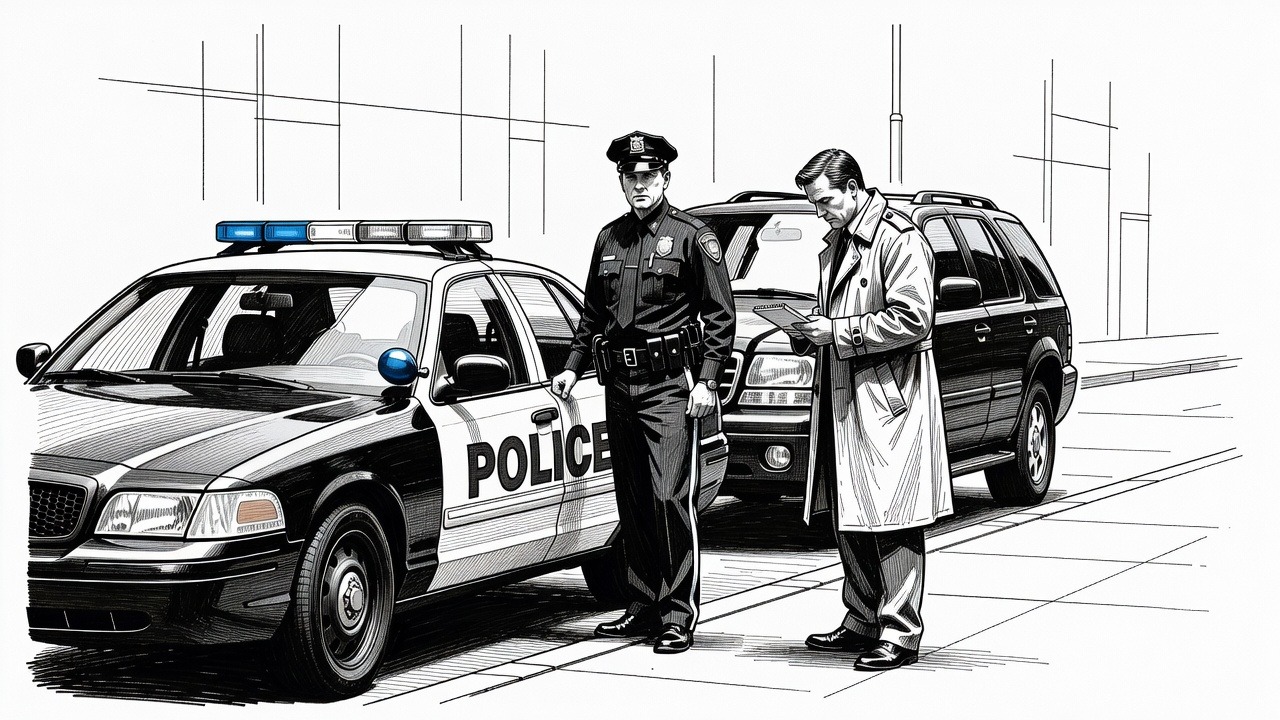
Notice who told us what happened in the Bronx. It was not the agency whose officer pulled the trigger. The shooting was described publicly by New York's police commissioner, while the Department of Homeland Security confirmed only that the man was its intended target and declined to say why seven rounds were fired. A 28-year-old man was hit below the ear. A five-year-old was in the vehicle. The agency that sent armed officers onto a New York street has so far offered no account of why one of them used lethal force.
That silence is the story, because the first question after any shooting by the state is not whether it was justified but who gets to decide. We do not know what happened in that car. The man may have done something that made the officer fear for his life. DHS may have footage that says so. But New Yorkers are being asked to wait on an agency whose credibility has eroded in recent confrontations elsewhere, where official accounts of force have sometimes collided with video. Deference has to be earned, and this agency has been spending its stock of it.
The usual answer is that federal agents operate beyond the city's reach. That is closer to true than it should be. Federal officers can claim Supremacy Clause immunity when they act within their authority, so a local prosecutor who wants to charge one faces a hard legal fight. The state's machinery for investigating police shootings was built for police, not for federal agents. Governor Hochul can ask for body-camera footage, but she cannot compel it. Mayor Mamdani can demand that federal operations end, but he has no power to make them. The people with the strongest moral claim to answers have the weakest legal tools to get them.
So the demand to end enforcement operations, however understandable, is the least useful thing City Hall can say right now. It is a statement of principle aimed at an agency that does not answer to the mayor. The more consequential work is dull and immediate: have the Bronx district attorney and the state attorney general open independent inquiries and preserve evidence, make NYPD witness and scene records available to them, and put on the public record what the city knows. If federal officials stonewall, the stonewalling should be documented. If a prosecutor decides to test the limits of federal immunity, the groundwork has to be laid now.
The left should also hold itself to one standard. The demands being made of DHS (release the footage, explain the shooting, accept outside scrutiny) are the ones that police reform movements fought for decades to impose on the NYPD, and the NYPD still resists some of them. Commissioner Tisch deserves credit for putting the facts on the table quickly. The principle that an armed state should explain itself publicly after shooting someone does not depend on which uniform is involved. If it applies only to agencies we already distrust, it is a political tactic, not a principle.
Then there is the child. Civil immigration enforcement is administrative law. Even when the person sought has a criminal record, which we have not been told, the choice to approach a vehicle with a five-year-old in it, and to fire repeatedly, is a tactical and moral judgment that someone has to defend. That a child was present and unhurt is luck, and we should not treat luck as a finding.
What we know is thin: a man in stable condition, a child placed with a relative, and an agency that has not said why. That is not enough to convict the officer. It is more than enough to insist that the answers be public, independent and soon.