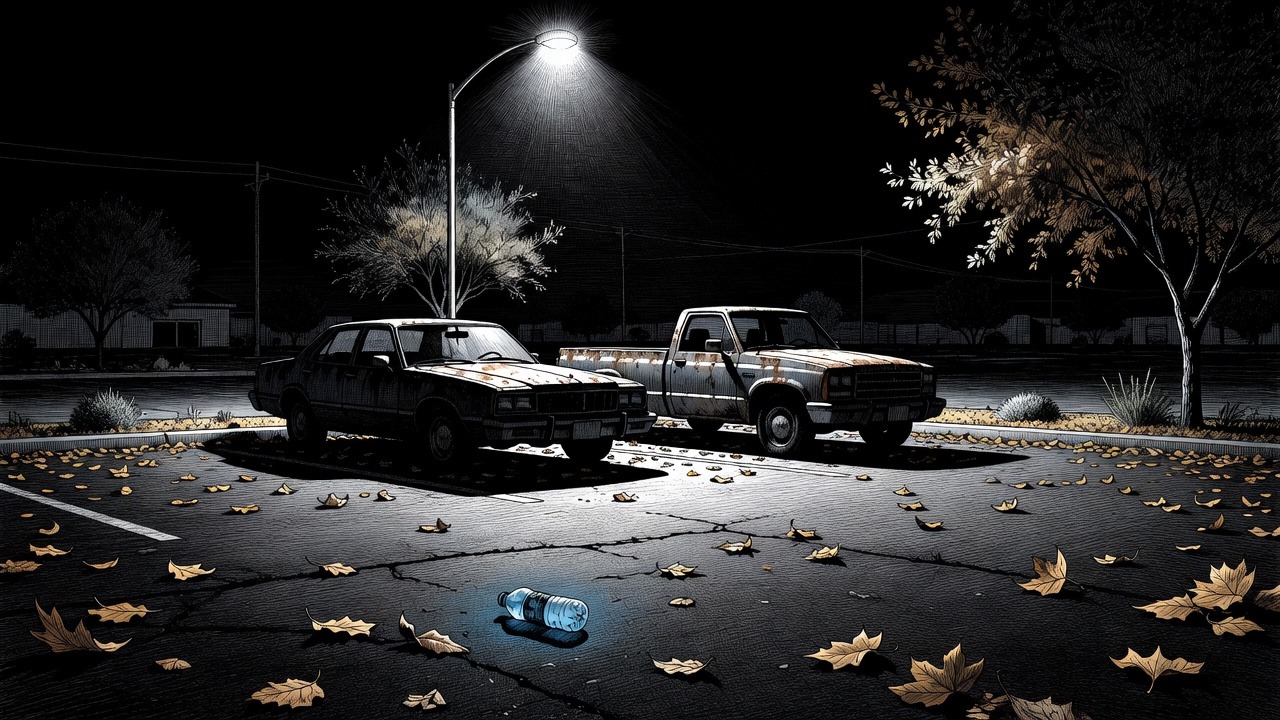
The detail that stays with me is the hour. It was shortly after 2 a.m., and a candidate for Congress was alone in a parking lot, repairing her own campaign sign. Nothing in that sentence suggests a political operation. It suggests the economics of a challenger's race in a district that leans the other way: thin staff, few paid hands, and a candidate who does the unglamorous work herself because nobody else will. Whatever the investigation finds, that detail belongs in the story. Running for office is often described as a test of ambition. It is also a test of how much unprotected labor a person can absorb, and the risks of that labor are not evenly spread.
Nothing has been proven, and a column should say so. Bernadette Greene-Placentia has made an allegation. The Maricopa County Sheriff's Office confirms a report and an active investigation, and says little else. Nobody has been identified, and speculation about who did this or why, particularly political speculation, would be both irresponsible and cheap. Believing a survivor enough to take her seriously does not mean skipping the work detectives exist to do. The two obligations fit together, and a decent public conversation can hold both.
What I would resist is the quiet suspicion that tends to follow the details here: the report filed on Aug. 31, more than two weeks after Aug. 14, and the two days her campaign says she was absent. Anyone who has studied sexual violence knows these are ordinary features, not red flags. Most sexual assaults never reach the police. Those that do often arrive late, after the person has tried to absorb what happened, worked out whom to tell, and weighed what telling will cost. Disappearing for a couple of days is not an anomaly in that process. It is the process. A candidate has an added burden, because her worst experience becomes a campaign event the moment she speaks, and every motive she has will be questioned. That she chose to speak anyway, saying she wanted to support other survivors, deserves some respect and no cynicism.
It is worth noting that Rep. Abe Hamadeh, her opponent, called for a thorough investigation, and Gov. Katie Hobbs's office condemned the assault. Partisan combatants responding decently should not be remarkable, but it is welcome and worth saying so. Hamadeh's call for authorities to review available camera footage is also practical. Now the test is whether that decency lasts beyond the first news cycle, and whether it extends to the less visible parts of the system. A senator's statement does not pay for the forensic nurses, advocates and detectives who determine whether a survivor's report ends in a case or in a file. Arizona's candidates of both parties are in a position to ask how well those services are funded, how quickly evidence is processed, and whether a woman without a campaign platform can expect the same seriousness this one has received. If condemnation is where the concern ends, it costs nothing and changes nothing.
That is the larger point from the left. Sexual violence is not mainly a story of rare monsters and isolated bad nights. It runs through a country where women do solitary, late-hour, low-paid and unpaid work, from cleaning offices and closing restaurants to hanging yard signs, and where the protections around that work are often an afterthought. A politician's case commands attention because she is a politician. The measure of whether we mean our statements is how we treat the case that never becomes a headline.
For now, the right posture is simple. Let the detectives work. Do not turn a reported rape into a campaign weapon or a campaign conspiracy. And do not mistake a delayed report for a doubtful one.
How it may affect me
If you or someone you know has been sexually assaulted, you do not have to decide everything at once. Evidence can often be collected at a hospital or forensic exam site for several days afterward, even if you haven't yet decided whether to report to police, so try not to shower or change clothes if you can help it, though you can still seek care if you already have. The RAINN national hotline (800-656-4673) is free and confidential, around the clock, and can connect you to local services. Reporting later is still reporting, and a delay does not erase your options.