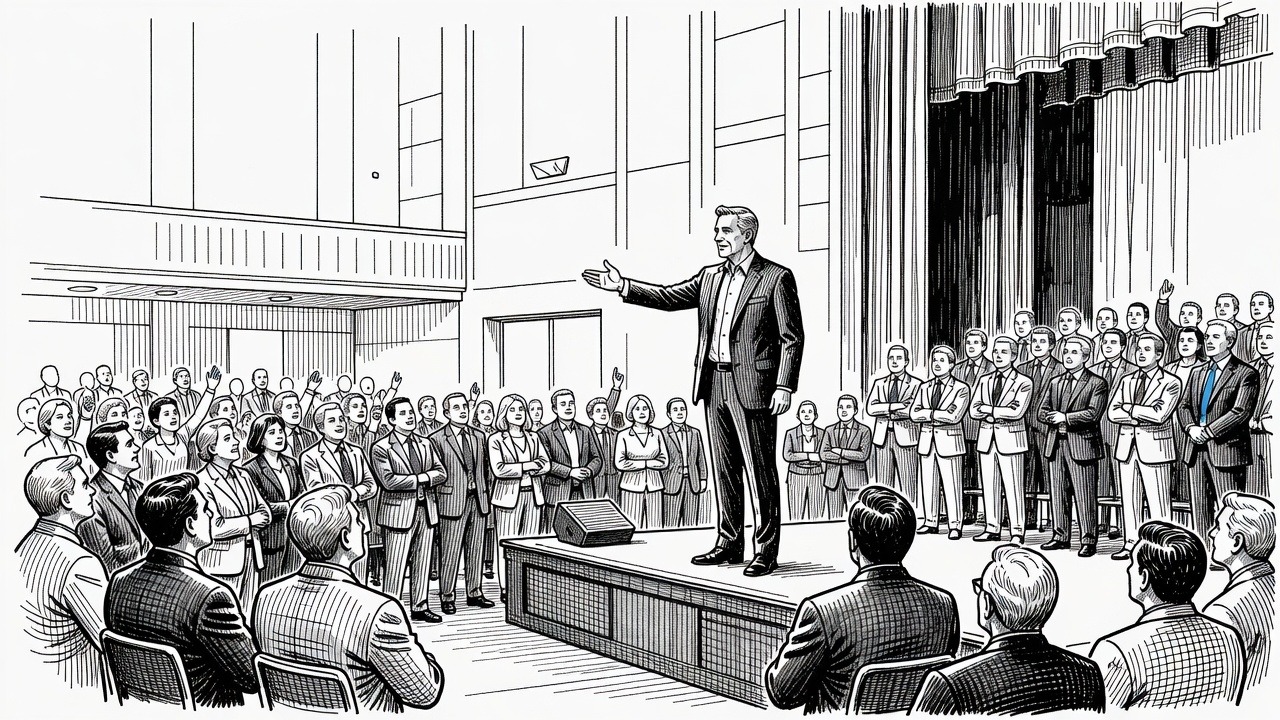
The loudest part of this story is the scuffle. The most revealing part is Ken Paxton standing in front of a crowd and counting the days his opponent was sick.
Eleven days without campaigning, Paxton said of James Talarico. The Talarico campaign answered that he had the flu after more than 100 public events. Strip away the partisan theater and you have a politician making a virtue of never being ill, in a state where being ill is a financial hazard for millions of people.
Texas has long had one of the country's highest uninsured rates. It has refused to expand Medicaid. It has also moved, through state law, to stop cities like San Antonio, where this rally took place, from requiring employers to give workers paid sick leave. For a large share of the people who live near that coliseum, the flu is not a reason to rest. It is a choice between recovering and paying rent. The candidate got to recuperate and then explain himself. The cashier, the roofer, and the home health aide get a lost shift and a warning from a manager.
That is why the attack lands so sourly. Paxton is surely right that voters can ask where a candidate has been, and Talarico's team was right to answer plainly. A campaign is a job interview and absence invites questions. But the premise of the jab, that stamina is character and sickness is slackness, is the working philosophy of an economy that treats bodies as inputs. Anyone who has dragged a fever through a shift knows that philosophy. It is how a cold becomes an outbreak and how a bad week becomes a bankruptcy. A party that governs a state this way should not be surprised when the metaphor follows it to the podium.
There is also the matter of who is delivering the line. Paxton is the state's attorney general who was impeached by the Texas House in 2023 and acquitted by the Senate. His career is a case study in a politics where loyalty displays substitute for accountability, and a Trump rally is the purest form of that ritual. The crowd does not come to evaluate a record. It comes to be told that fealty is the qualification and that the opponent is weak, absent, or foreign to the tribe. An opponent's flu fits neatly into that script. Policy, such as what a senator would do about health costs, wages, or the grid, barely appears in the account of the evening.
Progressives should be honest about their own side of the room too. At least ten protesters were removed, at least one was handcuffed, and there were scuffles. Dissent is a democratic right, and a political event is a legitimate place to show opposition. But disruption inside a hall rarely persuades anyone. It mostly supplies the movement it opposes with a martyr story and a clip of chaos. Opposition that wants to change Texas will do it in precincts, workplaces, and registration drives, not by getting walked out in zip ties. The same goes for Democrats' own hustle culture. A candidate who reports 100-plus events and thousands of voters is rightly proud of the work, but a campaign that must justify a week with the flu shows how thoroughly the norm of constant availability has captured both parties.
The larger lesson is that the Senate race may be decided less by who shouts loudest than by whether Democrats can turn this small, silly exchange into a concrete argument. Who gets to be sick without being punished? Who pays when a state declines to insure its people or protect their wages? Texans live those questions every winter. Talarico can answer Paxton's eleven days with a simple point: most of his constituents would be lucky to get eleven days.
How it may affect me
For ordinary Texans, the immediate effect is a campaign conversation that rewards image over substance, with a rally and a flu-shaming jab crowding out what a senator can actually do about insurance, wages, and costs. The longer-term stakes are real. Texas workers who lack paid sick leave and health coverage face a constant risk that illness turns into lost income, so who wins the seat could shape federal action on health care, labor standards, and whether states can block local protections like paid sick days. For voters who want to protest, the rally shows the trade-off: disruption draws attention and security, but organizing, registering, and turning out voters is more likely to affect the outcome. Anyone attending political events should expect heavy security and quick removals.