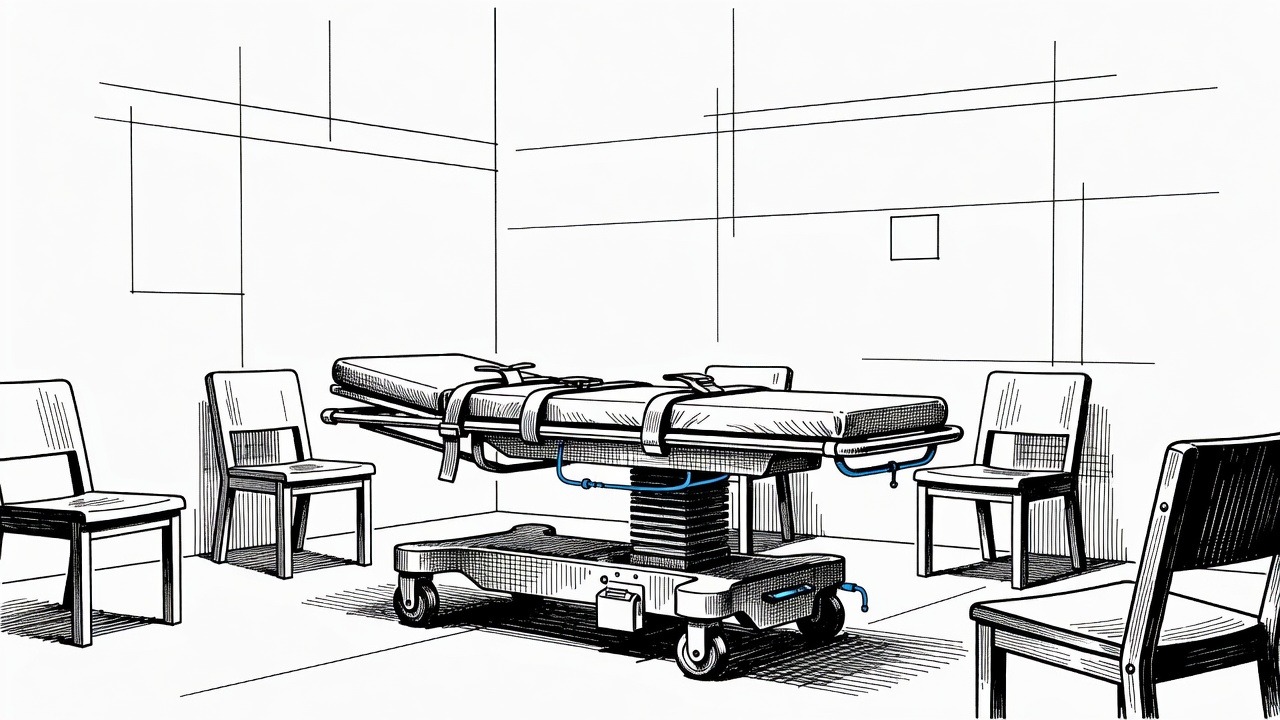
The most important fact in this story is not that the execution failed. It is that the failure was forecast. Before the attempt, Christa Pike's lawyers told the state that a platelet disorder and small veins could make lethal injection ineffective and painful. They even proposed an alternative, hanging. The state proceeded anyway. When an institution has been warned, in specific medical terms, and then produces exactly the outcome it was warned about, "mishap" is the wrong word. This was a decision.
That is the structural lesson. The condemned have no bargaining power in this system, and their claims arrive pre-discredited. Courts and officials have long treated objections to execution methods as stalling, a reflex that makes some sense when the filings are boilerplate. But Pike's objection was individual and medical. It was the kind of claim a competent system would check, because checking costs little and being wrong costs a great deal. A state that wants to exercise the most extreme power it has should be held to the most exacting standard of care. Instead the burden falls on the person strapped to the table to prove, in advance, how her own body will fail.
Tennessee has been here before. In 2022 the governor paused executions after it emerged that the state had not followed its own protocol for testing lethal injection drugs, and an outside review followed. Executions then resumed. Now comes another independent investigation. I welcome it, but a review is not a remedy. Reviews tend to ask whether paperwork was followed rather than whether the enterprise can be done humanely at all. If the inquiry produces a revised checklist and a new date, it will have served as a ritual of reassurance rather than accountability. The test is whether it examines how the state weighed the warnings it received, who decided to dismiss them, and how much of the process stays hidden from the public in whose name it operates.
There is a serious opposing argument, and it deserves a straight answer. Pike was convicted of a brutal killing, committed when she was 18. Her sentence has been reviewed over many years. The victim's family has waited decades for finality. Why should a procedural failure rescue her from a punishment juries and courts imposed? Because the failure now belongs to the state, not to her. Whatever one thinks of the crime, the state is obliged to carry out its sentence lawfully and without needless suffering, and it has tried and failed under circumstances it was told about. A second attempt would no longer be an ordinary execution. It would be a deliberate repeat after notice. Commutation to life in prison, as her lawyers urge, would still leave her to die behind bars. It would be a severe punishment that the state can actually deliver without turning a prison into a laboratory.
The victim's family is also not well served by this machinery. Each date set, each hearing, each botched procedure reopens the wound and leaves them hostage to the state's competence. Capital punishment promises closure and keeps delivering delay, litigation, and now spectacle. A life sentence is certain, final, and does not depend on locating a vein.
There is a larger pattern here. Across the country, states keep the death penalty alive while the supply of drugs, the willingness of medical professionals to participate, and the transparency of the process all erode. The result is improvisation, secrecy, and experimentation on people who cannot refuse. A government that cannot reliably do this one thing without a failure that triggers an investigation should ask whether it ought to be doing it at all. Tennessee canceled its remaining execution this year. It should treat that as the beginning of a moratorium, not a pause, and commute Pike's sentence.
How it may affect me
For Pike, the immediate question is whether the state will try again after she has already endured a failed attempt, and what physical and psychological harm the attempt caused, facts the investigation should establish publicly. For other Tennessee death-row prisoners, the canceled execution buys time but not safety. Unless the inquiry confronts how individual medical warnings are handled, the same flaws could recur. For the victim's family, a commutation would end the cycle of dates and reversals and give them certainty. For taxpayers, the failure shows that a method meant to be quick, cheap, and clean has become a litigated, secretive, error-prone process whose costs are paid by the public. More broadly, if a state cannot administer its gravest penalty competently, citizens have reason to doubt its claim to wield that power at all. This is also a test of whether official investigations produce real change or just a delay before the next attempt.