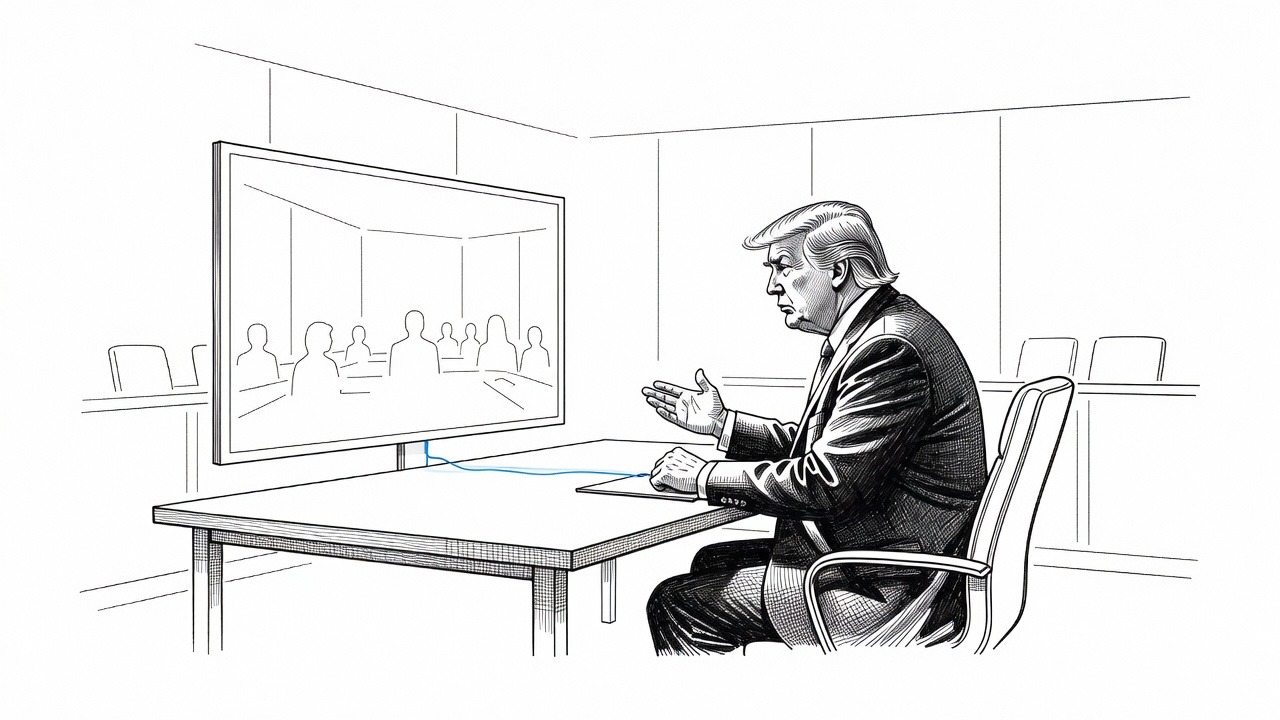
The easy way to read this story is as a partisan one: a Trump press secretary lands at Fox. Whatever else you think of Karoline Leavitt, that reading misses the point. Jen Psaki went to MSNBC, and Sarah Sanders and Kayleigh McEnany went to the other side of the dial. The pattern is bipartisan, which is exactly why it deserves scrutiny. It is a structure, not a scandal.
The structure is this. The White House press secretary is a public job, paid for by taxpayers. Its purpose, at least in theory, is to be the daily point of contact between the government and the people it governs, through the reporters who ask questions on their behalf. Increasingly it is also the best audition in American politics for a career in cable. Leavitt takes the screen on Nov. 1, two months after leaving the podium. Suzanne Scott says her White House and campaign experience gives her 'insight into the political landscape.' That is a revealing word. The insight is the product. What a person learned inside the government, on the public's payroll, is now being sold back to the public as programming, by a company whose business is holding an audience.
If you are a briefing-room performer who knows a lucrative contributor's chair awaits, how do you do the job? Perhaps no differently. But the incentives lean toward the viral clip over the useful answer, toward combat over information, toward being memorable to a cable audience rather than accurate to a skeptical room. A job meant to inform the public becomes a screen test for a network that profits from partisan loyalty. Fox, which paid $787.5 million to settle Dominion's defamation suit over its election coverage, has not exactly earned the benefit of the doubt on the line between commentary and fact.
The word 'contributor' matters too. A contributor is not a reporter. She faces no editor deciding what to chase and no beat to cover honestly. She commentates, with the authority of having been there and without the obligation to be checked. The viewer sees 'former White House press secretary' and hears the voice of experience, when what they may be hearing is the same talking points with a better lighting budget.
There is a fair defense, and I want to take it seriously. People are allowed to earn a living. Networks have always hired insiders, and some of them explain how government actually works. Leaving a punishing job to be with a newborn is not a scandal, and no progressive should sneer at a parent choosing family. (It is worth noticing, though, how soft the landing is. Most workers who step back for their children do not have a national platform waiting. That is a point about our parental-leave system, not about her.)
But the defense proves the problem. Nobody is being accused of breaking a rule, because the rules are what's missing. We have ethics laws about officials negotiating jobs with entities they regulate. We have almost nothing about officials who control the flow of public information negotiating futures with the outlets that receive it. Congress and the executive branch could at least require disclosure of when employment talks with media companies begin for senior communications staff. Networks could label these hires plainly: former administration spokesperson, not independent analyst. A cooling-off period would raise First Amendment questions, and I would not want to see people barred from speaking. Transparency is a more modest fix and a more defensible one.
The deeper issue is what we have let the job become. That no replacement has been announced is almost poetic: the podium sits empty while its former occupant gets a bigger megaphone elsewhere. Political communication has been turning into a branch of the entertainment business for decades, and the people who pay for the public side of it, taxpayers, get the least out of it. A democracy needs government that answers questions. It shouldn't be satisfied with government alumni who have a lot to say once the questions stop.
How it may affect me
For ordinary viewers, the practical effect is a blurrier line between information and advocacy. A familiar title will lend authority to commentary that carries no duty to be neutral, corrected, or complete, which makes it harder to tell what the government actually did from how its former spokespeople would like it remembered. For citizens more broadly, the longer-term risk is incentive distortion. If the public job is increasingly a stepping stone to a partisan media career, the briefing room may reward performance over transparency, and reporters may get less usable information from it. The cost falls on the public, which pays for the office and gets less accountability in return. Modest reforms, such as disclosure of employment talks and clear on-screen labeling of former officials' roles, would not solve this. They would let viewers weigh what they hear and give the press and the public a clearer view of who is speaking and why.