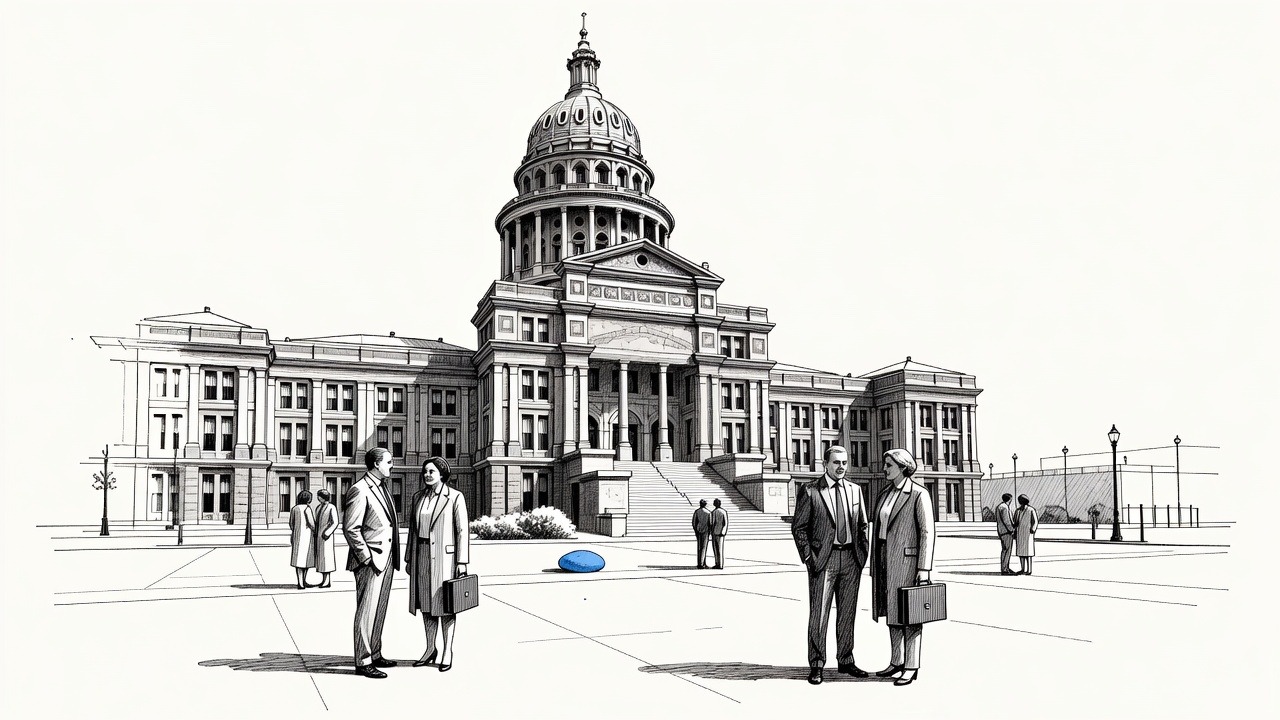
Strip away the alarm and what you actually have here is a case study in institutions doing the boring, unglamorous work correctly. DPS says it received credible information on Tuesday about a planned attack for Thursday, and by 3 a.m. Wednesday a suspect was in custody. That is not a sprawling bureaucratic process — that is a fast, coordinated response involving state police, the FBI, and local law enforcement moving in under 24 hours on a specific threat. Whatever else is uncertain about this case, the operational tempo here reflects competent threat response, not the kind of institutional fumbling that tends to dominate headlines after something goes wrong.
The more interesting judgment call is what DPS did *not* do: it did not close the Capitol. It kept the building open during regular hours and layered on additional law enforcement presence instead. That is the right tradeoff. Shutting down a state capitol every time a threat is reported would hand disruptive power to anyone willing to make a phone call, and it would train the public to treat government buildings as perpetually unsafe. Increasing security while maintaining normal operations signals that the threat was taken seriously without letting it dictate the functioning of government. That only works, of course, if the underlying threat assessment was accurate — and the swift arrest suggests it was.
The charge itself — terroristic threat against a public servant — is the appropriate legal instrument for this kind of case, assuming the facts hold up in court, which has not yet been tested. The transfer to federal custody and the lack of disclosed federal charges is less satisfying from a public-accountability standpoint, but it is defensible. Investigators withholding charge details while a federal case is still forming is standard practice, not evasion; premature disclosure can compromise prosecutions and reveal investigative methods. The cost of that opacity is that the public is asked to trust the process before seeing the evidence. That is a reasonable ask here, given the demonstrated speed and interagency cooperation, but it is still an ask, and it should not be mistaken for full transparency.
What this story does not support is speculation about motive, ideology, or broader political context — none of that is in the record, and any commentary pretending otherwise would be manufacturing drama the facts don't contain. The honest takeaway is narrower and less exciting: a threat was reported, agencies moved quickly, an arrest was made before the stated attack date, and the building stayed open. That is what institutional competence looks like when it functions as intended.
How it may affect me
For most people, especially those outside Texas, this changes nothing day to day — it's a contained law enforcement action, not a signal of broader instability. For Texans who work in, visit, or depend on the Capitol, the immediate effect is a heavier security presence around the building rather than any disruption to government operations, which stayed open on schedule. That's a meaningful distinction: normal business continued rather than being suspended out of caution.
Looking slightly further out, how this case resolves in federal court may matter more than the arrest itself. If charges are substantiated with solid evidence, it reinforces that threats against public institutions are taken seriously and acted on quickly — which is the kind of outcome that sustains public confidence in law enforcement's ability to prevent violence rather than just respond to it after the fact. If the case weakens or stalls, it could fuel skepticism about rushed judgments or opaque federal processes. Either way, the practical experience for ordinary people — including anyone planning to visit the Capitol — is unlikely to change much beyond noticing more visible security for a while.