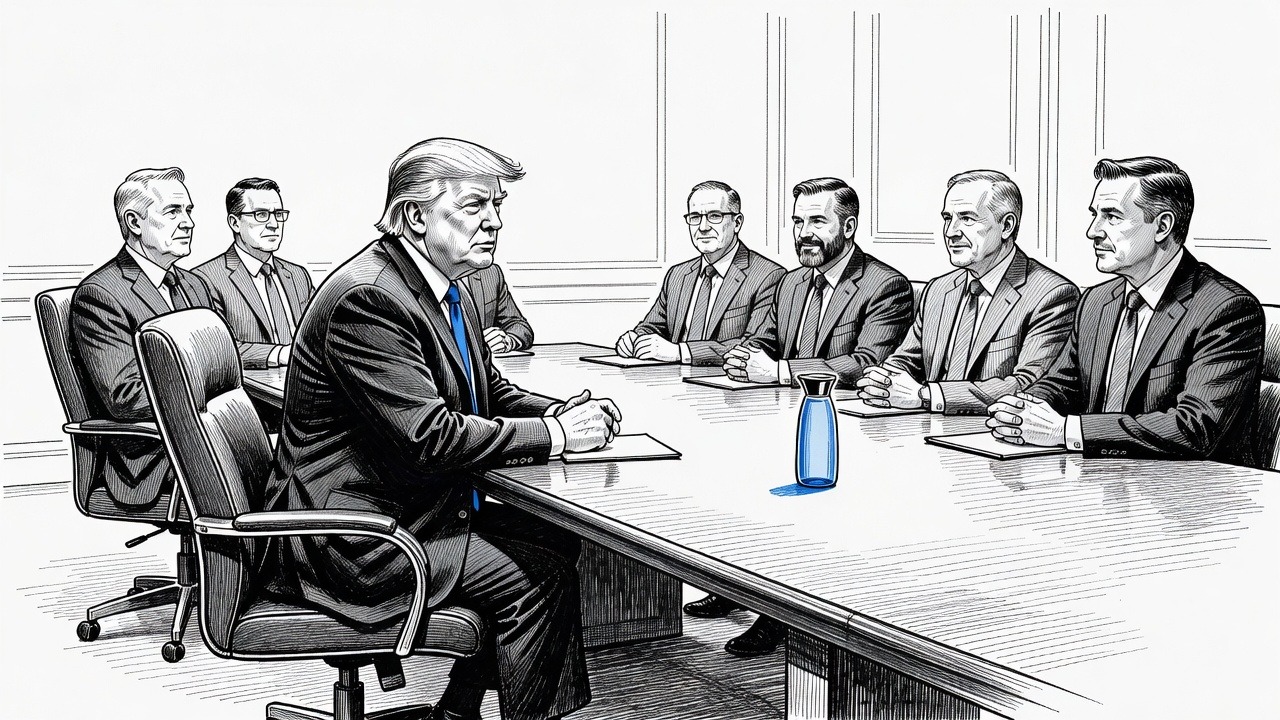
The calendar does not match the slogan. On Tuesday, executives from Anthropic, OpenAI, Meta, Nvidia and SpaceX were at the White House signing a voluntary safety accord, while President Trump said his administration would not slow AI development. On Wednesday the Federal Trade Commission confirmed an investigation it had already opened this summer into OpenAI, Anthropic and other, still-unnamed AI companies over potential risks their products may pose to consumers.
Nothing in that confirmation is a finding of deception or harm. It is an assertion of process. The agency says it is examining whether company practices comply with the FTC Act, plans to seek detailed information from the companies and from the nonprofit research group METR, and is preparing civil investigative demands so executives can be compelled to testify about their products. A civil investigative demand is not a roundtable. It is the state requiring answers.
Consumer protection is a real function of government. If these firms are misleading users, the FTC Act is the statute written for that, and using it is not some culture-war invention. The trouble is the distance between that job and this inquiry. The public has been offered potential risks, a refusal to name the rest of the targets, and a compulsory demand for documents and testimony — in the same week the White House told the industry it would not be slowed. A voluntary safety accord is compatible with that promise. An open-ended investigation backed by civil investigative demands is how a regulator builds a file. Files become conditions on how products are designed, shipped and sold. An administration that does not want to slow development should notice that its own agency is already running the process that does the slowing.
Do not cast these companies as put-upon startups. The firms at that White House table have the lawyers and the balance sheets to live inside an inquiry, and every incentive to favor safety rules that smaller competitors cannot cheaply meet. A wide, partly unnamed investigation can do that work for them: compliance cost as a moat, while the biggest players negotiate language in the West Wing. Free markets are not the same thing as politically connected scale meeting an unelected commission. The builders never named, and never invited, are the ones least able to treat a civil investigative demand as overhead.
The precedent will outlast the headline. Potential risk, compelled testimony, and a demand on an outside research group is a template. Once that template is ordinary, a commission holds a standing claim on a general-purpose technology no matter what an elected president says about speed. Limited government does not mean no FTC. It means the agency shows a concrete consumer injury before it treats an industry like a supervised utility. Until it does, skepticism belongs on both sides of this — the companies, and the regulator.
How it may affect me
This does not switch off the tools you already use. The FTC has opened an inquiry, not announced a ban, a fine, or a proven violation. The nearer effect is caution. Companies facing civil investigative demands and executive testimony tend to slow feature releases, add disclosures, and narrow what a product will do — not because a court found harm, but because legal exposure is now on the product calendar. If you use these tools for work, that can show up as later updates and more locked-down defaults.
Further out, the cost of detailed information demands, outside research reviews, and compliance lawyering does not stay inside the companies. It can reach users as higher prices, thinner free tiers, or products built to satisfy a regulator rather than a customer. It can also fall hardest on smaller firms the spokesperson did not name, which cannot match the legal staffs of the companies that just signed a White House accord. Less competition would mean less choice, not automatically more safety.
There is a real upside if the inquiry uncovers actual deception: clearer claims, and products that do what they say. That is possible. It is not what the agency has established. Until it does, ordinary users may pay — in time, money, or fewer options — for a regulatory process running alongside a presidential promise not to slow the industry down.