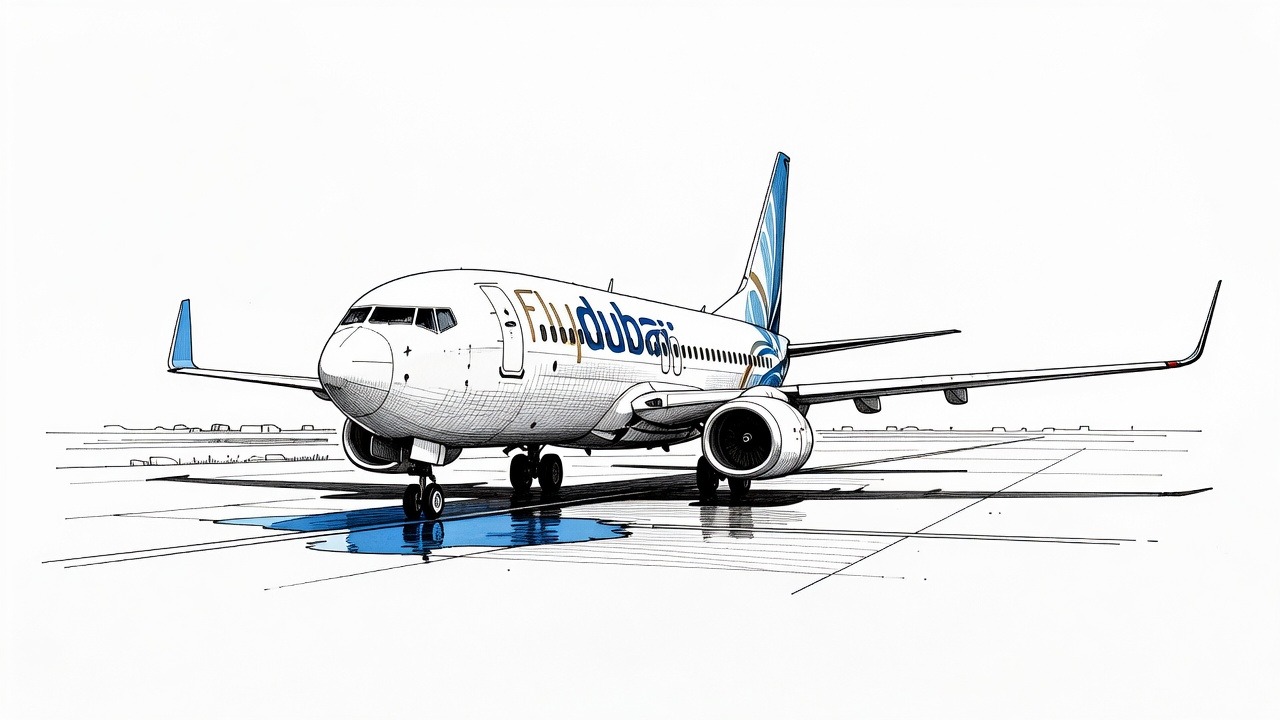
Strip away the alarming details and what's left is, oddly, a story about systems working. A Boeing 737 experienced a violent event inside its cockpit, both pilots were injured, and the aircraft still landed safely at a foreign airport after transmitting an internationally recognized distress code. That is not a minor operational footnote — it's the aviation safety architecture doing exactly what it's designed to do under worst-case stress. Redundant flight controls, standardized emergency codes, and diversion protocols exist precisely so that a catastrophic failure in one part of the system doesn't become a catastrophic failure of the whole flight. Whatever caused this incident, the outcome — everyone alive, plane on the ground — is the system's job, and it did that job.
What deserves more skepticism is the narrative racing ahead of the facts. Israeli officials and passengers are alleging one pilot stabbed the other; the airline has confirmed only that an incident occurred and that it's cooperating with authorities. A regional official confirms an altercation but won't characterize its cause. That gap between vivid allegation and cautious institutional confirmation is not a technicality — it's the difference between a confirmed attempted act of terrorism and an unconfirmed one, and those two realities carry very different implications for cockpit security policy, aviation regulation, and how nervous the flying public should be. Treating passenger accounts and unnamed-source characterizations as settled fact before investigators have finished is how information gets ahead of institutions, and institutions generally get it more right when they're not rushed.
There's also a quieter, more interesting fact buried in the geography: a Dubai-to-Tel Aviv commercial flight, in distress, was accepted and safely handled at a Saudi airport. Whatever the diplomatic temperature between these governments on any given day, the operational plumbing of regional aviation cooperation — emergency landing rights, air traffic coordination — functioned without friction. That's a small but real data point that practical infrastructure and security cooperation in the region sometimes outpaces the public political posture. It's not nothing.
The responsible read here is: safety systems worked, the cause is still under investigation, and the terrorism framing — however plausible — is not yet an established fact. If it is confirmed as a deliberate attack, that raises legitimate questions about cockpit access controls and crew vetting that regulators will need to take seriously. Until then, caution about the specific allegation is not squeamishness — it's the appropriate posture when the airline itself hasn't confirmed the central claim.
How it may affect me
In the near term, this is unlikely to change how safe commercial aviation actually is for the ordinary traveler — the incident itself demonstrates that existing safety redundancies and emergency protocols function even in a severe in-flight crisis. Travelers on this route, and Israeli passengers specifically, are being managed through established government and airline channels, which is the normal and appropriate response.
What could change, and only if the investigation confirms an intentional attack rather than some other cause, is scrutiny of cockpit access rules, crew screening, or two-person cockpit policies on certain carriers or routes — changes that, if they come, would likely take months to materialize through regulatory review rather than happening overnight. Until investigators confirm what actually happened in that cockpit, readers should treat the stabbing allegation as an unconfirmed claim rather than an established fact, and should expect the fuller picture — and any resulting policy response — to take time.