
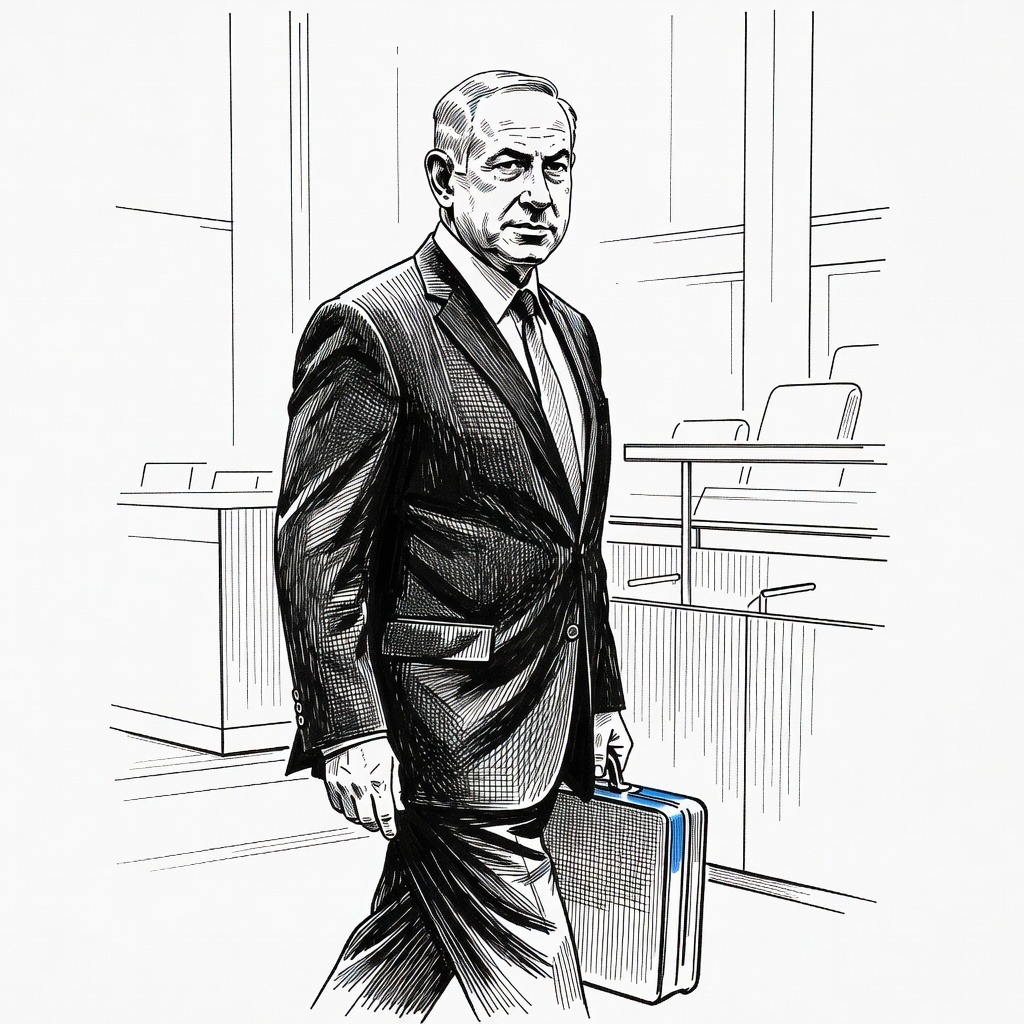
Netanyahu Arrives for UN Address Amid International Scrutiny and Public Dispute with New York Mayor

Illustration for: Netanyahu Arrives for UN Address Amid International Scrutiny and Public Dispute with New York Mayor
AI-generated illustration. Visual interpretation does not represent real individuals or scenes.

THE BARE STORY

Israeli Prime Minister Benjamin Netanyahu arrived in New York on Thursday to address the United Nations General Assembly amid extensive international criticism over Israel's military actions in the Gaza Strip and the West Bank. Netanyahu's office indicated he would hold bilateral meetings with several world leaders and depart shortly after his speech, with his address expected to focus on Iran and defend Israel's regional military operations.

The visit coincides with sharp rebukes from European and Middle Eastern leaders speaking at the assembly. Officials from the United Kingdom, France, and Jordan criticized Israel's actions in Gaza and the West Bank, pointing to civilian casualties, restrictions on humanitarian aid, and alleged rights violations. Netanyahu rejected the criticism, describing remarks by French President Emmanuel Macron as absurd and arguing that militant networks continue to carry out regular attacks in the West Bank.

The prime minister's arrival also triggered a sharp dispute with New York City Mayor Zohran Mamdani. Mamdani characterized Netanyahu as a war criminal and argued that an International Criminal Court arrest warrant against him should be enforced, though the mayor subsequently acknowledged that local authorities lacked the jurisdiction to detain him.

In response, Netanyahu and Israeli Ambassador to the UN Danny Danon accused Mamdani of supporting Hamas and inciting hostility against Jewish residents, allegations the Israeli officials stated would be addressed during the visit. Danon also called for the mayor's arrest, citing an aborted July meeting between a city official and an Iranian diplomat.

Same Facts. Different Perspectives.

Two AI models. Two viewpoints. One factual foundation.

• Enforce International Legal Accountability International legal frameworks must supersede national impunity to prevent unchecked state violence. Leaders facing scrutiny over civilian casualties and aid restrictions in the Gaza Strip and the West Bank must be held to global standards, including International Criminal Court mechanisms. When allied leaders from the United Kingdom, France, and Jordan identify systemic rights violations, dismissing these concerns damages the credibility of international law.

• Prioritize Universal Humanitarian Protection The protection of non-combatants and unhindered access to humanitarian aid represent foundational obligations during armed conflict. Restricting vital supplies and inflicting heavy civilian tolls cannot be justified as secondary consequences of counter-militancy operations. Subordinating basic human survival to strategic military objectives creates lasting regional destabilization and normalizes collective harm.

• Defend Legitimate Political Dissent Civic and institutional actors possess a necessary duty to challenge human rights abuses without facing existential political smearing. Equating calls for legal accountability with direct support for terrorism weaponizes security rhetoric to silence domestic and international dissent. Such retaliatory framing evades accountability for state actions and erodes protections for open political discourse.

How it may affect me

As a U.S. reader:

• In the short term, you may see heightened political and jurisdictional conflicts between local municipal officials and visiting foreign dignitaries over international warrants and diplomatic protocols.

• You may observe increased domestic community friction, particularly in major cities, following official disputes regarding the safety of Jewish residents and alleged support for foreign militant groups.

• Public discourse and civic dissent regarding foreign conflicts and humanitarian issues may face intensified rhetorical pushback and security-related accusations from political leaders.

• In the long term, you may encounter evolving legal and political standards regarding whether local municipal governments can engage in foreign policy or interact with foreign diplomats.

Read the story at

Note: All TheBareNews content is AI-generated. For additional context, reporting, and updates, you are invited to explore the news outlets linked above.