
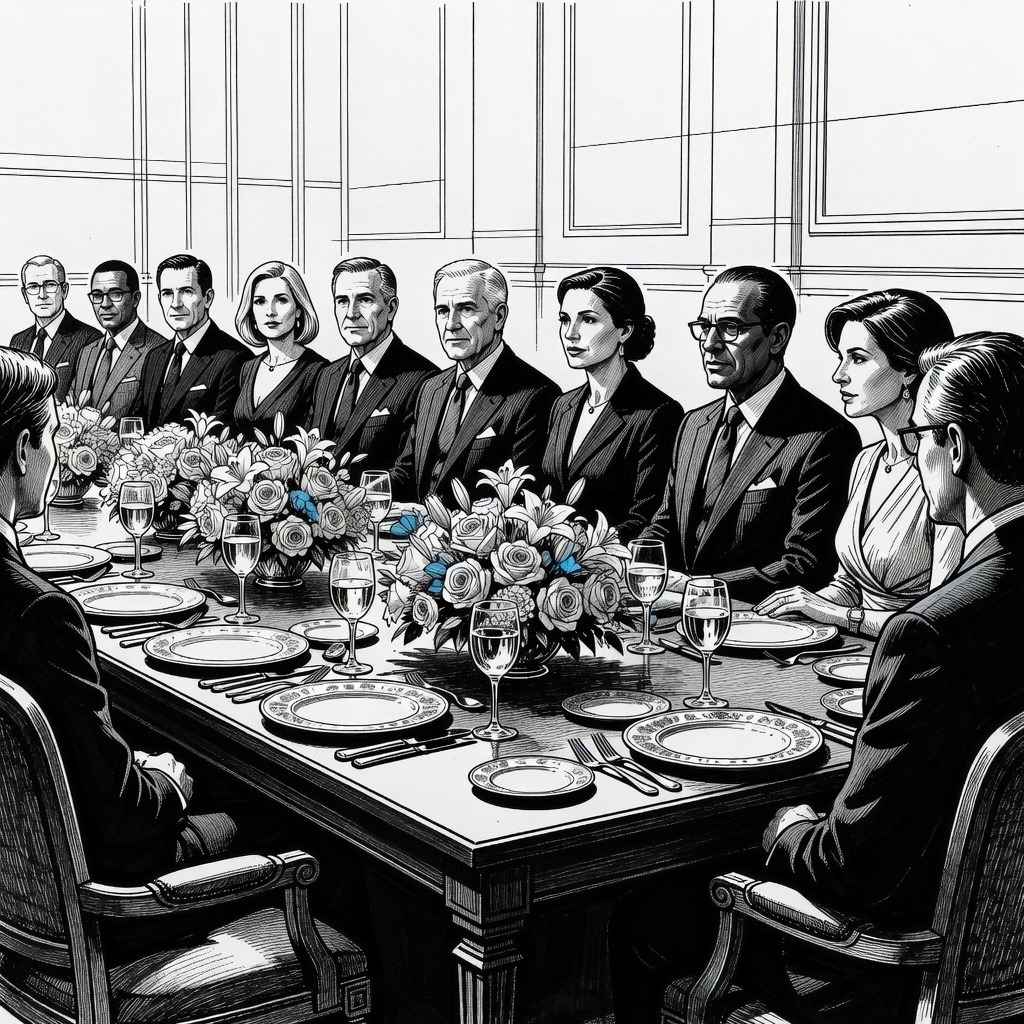
• Challenging Corporate Diplomatic Influence Directly seating multinational executives like Tim Cook, Jeff Bezos, and Elon Musk alongside state leaders risks subordinating public accountability to private commercial interests. When foreign policy negotiations prioritize the commercial agendas of elite corporate leaders, democratic governance is displaced by private corporate diplomacy. Bilateral diplomacy must prioritize systemic labor standards, civil liberties, and regulatory guardrails rather than facilitating market access for tech conglomerates.
• Sidelining Public Democratic Oversight Elevating artificial intelligence to the summit's central topic behind closed doors with tech CEOs bypasses essential regulatory and legislative scrutiny. Industry leaders like Sam Altman, Jensen Huang, and Satya Nadella operate with fiduciary duties to shareholders rather than obligations to the public good. Negotiating the future of powerful emerging technologies in elite, non-transparent settings threatens to lock in corporate-friendly terms that disregard broader social, ethical, and consumer safety concerns.
• Conceding Ethics for Market Access Engaging corporate representatives alongside state-backed Chinese entities risks diluting necessary trade restrictions designed to safeguard international rules. American tech and financial firms negotiating across from firms like BYD, CATL, and Bank of China signal a willingness to compromise public interest protections in exchange for bilateral commerce. This creates severe systemic risks, as corporate desire for market expansion can undermine strategic blacklists and human rights protections.
How it may affect me
As a U.S. reader:
• Bilateral discussions on artificial intelligence between state leaders and major tech executives could shape future consumer safety rules, ethical standards, and technology regulations without standard legislative oversight.
• Direct negotiations involving corporate leaders across tech, finance, and automotive sectors may lead to changes in trade blacklists and cross-border regulatory restrictions, altering commercial activity and supply chains.
• In the long term, high-level diplomatic involvement by multinational corporations could weaken public labor and civil liberty protections in favor of market access, or alternatively reinforce national technological leverage and geopolitical stability.