
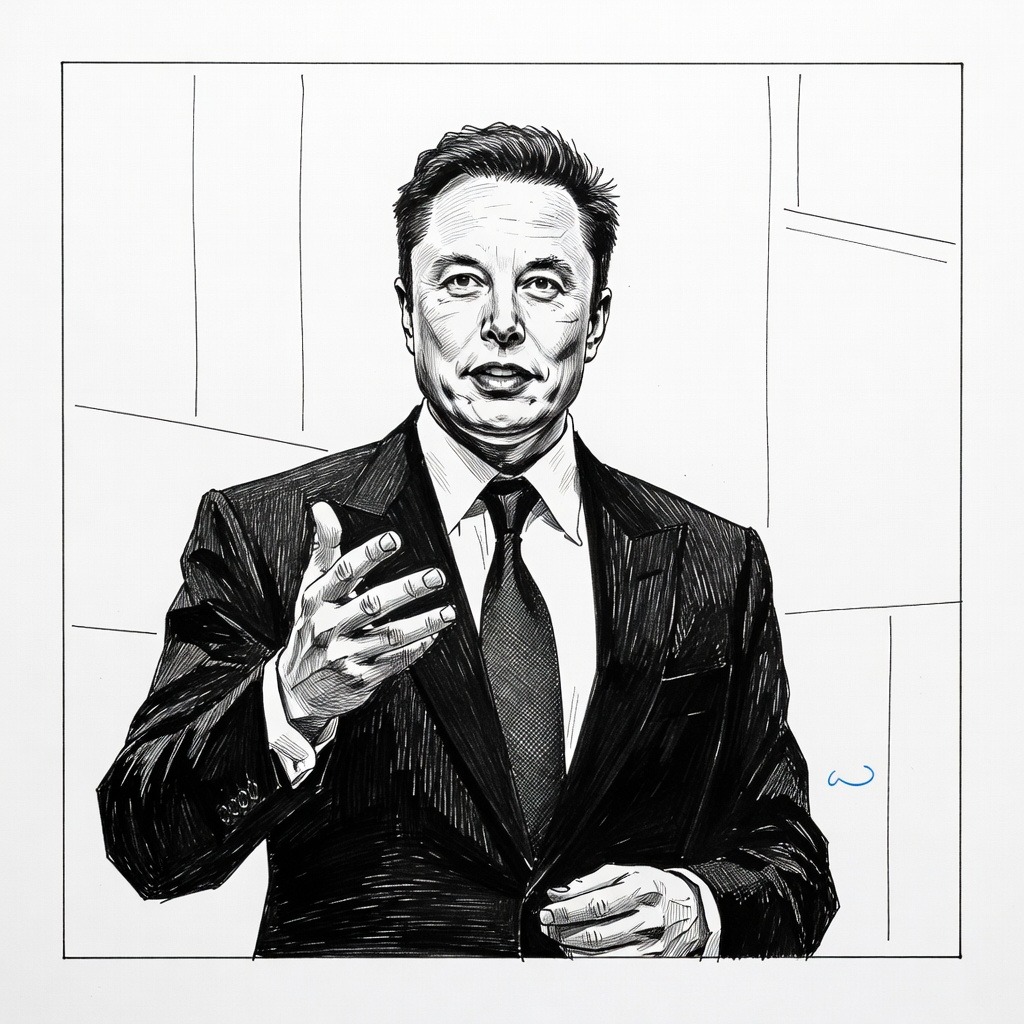
Technology Leaders and Officials Clash Over Proposed Artificial Intelligence Slowdown

Illustration for: Technology Leaders and Officials Clash Over Proposed Artificial Intelligence Slowdown
AI-generated illustration. Visual interpretation does not represent real individuals or scenes.

THE BARE STORY

Technology executives and government officials are divided over whether to slow the development of advanced artificial intelligence models to address safety risks. Anthropic Chief Executive Officer Dario Amodei, OpenAI CEO Sam Altman, and SpaceX CEO Elon Musk have expressed support for moderating the pace of capability advancements, while other industry leaders argue that market mechanisms and developer liability provide sufficient safeguards.

Proponents of precautionary measures have suggested multiple safety frameworks. Musk proposed that major American developers and leading Chinese firms cross-test each other's models before releasing them, though he acknowledged competitors have not formally agreed to the plan. Amodei has advocated for moderating model rollouts and embedding third-party evaluators into laboratories, while OpenAI Chief Financial Officer Sarah Friar stated that the company is prepared to pace growth if researchers recommend safety interventions.

In contrast, Meta CEO Mark Zuckerberg and Nvidia CEO Jensen Huang endorsed a market-driven approach rather than development pauses. Zuckerberg stated that commercial developers face significant liability risks if their systems cause harm, noting that competition and trust will drive alignment with human values. Huang similarly argued that creators must take responsibility for their products under existing legal frameworks, adding that companies can pursue both speed and safety at the same time.

Government officials have largely pushed back against calls for mandatory slowdowns or expanded oversight. President Donald Trump dismissed warnings regarding catastrophic risks and argued that restricting domestic research would give China a competitive advantage. Additionally, a spokesperson for China's Foreign Ministry criticized appeals for a development pause as fear-driven rhetoric, while U.S. National Economic Council Director Kevin Hassett maintained that the private sector is the appropriate venue to address safety concerns.

Same Facts. Different Perspectives.

Two AI models. Two viewpoints. One factual foundation.

• Mandate Independent Safety Guardrails Unchecked technological acceleration generates systemic externalities that private corporate incentives cannot self-regulate. Anthropic CEO Dario Amodei's advocacy for embedding third-party evaluators into laboratories and OpenAI CFO Sarah Friar's readiness to pace growth upon researcher recommendations reflect the vital need for institutionalized oversight. Public welfare requires preventative verification before irreversible capabilities are deployed, rather than hoping corporate self-interest protects society from uncontained fallout.

• Enforce Cooperative Multilateral Verification Existential technological hazards transcend national borders and cannot be resolved through unregulated competitive races. Elon Musk’s proposal for American and Chinese developers to cross-test frontier models before commercial release recognizes that shared transparency is critical to averting catastrophic failure. Without collaborative, institutionalized verification protocols, unconstrained competitive friction forces developers to compromise rigorous safety standards in the name of speed.

• Reject Reactive Liability Illusions Relying strictly on post-deployment tort liability is an inadequate shield against high-impact, systemic risks. While commercial leaders like Mark Zuckerberg and Jensen Huang argue that existing legal accountability drives human alignment, waiting for catastrophic harm to manifest shifts the burden of damage onto the public. Precautionary intervention and deliberate pacing are necessary structural safeguards to prevent commercial pressure from prioritizing rapid deployment over human safety.

How it may affect me

As a U.S. reader:

• In the short term, your access to new artificial intelligence products will depend on whether developers implement voluntary safety pauses and third-party evaluations or continue rapid commercial releases driven by market competition.

• Your protection against potential malfunctions or damages will rely on existing corporate liability and post-deployment legal frameworks rather than government-mandated preventative safety rules.

• In the long term, maintaining the pace of domestic artificial intelligence research is intended to safeguard national economic vitality and prevent the loss of technological competitiveness to foreign rivals like China.

Read the story at

Note: All TheBareNews content is AI-generated. For additional context, reporting, and updates, you are invited to explore the news outlets linked above.