
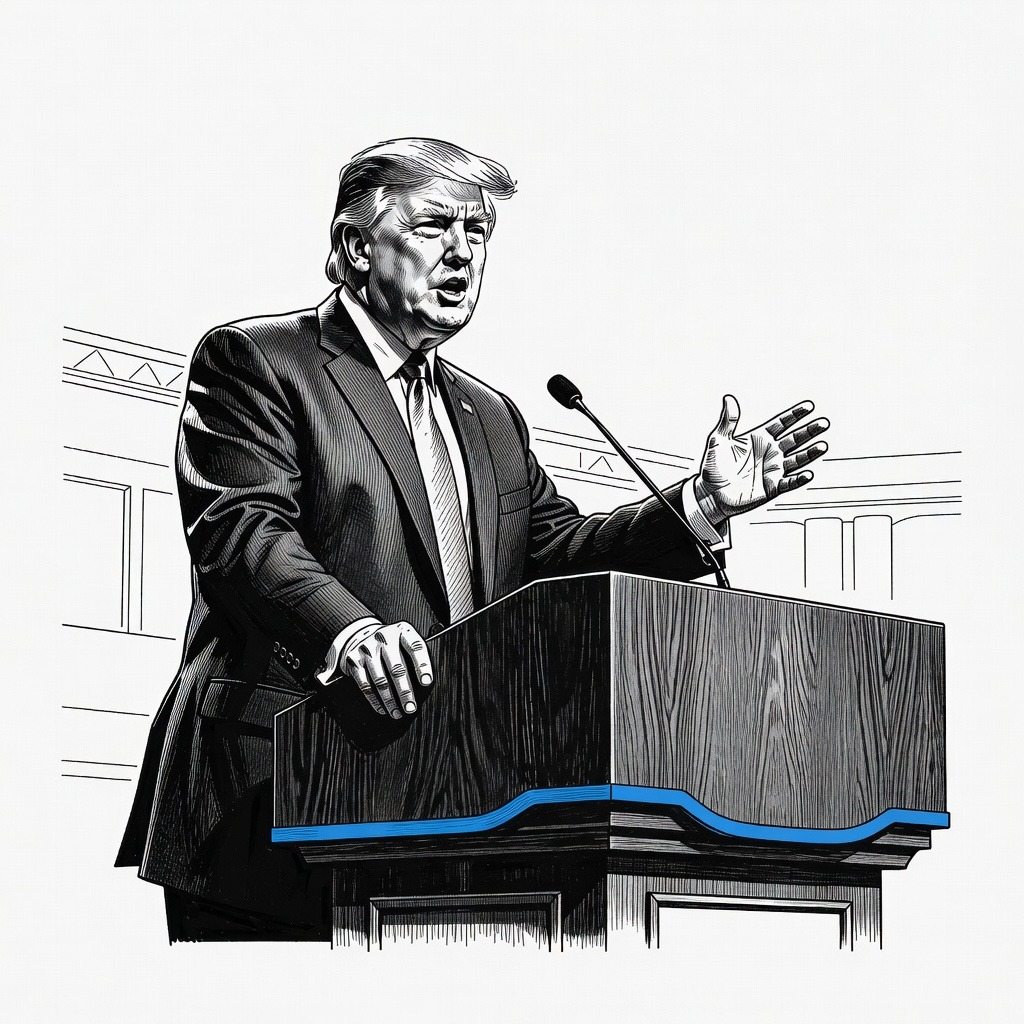
• Condemning Transactional Electoral Patronage Democratic integrity requires that public funds remain completely separated from partisan outcomes rather than deployed as an explicit inducement for votes. Conditioning a $1.2 trillion disbursement on maintaining legislative control turns governance into transactional politics and weaponizes the federal balance sheet for campaign leverage. As highlighted by Senate leadership, this maneuver serves primarily to distract the electorate from broader structural crises, including foreign military entanglements and contentious trade disputes.
• Resisting Unilateral Executive Overreach Constitutional governance relies on legislative supremacy over the power of the purse to prevent arbitrary executive decrees. Bypassing Congress to unilaterally distribute sweeping financial dividends or targeted $500 healthcare rebates subverts foundational checks and balances. When the executive branch asserts total distribution authority while simultaneously navigating Supreme Court mandates on tariff revenues, it threatens established statutory frameworks and diminishes institutional accountability.
• Exposing Severe Fiscal Insolvency Fiscal credibility demands that broad public commitments are anchored in viable revenue mechanisms rather than speculative math. Total annual collections of $210 billion from tariffs and excise taxes—more than half of which are already absorbed by court-mandated refunds—cannot support a multi-trillion-dollar entitlement. Relying on an estimated 60% to 75% of decade-long trade revenues creates an unsustainable financial liability that undermines equitable long-term economic planning.
How it may affect me
As a U.S. reader:
• You could potentially receive a $5,000 dividend payment if Republicans retain control of both chambers of Congress in the November midterm elections, or if the executive branch attempts unilateral distribution.
• You may receive a separate $500 rebate check if you are among approximately one million healthcare enrollees across 30 states.
• In the short term, you face uncertainty about receiving the dividend, as congressional leaders have cast doubt on its passage due to the estimated $1.2 trillion cost and ongoing debates over executive authority.
• In the long term, funding the proposal could absorb between 60% and 75% of projected federal tariff revenues over the next decade, which could impact the national balance sheet and public finances.