
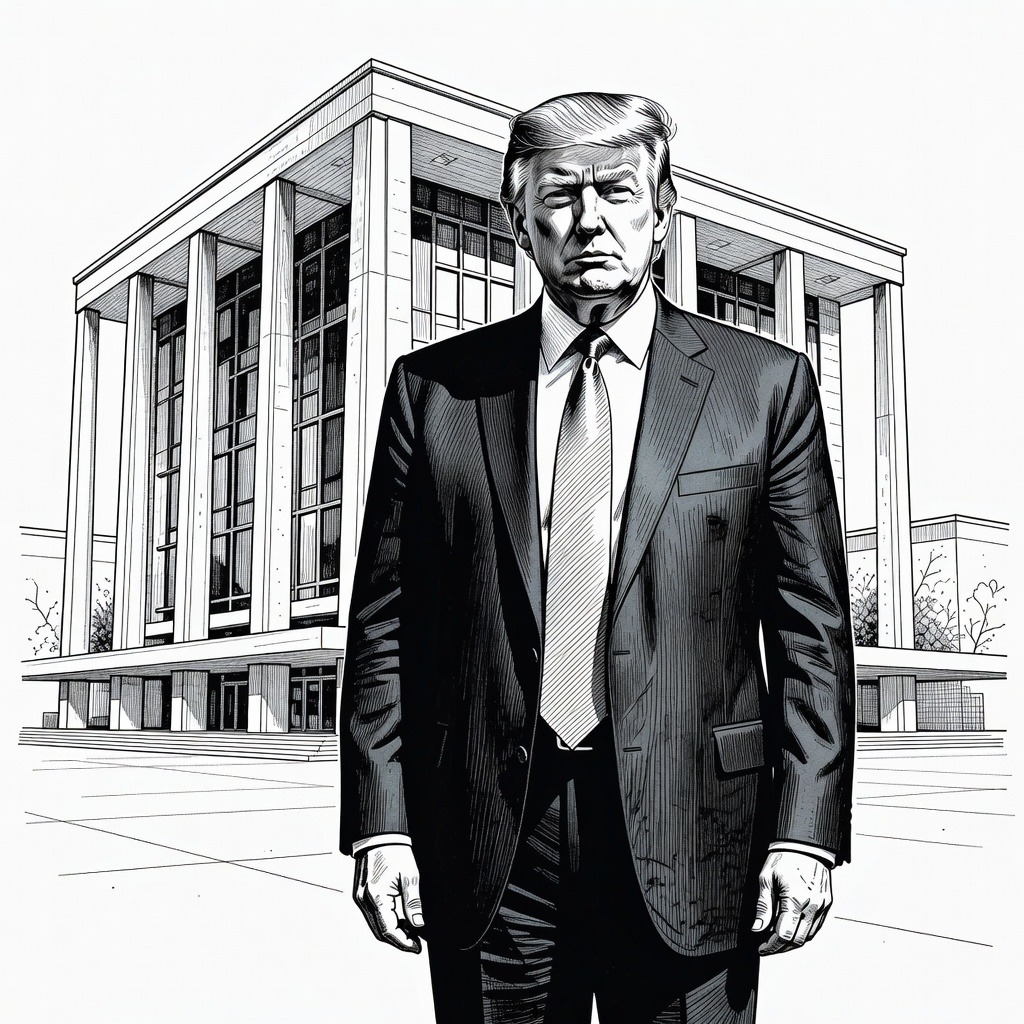
• Enforcing Statutory Memorial Mandates Public civic institutions belong to the national commons and must remain protected from partisan branding or personal co-optation. The legal challenge against altering the John F. Kennedy Center emphasizes that federal law explicitly governs designations within national memorials. A board resolution cannot supersede established statutory provisions, ensuring that historic public landmarks retain their designated purpose rather than reflecting transient political influence.
• Checking Executive Court Defiance Judicial oversight serves as an essential mechanism to halt institutional overreach and compel adherence to prior legal rulings. Representative Joyce Beatty’s motion reveals that the board pursued naming modifications despite previous court orders requiring the removal of the president's name. Halting the installation prevents further physical degradation to the marble facade while maintaining the status quo against administrative circumvention.
• Resisting Transactional Public Space Allowing naming rights in exchange for fundraising converts public stewardship into a transactional commodity for political figures. When civic infrastructure relies on financial relief to justify memorial inscriptions, it threatens the integrity of national cultural spaces. Preserving these boundaries guarantees that public honors reflect enduring national significance rather than financial leverage or political patronage.
How it may affect me
As a U.S. reader:
• In the short term, visitors to the Kennedy Center will see the facility's current naming and appearance maintained without modifications through at least Oct. 8.
• Pausing the installation prevents immediate additional physical damage to the public landmark's marble facade while the court reviews the board's actions.
• In the long term, the court's decision will determine whether the institution can use commemorative plaza inscriptions to support fundraising for structural repairs and financial deficits.