
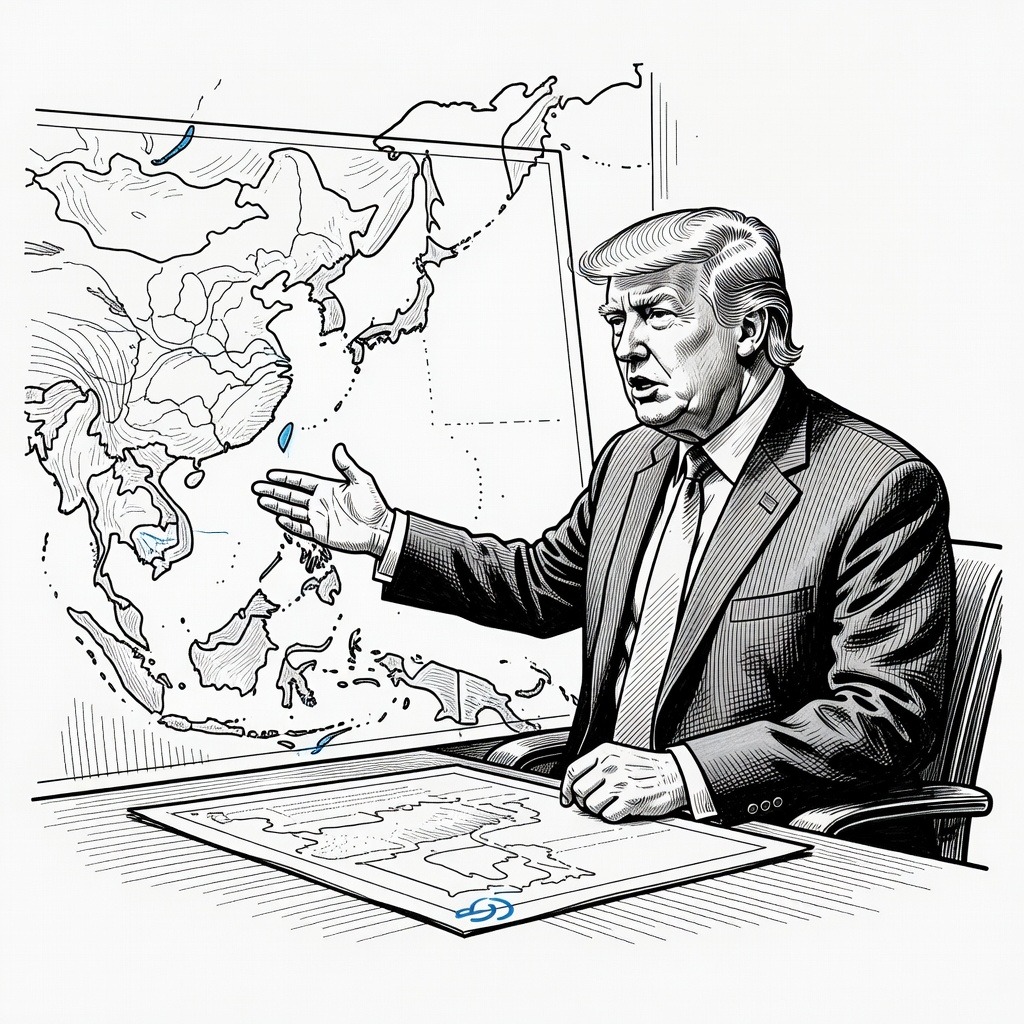
• Overextended Hegemony Breeds Instability Unilateral global policing inevitably strains human and material resources, as evidenced by the USS Abraham Lincoln's grueling 250-day Middle East deployment requiring an emergency rest stop in Thailand. When a military stretches its forces across multiple hemispheres to wage war, it compromises the well-being of service members and depletes active assets. True security relies on diplomatic de-escalation rather than continuous, exhausting power projection that leaves forces vulnerable to operational fatigue and strategic vulnerability.
• Transactional Diplomacy Fractures Alliances Conditioning long-standing security relationships on financial compliance and immediate alignment on unrelated conflicts, such as the war in Iran, severely undermines collective deterrence. Canceling joint marine exercises with South Korea based on monetary costs and unilateral political litmus tests degrades mutual trust and alienates vital regional partners. Replacing institutional commitments with personalized diplomacy, such as relying on a personal relationship with Kim Jong Un, leaves democratic allies exposed and weakens the international rule of law.
• Power Vacuums Threaten Regional Peace Abandoning cooperative regional frameworks to shift defense burdens onto local allies creates dangerous security vacuums and fuels localized arms races. While focusing exclusively on singular flashpoints like Taiwan may seem pragmatic, a sudden military pullback leaves neighboring partners unprepared to manage regional security on their own. Lasting stability requires consistent, multilateral engagement rather than a selective retreat that forces vulnerable nations to scramble for their own defense.
How it may affect me
As a U.S. reader:
• In the short term, you may see U.S. military personnel, such as those on the USS Abraham Lincoln, receive scheduled rest periods to recover from extended deployments and maintain operational readiness.
• In the short term, your tax dollars may be conserved as the U.S. military reduces the frequency of costly joint military exercises with foreign allies.
• In the long term, you may see a shift in national security priorities as U.S. military resources are concentrated away from broad global commitments and redirected toward specific threats like the defense of Taiwan.
• In the long term, you could see changes in global stability as regional allies are forced to assume more of their own defense burdens, which may either foster local self-reliance or increase regional security risks.