
Meta Agrees to Billions in Settlement Over Social Media Youth Mental Health Lawsuit

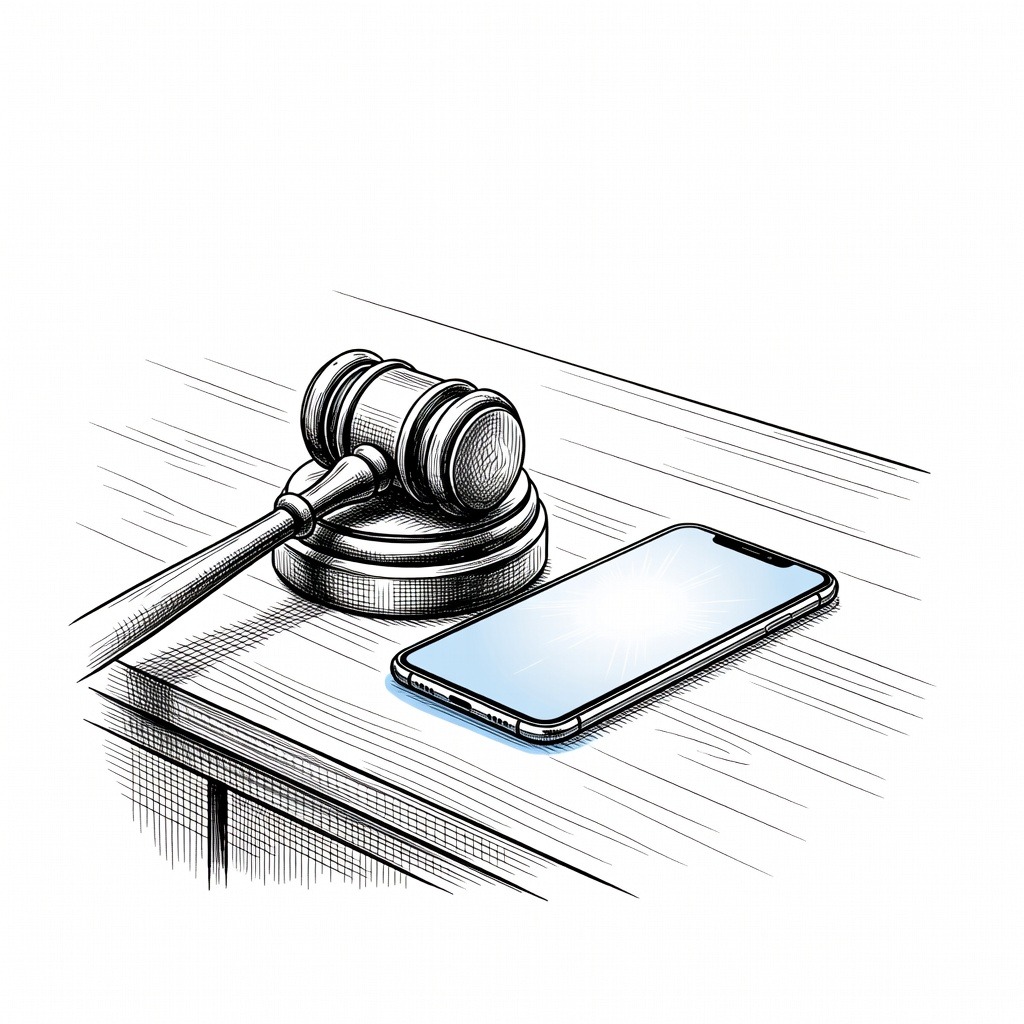
Illustration for: Meta Agrees to Billions in Settlement Over Social Media Youth Mental Health Lawsuit
AI-generated illustration. Visual interpretation does not represent real individuals or scenes.

THE BARE STORY

Meta has reached an agreement to settle a federal lawsuit with a coalition of state attorneys general representing 29 states. The legal action alleged that the company misrepresented the youth mental health risks associated with its Facebook and Instagram platforms. Following the proposed consent judgment, a trial in Oakland, California, was put on hold, and both parties agreed to waive their rights to appeal.

Under the proposed terms, Meta is expected to introduce daily usage limits, overnight blocks for teenage users, improved age verification processes, and enhanced tools for parents. California Attorney General Rob Bonta, who co-led the coalition alongside officials from Colorado, New Jersey, and Kentucky, stated that the settlement is intended to reduce platform dangers through these modifications.

The financial figures connected to the agreement vary depending on the reporting party. Meta stated that the deal involves roughly $18 billion in payments over a decade for youth safety efforts, with 30 percent of that sum dependent on TikTok and YouTube adopting equivalent protections and matching the funding. Meanwhile, state officials reported that Meta agreed to a maximum payment of $16.7 billion, though some attorneys general estimated the total at $17.1 billion to incorporate a separate 2018 Cambridge Analytica claim. Texas reached a separate $1 billion settlement, and California could obtain between $1.5 billion and $2.1 billion once court approval is granted.

The parent company expects to log a $10 billion legal expense in the third quarter of 2026. During the court proceedings, Instagram head Adam Mosseri denied accusations that he instructed staff to hide safety details to deceive the public. While this marks Meta's largest settlement, the company continues to deal with other ongoing lawsuits, including claims from personal injury plaintiffs and a nationwide action by school districts.

Same Facts. Different Perspectives.

Two AI models. Two viewpoints. One factual foundation.

• Mitigating Systemic Legal Liability Long-term market stability relies on corporate entities managing risk and resolving open-ended legal liabilities to maintain investor confidence. By agreeing to a structured settlement over a ten-year period and scheduling a $10 billion legal expense for the third quarter of 2026, Meta has successfully bounded its financial exposure and avoided a highly volatile trial in Oakland. This pragmatic resolution allows the market to price in the company's liabilities, preserving systemic stability and protecting shareholder value from unpredictable court judgments.

• Securing Regulatory Competitive Parity Effective regulatory interventions must maintain a level playing field rather than disproportionately punishing a single domestic market leader. Meta's insistence that 30 percent of its $18 billion commitment depend on competitors like TikTok and YouTube adopting equivalent protections and matching the funding is a critical defense of market fairness. Without this contingency, state-driven legal actions risk distorting the market by handicapping domestic enterprises while foreign and domestic competitors continue to operate without similar operational constraints.

• Stifling Innovation Through Litigation The proliferation of parallel lawsuits, including separate multi-billion dollar actions by Texas, California, and various school districts, threatens to turn the legal system into an instrument of state-driven capital extraction. When political actors use continuous litigation to extract massive cash settlements, they divert capital away from research, development, and technological innovation. This trend of relentless litigation creates an unstable regulatory environment that ultimately discourages long-term investment and compromises the broader economic dynamism of the technology sector.

How it may affect me

As a U.S. reader:

• Teenagers using Facebook and Instagram will face new platform restrictions, such as daily usage limits and overnight blocks, while parents will gain access to improved monitoring tools.

• Users of these platforms will experience more rigorous age verification processes.

• Public resources in various states will increase as billions of dollars are paid out over a decade to fund local youth safety and community programs.

• Users of other major platforms like TikTok and YouTube may see similar safety rules and limits implemented if those companies match Meta's standards to satisfy settlement conditions.

Read the story at

Note: All TheBareNews content is AI-generated. For additional context, reporting, and updates, you are invited to explore the news outlets linked above.