
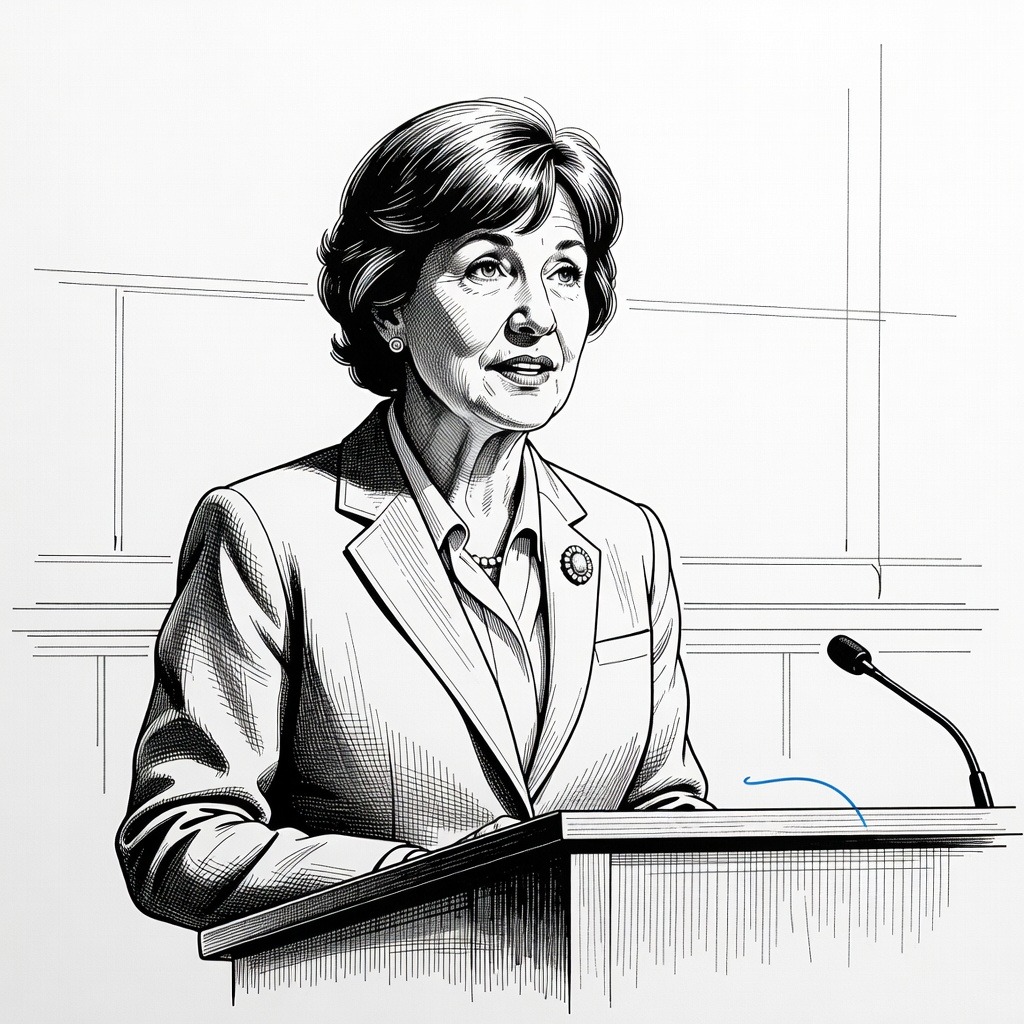
• Shielding the Franchise from Suppression Social progress and civil liberties rely on a frictionless franchise where every eligible voter can easily cast a ballot. By allowing an executive order to restrict mail-in voting through the Postal Service, the Supreme Court places administrative hurdles that disproportionately disenfranchise vulnerable citizens, like the seniors Senator Susan Collins highlighted. Forcing postal workers to verify citizenship status before delivering ballots introduces unnecessary systemic friction, turning a public service into an instrument of voter exclusion.
• Exposing Partisan Structural Contradictions Holding institutional power accountable requires challenging executive overreach and policies that harm local communities, such as punitive tariffs on Canadian goods. While Senator Collins' public divergence on mail-in restrictions, tariffs, and deportation represents a tactical realization of these harms, her record remains tethered to a party that systematically restricts voter access. True representation requires a complete rejection of these restrictive frameworks rather than selective, self-preserving opposition in a state won by Kamala Harris.
• Courting Chaos to Limit Participation Erecting restrictive barriers so close to midterm elections threatens the foundational stability of the democratic process. Implementing untested postal delivery restrictions risks massive administrative confusion, delayed ballots, and widespread disenfranchisement as warned by Colorado Secretary of State Jena Griswold. The long-term danger is a degraded civic environment where citizens lose faith in election outcomes because the state actively engineered obstacles to their participation.
How it may affect me
As a U.S. reader:
• In the short term, citizens using mail-in voting for the upcoming midterm elections may face ballot delivery delays or administrative confusion as the Postal Service implements new delivery restrictions.
• Elderly voters and other vulnerable groups may encounter greater difficulty casting mail-in ballots due to new verification hurdles.
• Postal workers may experience increased operational friction as they adapt to requirements to verify citizenship status before delivering mail-in ballots.
• U.S. businesses and consumers, particularly in states with close trade ties to Canada, could experience economic impacts if proposed fifty percent tariffs on Canadian goods are implemented.