
Michigan Senate Candidate Abdul El-Sayed Faces Criticism From JD Vance and Scrutiny Over PAC Donations

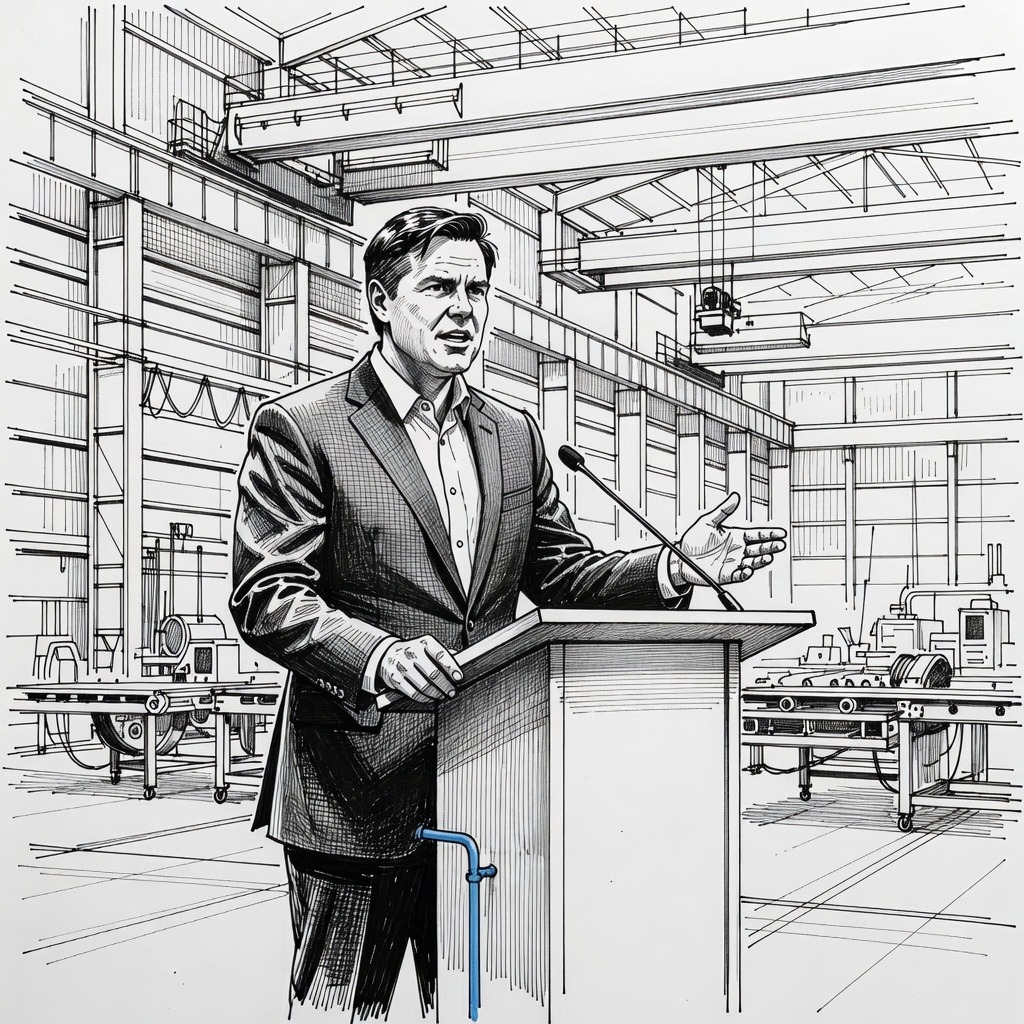
Illustration for: Michigan Senate Candidate Abdul El-Sayed Faces Criticism From JD Vance and Scrutiny Over PAC Donations
AI-generated illustration. Visual interpretation does not represent real individuals or scenes.

THE BARE STORY

Vice President JD Vance criticized Michigan Democratic Senate nominee Abdul El-Sayed during a speech at an Ohio steel plant on Friday, claiming that the Democratic Party has abandoned its working-class roots. Vance pointed to El-Sayed’s past remarks at a 2022 Council on American-Islamic Relations (CAIR) event, where El-Sayed compared an Oklahoma ballot measure banning Sharia law to the Trail of Tears and the Tulsa race massacre. El-Sayed’s campaign did not immediately respond to requests for comment regarding Vance's remarks.

The speech coincides with newly released campaign finance records showing that the Unity & Justice Fund, a super PAC established by CAIR, donated $175,000 in July to Fighting for Michigan PAC, the primary outside group supporting El-Sayed’s Senate campaign. Other notable donors to the PAC include El-Sayed's father-in-law, Tayeb Jukaku, who contributed $300,000, and the Institute for Middle East Understanding, which donated $400,000. The filings also showed El-Sayed's campaign paid $82,500 to an organization led by Detroit pastor Horace Sheffield, who endorsed El-Sayed.

El-Sayed, who is running against Republican Mike Rogers after defeating Representative Haley Stevens in the primary, previously accused Stevens's backers at the American Israel Public Affairs Committee of foreign election intervention. Some Jewish leaders have accused El-Sayed of fostering antisemitism due to his past criticisms of Israel. El-Sayed has previously responded to these concerns by stating he is committed to Jewish safety and opposes all forms of antisemitism.

The financial backing from the CAIR-linked PAC has also drawn attention. The Department of Justice previously labeled CAIR as an unindicted coconspirator in a 2008 terrorism investigation, and the governors of Florida and Texas have designated the group as a terrorist organization. Additionally, the White House condemned CAIR’s executive director and removed the group from its antisemitism working group following his comments regarding the October 7 attacks on Israel.

Same Facts. Different Perspectives.

Two AI models. Two viewpoints. One factual foundation.

• Enforcing Security Standards Preserving national security and the rule of law requires strict vetting of political campaigns and their financial backers. Traditionalists interpret the $175,000 donation from the CAIR-linked Unity & Justice Fund as a profound risk, given the group's designation as an unindicted coconspirator in a 2008 federal terrorism investigation and its terrorist designations in Florida and Texas. The White House’s decision to remove the group from its antisemitism working group further confirms that aligning with such organizations compromises the integrity of public office.

• Preserving Historical Proportion Maintaining social order and institutional continuity requires safeguarding national history from political exploitation and rhetorical distortion. Traditionalists reject El-Sayed’s 2022 comparison of an Oklahoma ballot measure to the Trail of Tears and the Tulsa race massacre as an attempt to delegitimize lawful democratic processes. Framing standard legislative oversight of religious laws in the same category as historic mass atrocities is viewed as a dangerous escalation that deepens polarization and erodes civic trust.

• Exposing Financial Hypocrisy Upholding systemic integrity requires consistent application of ethical standards across all political actors. This camp views El-Sayed's past accusations of foreign intervention against Haley Stevens’s AIPAC donors as hypocritical when contrasted with his own PAC’s heavy reliance on $400,000 from the Institute for Middle East Understanding and $300,000 from his father-in-law, Tayeb Jukaku. Additionally, the $82,500 payment to an organization led by an endorsing pastor suggests transactional politics rather than authentic grassroots representation, undermining his claim to represent the working class.

How it may affect me

As a U.S. reader:

• You may experience heightened political polarization and a loss of civic trust as political campaigns use intense historical comparisons to debate local religious laws and minority rights.

• You can expect increased public scrutiny and debate over the ethical standards of campaign finance, particularly regarding candidates accepting large donations from interest groups with controversial security or political records.

• Your local community engagement could be affected as political campaigns increasingly fund local religious and community leaders to build voter coalitions, which may be viewed either as grassroots empowerment or transactional politics.

• In the long term, the debate over this Senate race may shape how future federal policymakers balance national security standards with the protection of civil rights for minority groups.

Read the story at

Note: All TheBareNews content is AI-generated. For additional context, reporting, and updates, you are invited to explore the news outlets linked above.