
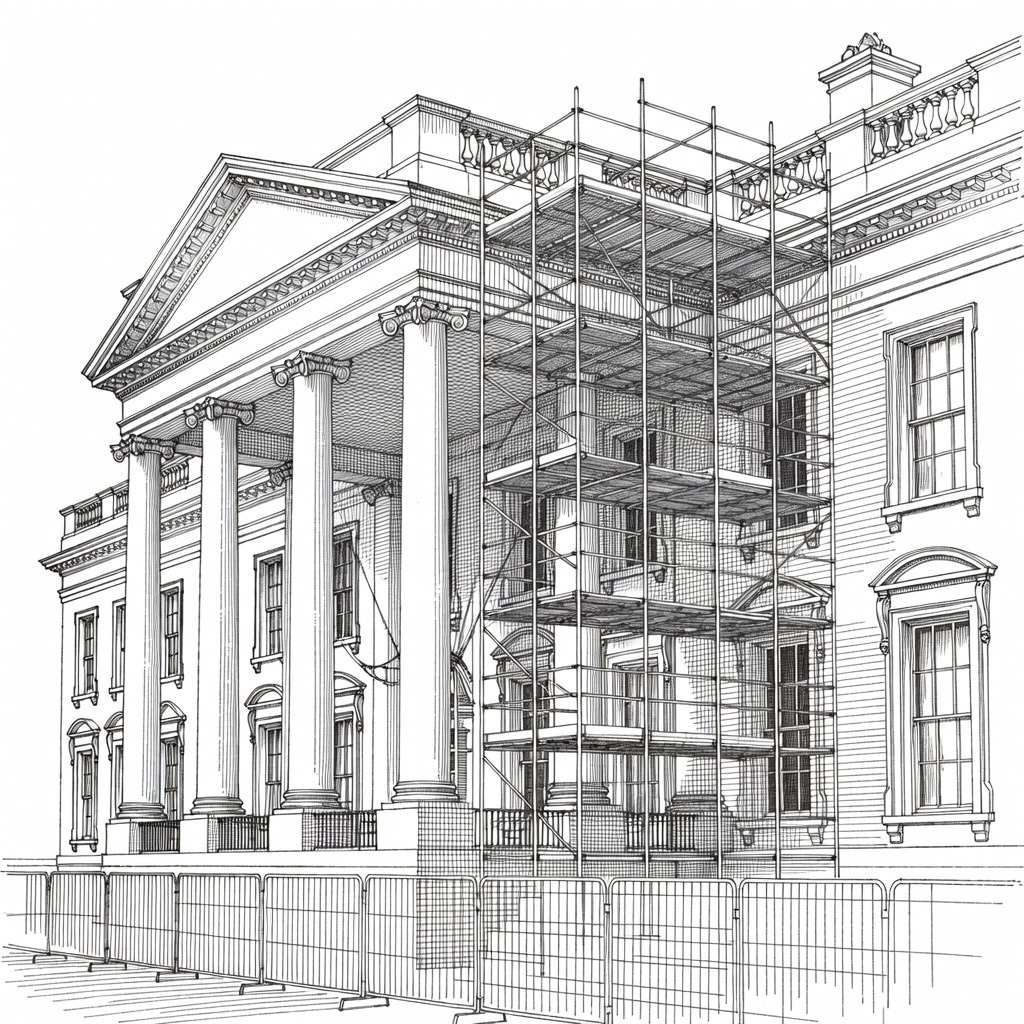
• Curbing Executive Overreach The value of constitutional checks and balances is violated when the executive branch bypasses required judicial and congressional reviews. Allowing the $300 million to $400 million project to proceed via a temporary administrative stay undermines the authority of co-equal branches of government. By skirting established oversight mechanisms to build the massive complex, the administration erodes institutional accountability and sets a dangerous precedent for unilateral executive action.
• Preserving Civic Heritage The protection of historic public landmarks is a core duty of government stewardship, making the demolition of the East Wing an irreversible cultural loss. The National Trust for Historic Preservation’s lawsuit represents a defense of public trust against executive destruction. Demolishing this historic site for a 90,000-square-foot ballroom disregards both preservation standards and the democratic will of the 56 percent of Americans who disapprove of the demolition.
• Resisting Vanity Expenditures Public resources must be directed toward collective welfare rather than indulgent executive monuments that lack public alignment. Labeling the construction a "vanity-driven project" emphasizes the misallocation of taxpayer funds during a time of broader economic needs. The risk of allowing this construction to continue is the normalization of unchecked executive spending on projects that lack broad legislative consent.
How it may affect me
As a U.S. reader:
• Your federal tax dollars, estimated between 300 million and 400 million dollars, will continue to fund this massive construction project rather than being directed toward broader economic needs or public welfare.
• You will see the permanent and irreversible loss of the historic East Wing, a national civic landmark that more than half of surveyed Americans disapproved of demolishing.
• Over the long term, you may benefit from enhanced national security and diplomatic capabilities through a fortified executive command center featuring bomb shelters, a hospital, and a drone port.
• The Supreme Court's decision to temporarily allow construction despite ongoing lawsuits could set a precedent for how future executive projects proceed, potentially altering government accountability and the balance of power.