
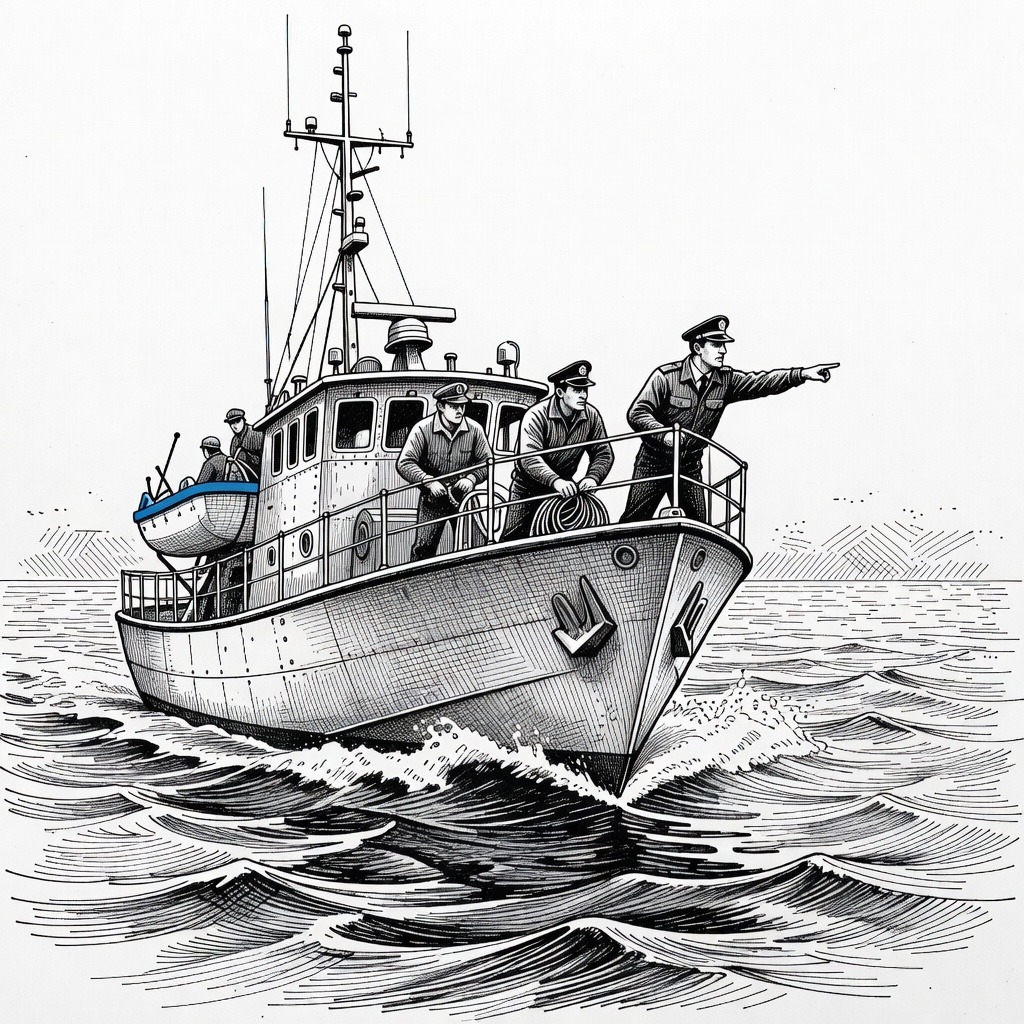
• Militarizing Civil Law Enforcement Prioritizing regional autonomy and human-centric security leads to profound skepticism toward deploying heavy foreign military assets to police domestic waters. While the U.S. and Ecuador aim to triple interdiction capabilities, relying on U.S. warships and Black Hawk helicopters risks over-militarizing the security space and eroding local sovereignty. This dynamic can foster a dependency on external superpowers rather than cultivating the resilient, civil institutions necessary for long-term domestic peace.
• Symptom-Targeting Asset Freezes Restricting economic options through sanctions on 15 individuals, 10 vessels, and targeted entities in Manta treats the symptoms of transnational crime rather than its structural root causes. Cartels exploit severe regional poverty to recruit vulnerable populations into their maritime operations to transport cocaine. Freezing assets does nothing to address the underlying socioeconomic inequality and lack of viable livelihoods that force individuals into the illicit economy in the first place.
• Escalation of Structural Violence Aggressive militarized interdiction campaigns risk driving highly organized groups, such as Los Choneros and Los Lobos, to adopt more violent tactics to protect their trade. High-impact operations, though seizing over 225,000 pounds of cocaine under Operation Pacific Viper, often fragment criminal cartels and spark bloody turf wars that escalate local violence. This cycle of militarized enforcement and cartel retaliation ultimately inflicts the heaviest toll on civilian populations, contributing to the country's historic homicide rate of 50 deaths per 100,000 residents.
How it may affect me
As a U.S. reader:
• You are legally prohibited from conducting business with the fifteen sanctioned Ecuadorian individuals and entities, whose U.S.-based assets have been frozen.
• In the short term, you may see a reduction in the volume of illicit cocaine entering the United States as U.S. warships and Coast Guard operations intercept smuggling networks.
• U.S. military and security assets, including two warships, helicopters, interceptor boats, and Coast Guard personnel, are being committed to active patrol operations in Ecuador.
• In the long term, these actions could either successfully neutralize drug networks before they reach domestic borders or cause organized cartels to adopt more violent tactics to protect their operations.