
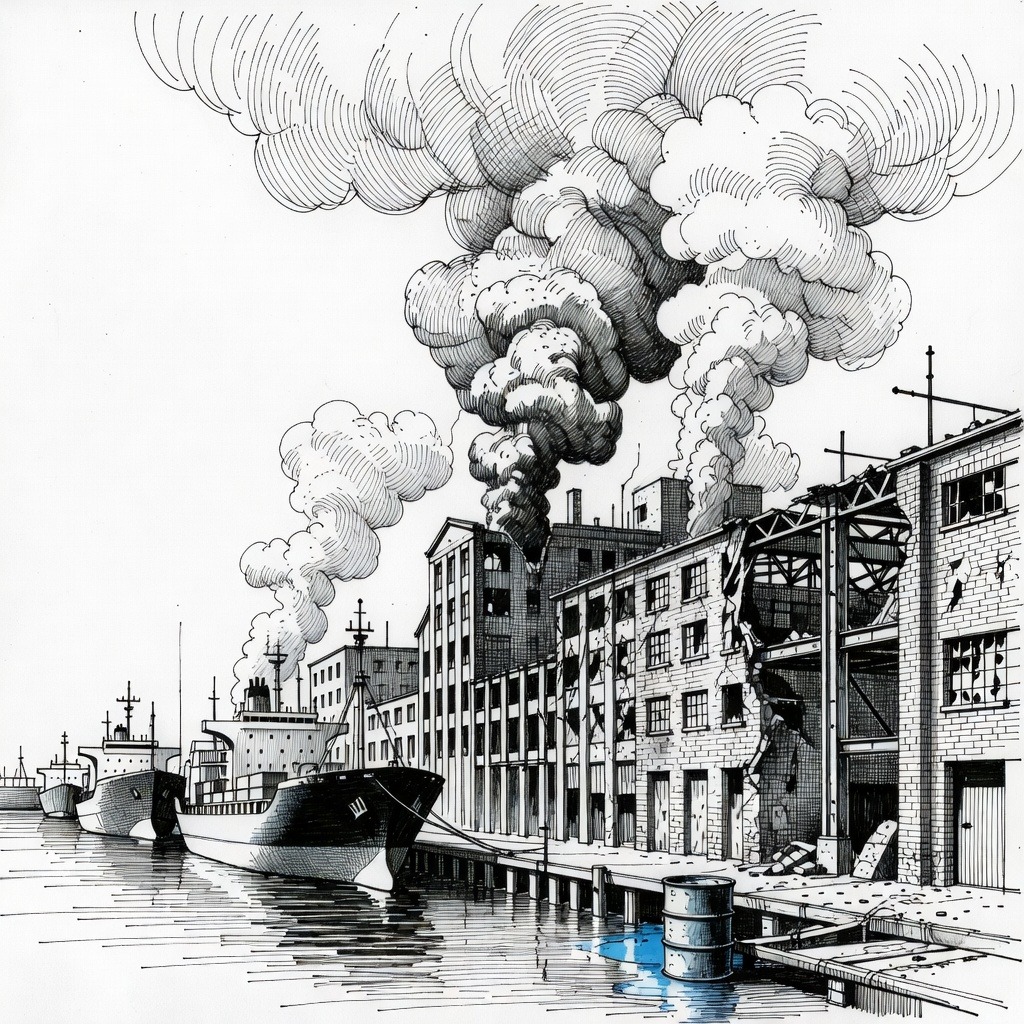
• Shielding Vulnerable Civilian Infrastructure Minimizing civilian suffering and upholding international law are the foundational imperatives for lasting security. The Russian strikes on the Izmail district in the southern Odesa region, which injured four people and damaged a Togo-flagged civilian vessel, demonstrate how expanding the target zone directly threatens non-combatants and global trade networks. When military strategies shift toward disabling ports and retail hubs like the Wildberries warehouse, the immediate consequence is the degradation of civilian life rather than military resolution. This escalatory cycle proves that widening the conflict's geographic scope only deepens the humanitarian crisis without offering a viable path to peace.
• Breaking the Escalatory Spiral Diplomatic engagement, rather than reciprocal destruction, remains the only sustainable mechanism to end hostilities. The massive exchange of 1,478 Ukrainian drones in a single day and Russia’s subsequent heavy retaliation on Ukrainian ports show that military escalation fails to produce a decisive victor. Instead of forcing Moscow into peace talks, high-impact economic strikes on commercial hubs only harden political resolve and invite retaliatory strikes that devastate Ukraine's critical infrastructure. Relying on sheer destructive capacity to force negotiations is a dangerous gamble that ignores historical patterns of conflict entrenchment.
• Preventing Broad Economic Deprivation Protecting the interconnected global economy and local supply chains is vital for post-war recovery and stability. The targeting of Russia's retail sector, specifically the Wildberries warehouse representing approximately 3% of Russia's gross domestic product, risks triggering unpredictable economic shocks that harm ordinary citizens. Simultaneously, attacks on the Danube River port facilities disrupt food security and civilian transport networks. Damaging these civilian-integrated logistics hubs creates long-term structural damage that will take decades to rebuild, ultimately undermining the economic foundation needed for eventual regional stability.
How it may affect me
As a U.S. reader:
• You may experience indirect impacts on food security and global trade networks due to ongoing damage inflicted on Ukrainian port facilities along the Danube River.
• The destruction of Western military equipment stored in Ukrainian cargo terminals may affect the distribution and strategic outcome of Western defense logistics and security assistance.
• In the long term, unpredictable global economic shocks could arise from the targeting of major retail and logistical infrastructure representing a significant portion of the Russian economy.