
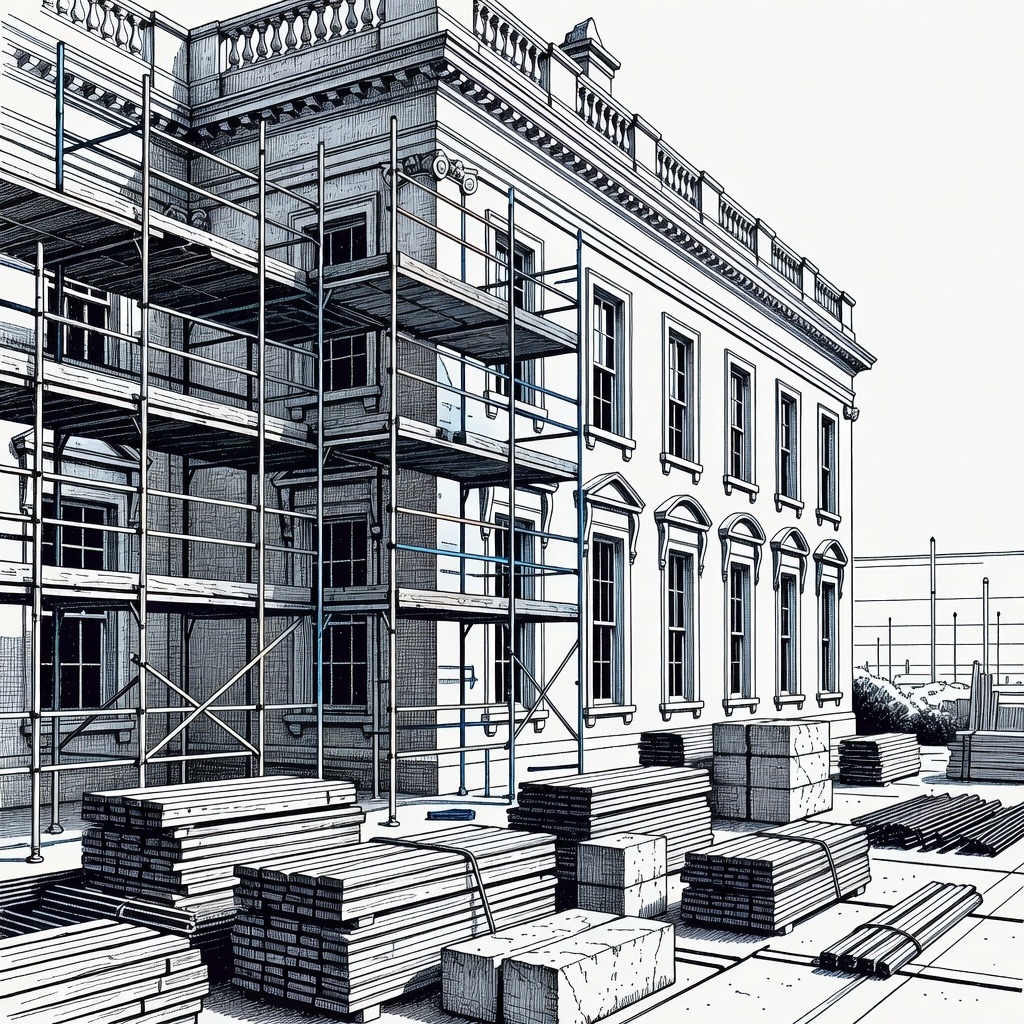
• Shielding Constitutional Separation The foundational principle of checks and balances dictates that the executive branch must remain subordinate to legislative approval for structural changes to public grounds. The U.S. Court of Appeals for the D.C. Circuit's August 7 ruling correctly reinforces this boundary, preventing the president from unilaterally acting as a sovereign entity above the law. Seeking to bypass this ruling through an emergency Supreme Court appeal threatens to erode the legislative branch's power of the purse and its vital constitutional oversight duties.
• Exposing Fiscal Contradictions Guarding public integrity requires absolute transparency, which is why the legislative request for a Government Accountability Office audit is a necessary intervention. The administration’s claim of using zero taxpayer dollars for the East Wing demolition and renovation conflicts with a separate $1 billion congressional funding request for security hardening, raising alarms about the potential combination of public and private funds. Without transparent tracking, the project risks establishing a dangerous precedent of off-the-books executive construction projects free from democratic scrutiny.
• Challenging Safety-Based Overreach Utilizing threat-based arguments, such as citing six assassination attempts and a July 8 threat against Air Force One, serves as a political lever to bypass established legal norms. Framing a ballroom and a rooftop drone port as immediate military assets is an exaggeration designed to carve out national security exemptions from domestic law. Furthermore, using the safety hazards of an unfinished 65-percent complete superstructure as an excuse to force completion is a self-inflicted crisis that should not justify constitutional shortcuts.
How it may affect me
As a U.S. reader:
• You may see your tax dollars impacted or more heavily scrutinized depending on a government audit investigating whether public and private funds are being mixed for White House security hardening.
• Anyone visiting or working on the White House grounds could face short-term physical safety hazards from unfinished freestanding steel-and-concrete walls if the construction shutdown goes into effect.
• The final ruling will establish a long-term constitutional precedent regarding whether the executive branch can make major structural changes to public grounds without legislative approval.
• The physical security of the head of state and the White House staff may be impacted by whether the administration is permitted to complete security upgrades, including a secure ballroom and drone port.