
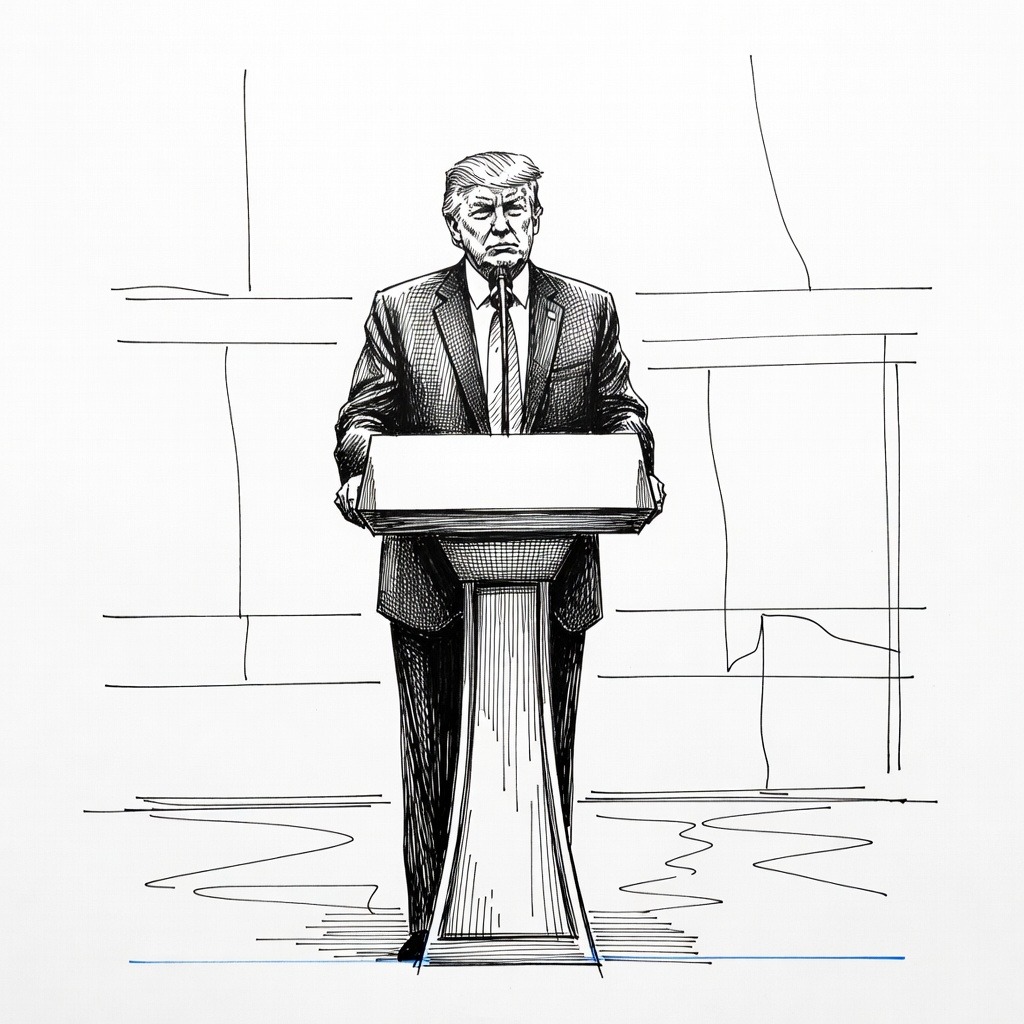
AI-generated illustration. Visual interpretation does not represent real individuals or scenes.
Federal Trade Court Upholds President Trump’s Elimination of Tariff Exemption
2026-08-14
The BareStory
A three-judge panel on the U.S. Court of International Trade has upheld President Donald Trump’s decision to eliminate the "de minimis" tax exemption. The rule had previously allowed imported goods valued under $800 to enter the United States duty-free.
The decision addressed a legal challenge brought by Detroit Axle. The plaintiff argued that the president lacked the legal authority to end the exemption. However, the federal trade court determined that the International Emergency Economic Powers Act grants the president the authority to scrap the loophole.
President Trump welcomed the court's decision, claiming that the tax exemption cost the country billions of dollars in uncollected revenue, enabled tariff evasion, and allowed criminals to ship drugs and illicit goods into the country. Attorneys representing Detroit Axle did not immediately respond to requests for comment.
The court panel noted that its decision differed from a February Supreme Court ruling that struck down global tariffs, stating that rescinding this duty-free loophole does not constitute an exercise of legislative power or the power of the purse. Meanwhile, some economists have warned that ending the exemption could disproportionately impact lower-income and minority consumers who purchase inexpensive items online.
Left Perspective
Shielding Vulnerable Consumer Wallets
Exposing Disproportionate Regressive Taxation
Challenging Unchecked Executive Extraction
Right Perspective
Restoring Fair Market Competition
Securing Lost National Revenue
Shielding Borders From Illicit Flow
Left Perspective
• Shielding Vulnerable Consumer Wallets
Social equity demands protecting lower-income and minority populations from regressive economic adjustments that diminish their purchasing power. Eliminating the "de minimis" exemption, which allowed goods under $800 to enter duty-free, directly threatens these vulnerable consumer bases who rely on affordable online retail options. By raising the cost of imported everyday goods, this policy shift effectively acts as an regressive tax that disproportionately squeezes the household budgets of marginalized groups.
• Exposing Disproportionate Regressive Taxation
The elimination of this tax exemption represents an institutional extraction of wealth from everyday consumers to protect domestic industry interests. While the Court of International Trade distinguished this ruling from the Supreme Court's February decision on global tariffs, the practical economic outcome remains a burden on the working class. Prioritizing domestic trade protectionism over direct consumer welfare fails to foster genuine equity and instead forces the public to subsidize broader trade disputes.
• Challenging Unchecked Executive Extraction
Allowing the executive branch to unilaterally dismantle established trade exemptions under the International Emergency Economic Powers Act sets a dangerous precedent of regulatory instability. The legal challenge mounted by Detroit Axle highlights the risk of unchecked presidential authority overriding standard legislative channels and disrupting established market expectations. This concentration of economic power threatens consistent trading rules and leaves consumer-facing industries vulnerable to sudden, disruptive regulatory shifts.
Right Perspective
• Restoring Fair Market Competition
Market realism dictates that trade loopholes like the "de minimis" exemption distort the domestic economy by giving foreign manufacturers an unfair tax-free advantage over domestic businesses. Eliminating the $800 threshold ensures a level playing field where all market participants operate under the same rules of fiscal responsibility. Closing this loophole protects domestic enterprises, such as Detroit Axle's competitors, from artificial pricing disadvantages and strengthens the domestic supply chain.
• Securing Lost National Revenue
Fiscal discipline requires governments to safeguard sovereign revenues and prevent systematic evasion of national trade laws. Allowing billions of dollars in uncollected revenue to bypass the Treasury through the de minimis loophole undermines national fiscal health and drains the broader economic system. Reclaiming these funds through proper customs enforcement ensures that trade contributes to the national economy rather than operating in a tax-free regulatory vacuum.
• Shielding Borders From Illicit Flow
Economic prosperity cannot exist without systemic security, and unregulated import channels present a direct threat to domestic rule of law and market stability. Restricting the unmonitored entry of low-value shipments directly curbs the ability of illicit networks to ship drugs and contraband goods into the country under the guise of legitimate commerce. The court's validation of the International Emergency Economic Powers Act rightly prioritizes national security and regulatory oversight as foundational prerequisites for a stable market.
How it may affect me
As a U.S. reader:
• You may face higher prices for imported items under 800 dollars purchased online, which could disproportionately impact the budgets of lower-income and minority consumers.
• You may see improved safety and security in your community due to tighter regulation of low-value shipments, which aims to curb the flow of illegal drugs and contraband.
• If you own or work for a domestic business, you may benefit from a more competitive market as foreign companies lose their tax-free import advantage.
• In the long term, you may see increased national funding as billions of dollars in previously uncollected tariff revenues are directed to the U.S. Treasury.
• You may experience market instability and sudden price changes as consumer-facing industries adjust to the elimination of the tariff exemption.