
White House Correspondents’ Association Seeks New Protocols After Trump's Secret Plane Switch

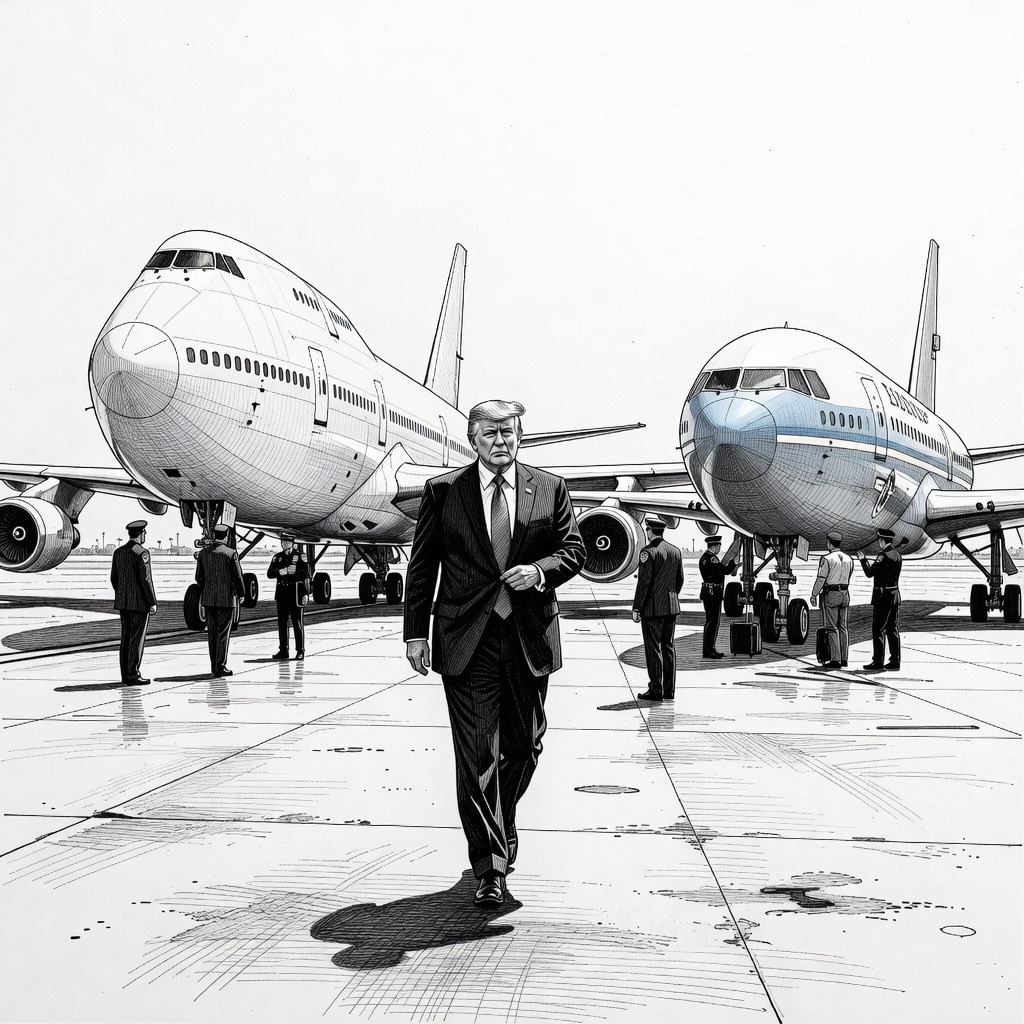
Illustration for: White House Correspondents’ Association Seeks New Protocols After Trump's Secret Plane Switch
AI-generated illustration. Visual interpretation does not represent real individuals or scenes.

THE BARE STORY

During a return trip from a NATO summit in Ankara, Turkey, last month, President Donald Trump secretly traveled on a separate government aircraft while members of the press and staff flew on a decoy flight. On July 8, 2026, Trump boarded a legacy Boeing 747 decoy plane, waved to cameras, and then used an airport catering truck to covertly transfer to an Air Force C-32A. The press and staff on the decoy flight, who kept their window shades closed during the flight, believed they were traveling with the president.

Defense Secretary Pete Hegseth and several aides accompanied Trump on the secret flight. Secretary of State Marco Rubio and Treasury Secretary Scott Bessent traveled on the decoy flight to maintain the line of succession, knowing the president's actual location. Trump traveled to the United Kingdom, where he boarded a newer Air Force One plane before flying back to Washington, D.C.

The secret arrangement was reportedly prompted by a specific threat from Iran following earlier U.S. military strikes, according to intelligence officials cited in media reports. Trump stated that military and Secret Service officials directed the split flights due to a threat, asserting his flight was at greater risk. Sources familiar with the situation also noted that the Secret Service had advised using the older plane for security.

The incident sparked backlash from journalists who argued they were misled and placed at risk. Jacqui Heinrich, president of the White House Correspondents’ Association, stated in a memo to members that she met with senior administration officials to address press safety and reporting credibility. Heinrich requested that the White House collaborate on a protocol for future security situations to preserve independent press coverage. The White House did not immediately respond to requests for comment.

Same Facts. Different Perspectives.

Two AI models. Two viewpoints. One factual foundation.

• Securing Constitutional Succession Protecting the life of the Commander-in-Chief is the paramount duty of national security agencies, overriding all secondary civic protocols. Strategically splitting the executive leadership—placing Secretaries Rubio and Bessent on the decoy flight while President Trump traveled with Secretary Hegseth—ensured robust constitutional continuity in the face of an active threat. In a high-stakes geopolitical environment, safeguarding the ultimate seat of sovereign authority is essential to maintaining national stability and deterrence.

• Deploying Tactical Deception When facing an active, credible threat from a hostile foreign adversary like Iran, operational security demands absolute secrecy and decoy maneuvers. The use of a legacy Boeing 747 as a decoy and the covert transfer via an airport catering truck are highly effective, standard defensive tactics designed to disrupt adversary tracking. Prioritizing the public's right to know or media convenience over life-saving military and Secret Service guidance would foolishly expose the nation's leader to hostile action.

• Defending Sovereign Command Authority The President's security detail must retain absolute, unilateral control over protective maneuvers without being constrained by external media protocols. Subjecting critical, split-second safety decisions to negotiated agreements with press associations creates dangerous operational vulnerabilities and delays. To preserve national sovereignty and defense integrity, the executive branch must reject any protocols that restrict the military's flexibility to protect the head of state during international crises.

How it may affect me

As a U.S. reader:

• You may experience reduced or delayed access to accurate information regarding the president's activities and location during high-risk security events due to the use of government tactical deception.

• You can expect potential changes in how future presidential travels are reported if the White House and the media establish new protocols to balance independent press coverage with security measures.

• Your confidence in the stability of the government during international crises may depend on the effectiveness of strategic split-flight arrangements designed to protect the chain of succession.

• You may observe ongoing debates regarding the physical safety of civilian professionals, such as journalists, who fly with executive officials and could be exposed to risks during security maneuvers.

Read the story at

Note: All TheBareNews content is AI-generated. For additional context, reporting, and updates, you are invited to explore the news outlets linked above.