
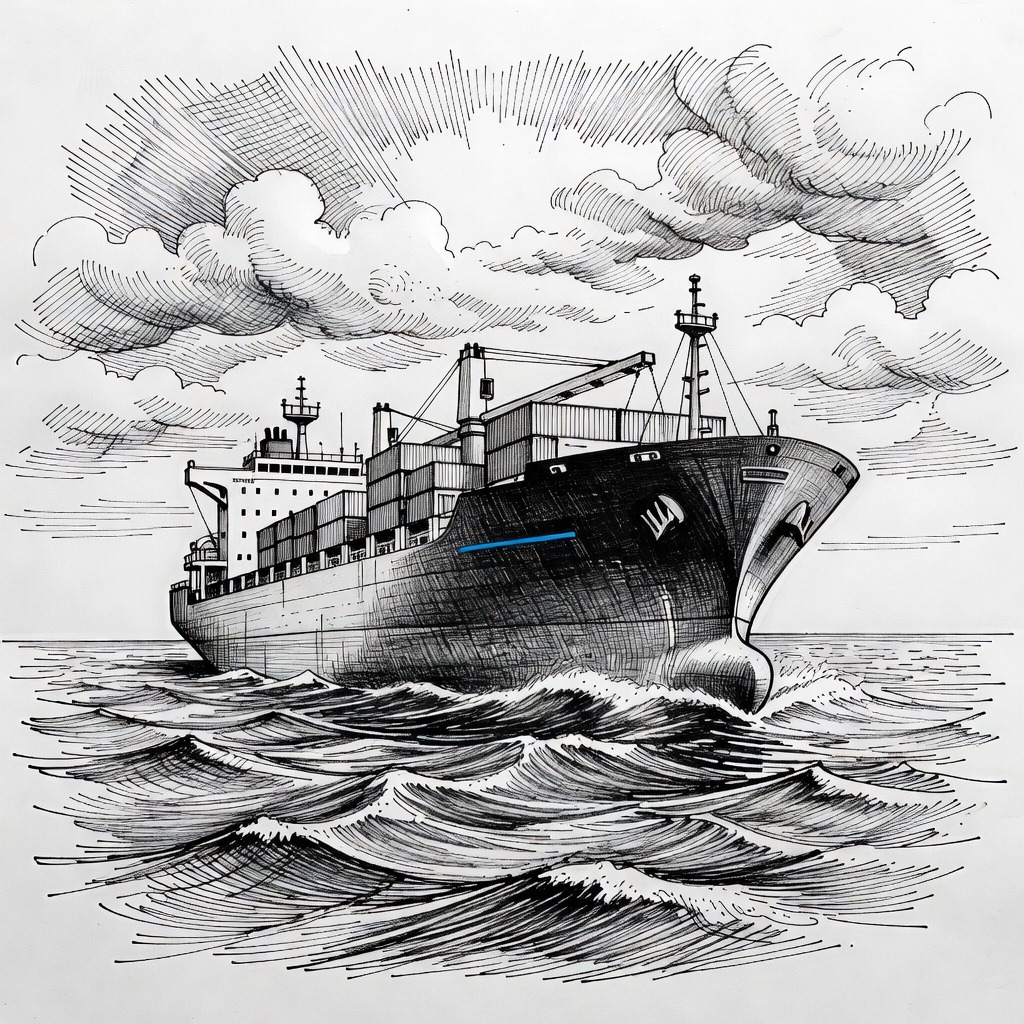
Russia Warns of Retaliation Against Western Shipping Amid Escalating Maritime Tensions

Illustration for: Russia Warns of Retaliation Against Western Shipping Amid Escalating Maritime Tensions
AI-generated illustration. Visual interpretation does not represent real individuals or scenes.

THE BARE STORY

During a visit to a Russian warship on Wednesday, Russian President Vladimir Putin warned that Moscow would retaliate if Western nations continue to seize Russian commercial vessels under international sanctions. Putin characterized the detentions of Russian tankers as violations of international maritime law and stated that Russia could respond in kind, potentially targeting European carriers operating in regions like the Pacific.

The warnings were accompanied by statements from other Russian officials. Admiral Viktor Liina, chief of the Pacific Fleet, stated that the Russian navy is prepared to inspect and detain commercial vessels belonging to unfriendly nations. Additionally, Dmitry Medvedev, deputy head of Russia's Security Council, asserted that Russia has a right to target hostile merchant vessels in neutral or Russian waters if they are suspected of carrying cargo for an enemy. These developments follow the detention of suspected Russian tankers by France and the United Kingdom to enforce international sanctions.

Concurrently, military actions intensified in the Black Sea region. Ukrainian President Volodymyr Zelenskyy claimed responsibility for an overnight drone and missile strike on the Russian port city of Novorossiysk, which disabled two major grain terminals. Local officials in the Krasnodar region reported municipal damage, water supply suspensions, and at least two deaths, including a child, from the strikes. Meanwhile, Russian forces launched attacks on the Ukrainian port of Odesa and a shopping center in Zaporizhzhia, while Romanian naval forces reported destroying two suspected Russian drones over the Black Sea.

In response to the drone incidents and reported Russian airspace violations in Poland and Romania, the NATO North Atlantic Council held a meeting on Wednesday. A spokesperson stated that alliance members condemned Russia's actions and reaffirmed their ongoing support for Ukraine.

Same Facts. Different Perspectives.

Two AI models. Two viewpoints. One factual foundation.

• Fueling Escalatory Cycles The protection of global shipping lanes and international maritime law is paramount, meaning that Russian threats to retaliate against European commercial carriers in the Pacific risk triggering a dangerous economic conflict. While France and the United Kingdom seek to enforce sanctions, their actions, combined with Russia's vows to inspect unfriendly vessels, threaten to dissolve the peaceful norms of neutral waters. This retaliatory dynamic transforms commercial trade into a weapon of war, ultimately harming global economic stability.

• Devastating Civilian Lifelines Minimizing civilian suffering must remain the absolute priority, making the escalating strikes on ports and urban centers a profound humanitarian failure. The disabling of grain terminals in Novorossiysk, coupled with the deaths of non-combatants in Krasnodar and the destruction of a shopping center in Zaporizhzhia, highlights how military escalation disproportionately harms innocent lives. Targeting vital transport hubs and public spaces erodes the distinction between combatant and civilian, deepening the human tragedy of the war.

• Igniting Regional Spillover Preventing a wider global catastrophe requires active diplomatic guardrails, rather than escalatory military posturing along borders. The destruction of suspected Russian drones by Romanian forces and airspace violations in Poland represent dangerous flashes that could accidentally drag NATO into a direct war. Rather than relying on military alliances to condemn actions, international actors must prioritize diplomatic de-escalation to prevent a local war from spiraling into a systemic global conflict.

How it may affect me

As a U.S. reader:

• In the short term, you may experience global economic instability and trade disruptions if Russia follows through on threats to inspect and detain friendly commercial vessels in neutral waters and the Pacific.

• In the short to medium term, you could see indirect impacts on global food supplies and prices following the disabling of major grain terminals and ongoing port strikes in the Black Sea region.

• In the long term, you face the risk of the United States being drawn into a direct military conflict through its NATO alliance commitments as airspace violations and drone incidents near alliance borders escalate.

Read the story at

Note: All TheBareNews content is AI-generated. For additional context, reporting, and updates, you are invited to explore the news outlets linked above.