
• Leveraging Risky Speculative Bubbles Prioritizing long-term economic stability requires skepticism toward high-leverage growth models that concentrate systemic risk. CoreWeave’s transition from a $19 million operating income last year to a $626 million net loss and a $49 million operating loss in the second quarter, despite doubling its revenue, exposes the volatile nature of the artificial intelligence boom. By accumulating $35 billion in debt to fund aggressive expansion, the company risks creating a speculative bubble where massive capital investments are locked into specialized infrastructure that may not yield sustainable public prosperity.
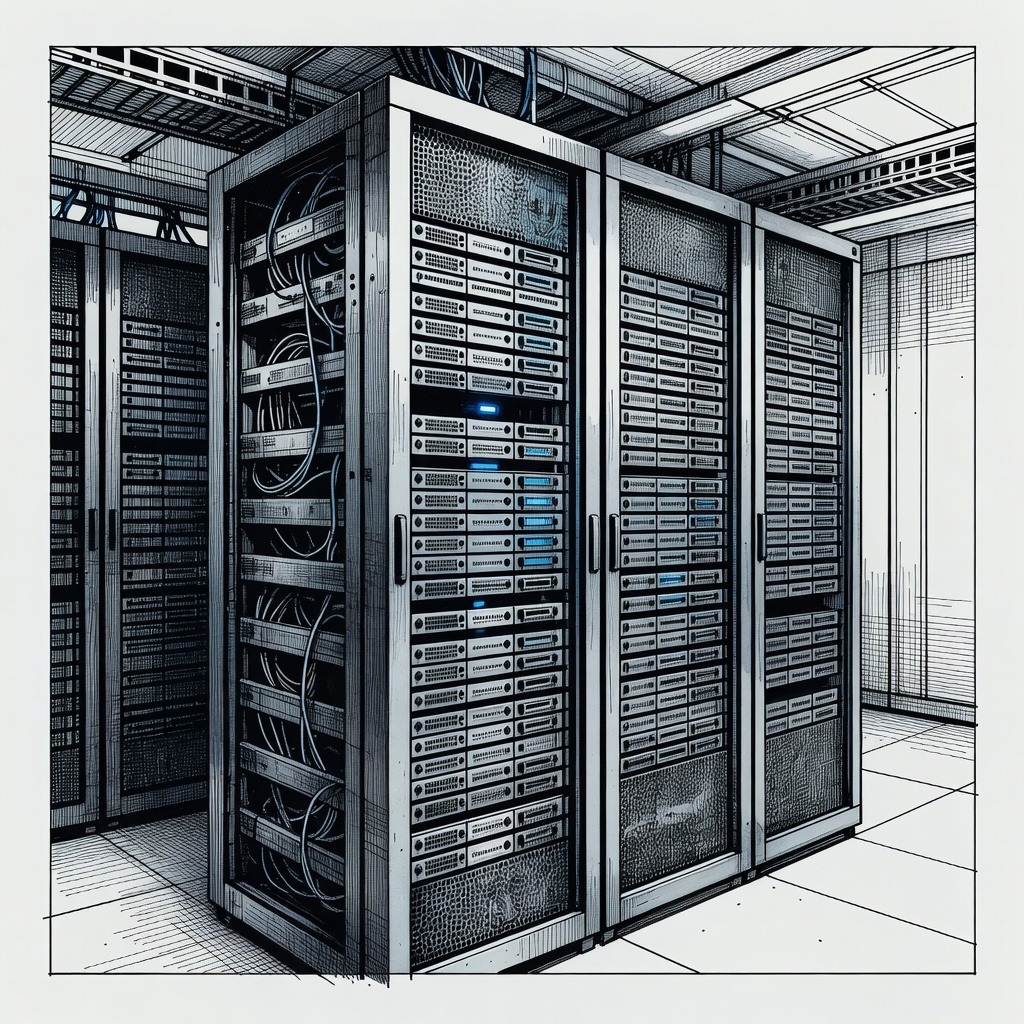
• Ignoring Externalities of Resource Extraction Protecting local communities and environmental resources must take precedence over unchecked industrial expansion. The localized opposition and New York Governor Kathy Hochul's July moratorium on new large-scale data centers highlight the significant environmental and municipal strains caused by rapid infrastructure scaling. The chief executive officer's assertion that regulatory pushback will not impact financial projections signals a corporate indifference to the physical and ecological footprint of data centers, which consume vast local energy and water resources without direct community benefit.
• Consolidating Monopolistic Digital Commons Preventing corporate extraction and ensuring a fair market requires resisting the hyper-concentration of technological power. Massive commitments from dominant industry players, including Meta’s $21 billion agreement and Jane Street's $6 billion deal, secure exclusive pipelines to critical computing power, effectively gatekeeping the future of technological utility. With a staggering $104 billion backlog, the market is organizing into a closed oligopoly where foundational computational resources are hoarded by a few elite entities, stifling democratic, open-source innovation.
How it may affect me
As a U.S. reader:
• Residents in areas targeted for data center expansion may experience increased strain on local energy and water resources, as well as local regulatory actions or moratoriums such as the one enacted in New York.
• Everyday users of digital services provided by CoreWeave's clients, such as Meta, Grammarly, and Anthropic, may see the rollout of new or upgraded AI-powered tools and downstream technological innovations.
• The public faces potential long-term economic instability or market volatility if the high debt and rapid capital investment in artificial intelligence infrastructure lead to a speculative bubble.
• Consumers and independent developers could see reduced access to open-source tools if foundational computing resources become increasingly concentrated among a few dominant technology firms.