
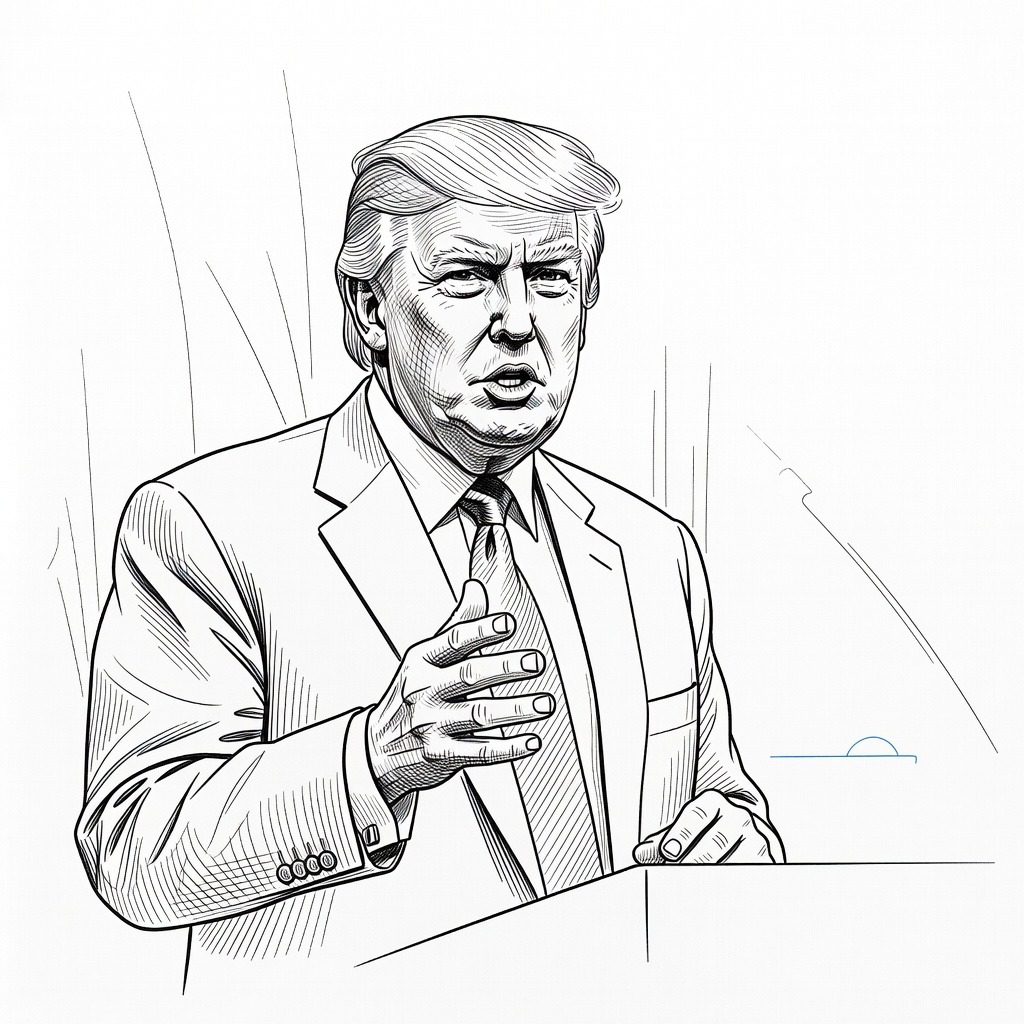
• Militarization of Public Safety Prioritizing civil liberties and government accountability requires resisting the normalization of military forces on domestic streets. The fact that Washington, D.C. violent crime was already at a 30-year low prior to the August 2025 deployment demonstrates that the federal intervention was an unnecessary escalation rather than a targeted safety measure. Utilizing 4,000 National Guard troops—who Senator Chris Coons notes are untrained for civilian policing duties—undermines established local law enforcement institutions. This over-militarized presence risks civil rights infractions while failing to address the root causes of urban instability.
• Inefficient Capital Allocation Ensuring government accountability demands rigorous fiscal discipline and the efficient distribution of public resources. Spending $607 daily per guardsman compared to just $384 for a local officer represents an inefficient allocation of capital that drains resources away from sustainable community policing. With the deployment projected to cost taxpayers $1.4 billion through 2029, this strategy prioritizes expensive, short-term federal optics over long-term municipal solvency. Furthermore, a Niskanen Center analysis indicates this massive financial investment yielded no actual reduction in violent crime, proving that these funds would be better utilized by direct investment into local law enforcement.
• Fragile Partisan Security Gamble Preserving systemic stability requires avoiding highly politicized security actions that deepen regional polarization. Relying primarily on troops from Republican-led states due to Democratic resistance transforms a domestic public safety initiative into a partisan-backed occupation of the nation's capital. Furthermore, tragic incidents like the November shooting near the White House that killed Specialist Sarah Beckstrom and wounded Staff Sergeant Andrew Wolfe reveal that deploying military personnel into urban areas exposes them to lethal domestic vulnerabilities. Ultimately, this approach creates new security hazards rather than mitigating existing urban threats.
How it may affect me
As a U.S. reader:
• In the long term, you can expect 1.4 billion dollars of taxpayer funding to be spent on this deployment through 2029, with each guardsman costing 607 dollars daily compared to 384 dollars for a local officer.
• If you live in or visit the nation's capital, you will encounter 4,000 active National Guard troops on the streets, an active presence that supporters link to a 43.9 percent decrease in homicides but critics argue risks civil rights infractions.
• In the short and long term, public safety resources may be diverted away from direct investments in local municipal law enforcement to fund federal military policing operations.
• If you reside in a Republican-led state, your local National Guard personnel are more likely to be mobilized for this D.C. deployment due to participation reluctance from Democratic-led states.