
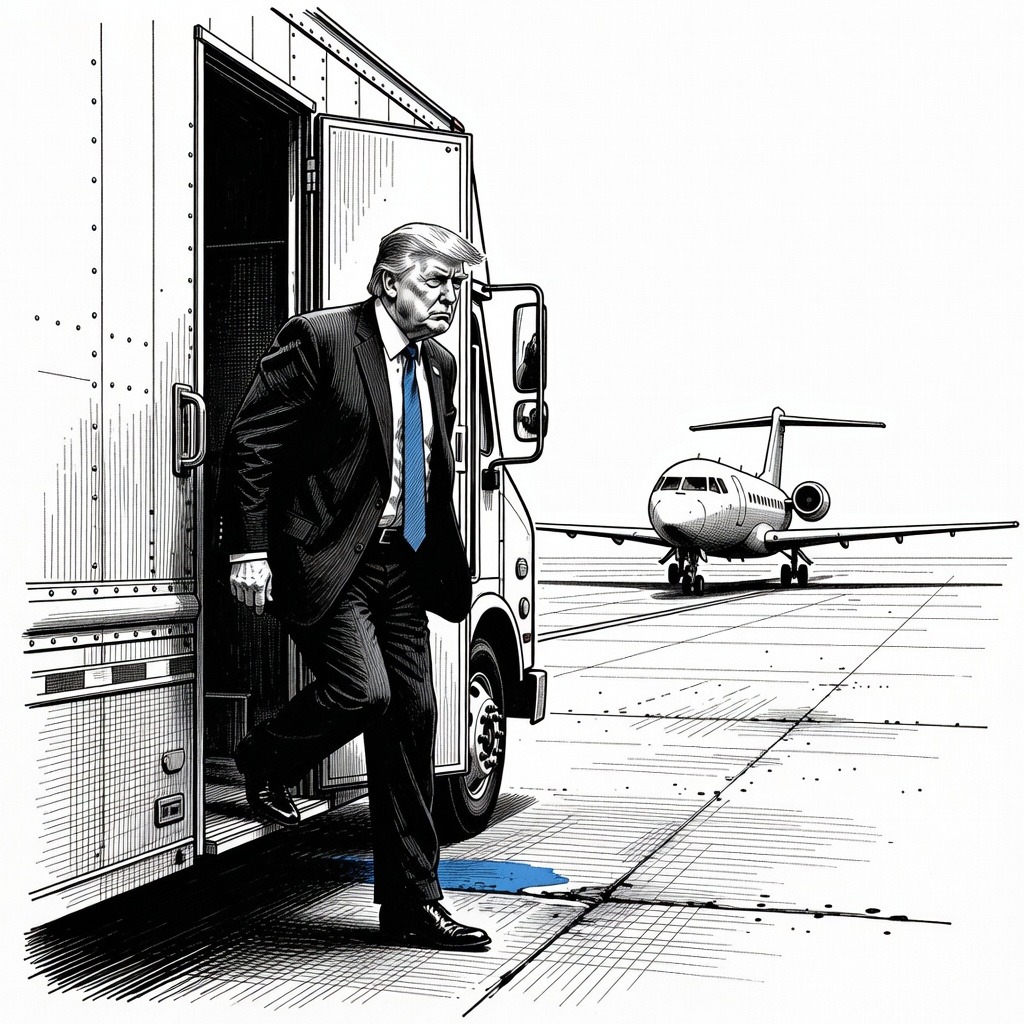
• Exposing Civilians as Shields Democratic accountability and the humanitarian value of non-combatant lives dictate that civilian staff and journalists must never be used as unwitting physical decoys. By keeping White House staff, Secret Service agents, and journalists—including Secretary of State Marco Rubio—aboard the original Air Force One, the administration elevated the physical risk to civilian lives to protect a single official. While former Secret Service agent Bill Gage confirmed this maneuver subjected those on the legacy flight to heightened danger, treating members of the press and support staff as strategic bait undermines the ethical duty of care owed to citizens by their leaders.
• Eroding Trust Through Secrecy Transparency and the rule of law require that risks imposed on citizens by the state must be subject to rigorous institutional oversight and consent. The refusal of the White House to clarify whether a separate risk assessment was conducted for the decoy flight, alongside the Pentagon and Air Force referring all inquiries back to the executive, highlights a troubling lack of administrative accountability. When the state operates in absolute secrecy during domestic-civilian deployments, it bypasses democratic checks and leaves those exposed to danger without recourse, representation, or prior knowledge.
• Normalizing Asymmetric Human Valuation The long-term danger of normalizing deceptive security operations is the erosion of egalitarian principles within state institutions. When leaders dismiss the dangers faced by subordinates—exemplified by Trump's comment that staff and media were on a dangerous flight because he was the primary target—it codifies a hierarchy where some lives are deemed fundamentally expendable. If future administrations routinely leverage civilian press corps and administrative staff as decoy targets, it will permanently chill the press's ability to cover the presidency and degrade the safety standards of public service.
How it may affect me
As a U.S. reader:
• In the long term, you may experience a reduction in direct news coverage of presidential events if media organizations limit journalists from participating in official travel due to the safety risks of acting as decoys.
• In the short term, the country avoids the instability of a catastrophic leadership vacuum through the successful protection of the president from active threats.
• In the long term, citizens pursuing federal public service or administrative roles may face diminished safety standards and higher physical risks during official state travel.
• In the long term, the ability of the U.S. to conduct diplomatic summits in volatile foreign regions may be compromised if security agencies are restricted from using flexible deception tactics.