
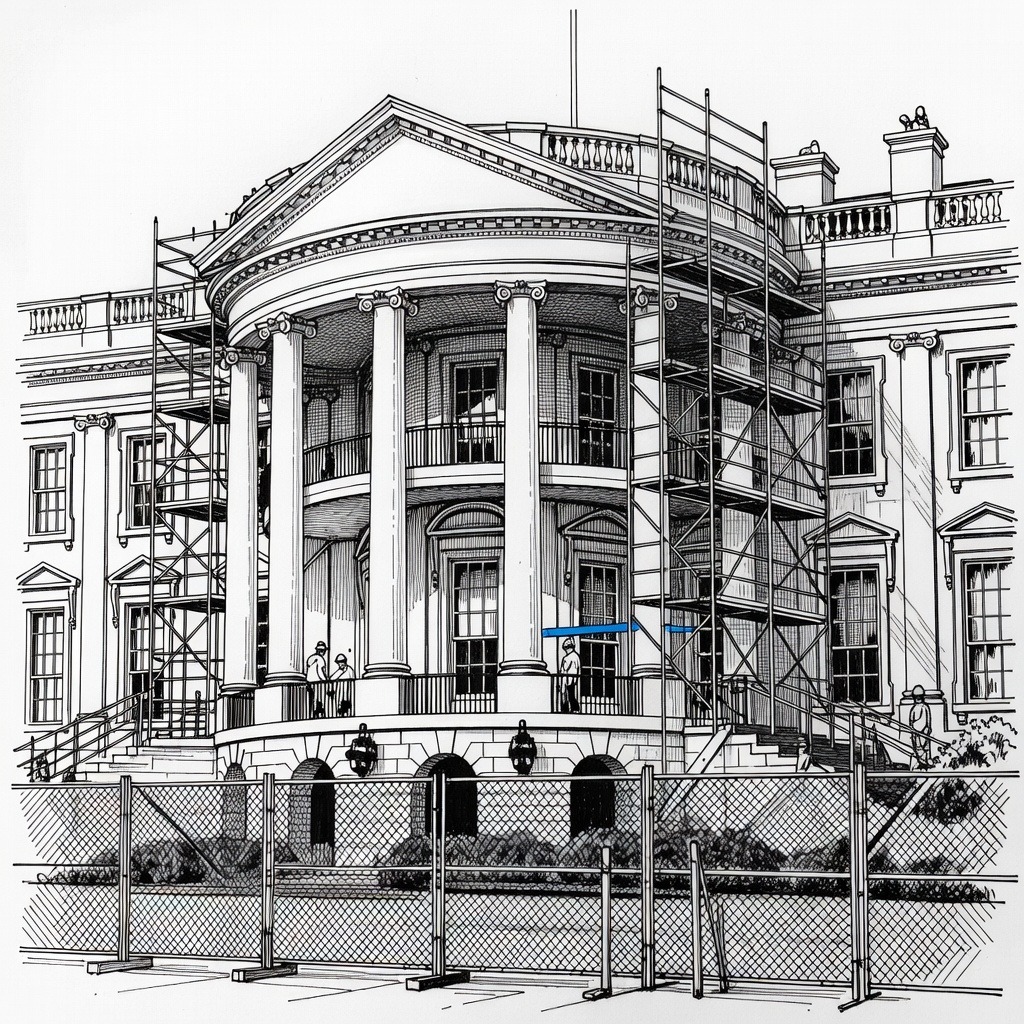
• Defending Congressional Purse Powers Democratic accountability demands that the power of the purse remains strictly within the legislative branch to prevent unilateral executive spending. The D.C. Circuit's 2-1 ruling, led by Judges Patricia Millett and Bradley Garcia, correctly asserts that the President cannot bypass Congress to fund a $400 million, 90,000-square-foot ballroom. Forcing the administration to seek congressional approval protects the constitutional balance of power and ensures that taxpayer-funded alterations to public property undergo rigorous legislative scrutiny.
• Shielding Shared Historical Landmarks Preserving cultural heritage and historical sites is a collective civic responsibility that must override executive unilateralism. The lawsuit initiated by the National Trust for Historic Preservation highlights how the demolition of the East Wing and subsequent ballroom construction lacked necessary public input and authorization. Halting above-ground construction protects the White House’s status as a global landmark from being irreversibly altered without democratic consensus and community oversight.
• Curbing Executive Precedent Gambles Allowing administrations to recharacterize massive construction projects as basic upkeep creates a dangerous loophole for future executive overreach. Rejecting the defense presented by Acting Attorney General Todd Blanche, who cited a routine maintenance statute, prevents a slippery slope where any president can unilaterally reshape federal property. Securing this judicial halt is vital to establishing a long-term precedent that protects constitutional safeguards against executive circumvention.
How it may affect me
As a U.S. reader:
• In the short term, 400 million dollars of taxpayer funds allocated for the White House ballroom construction are temporarily protected from unilateral executive spending while the ruling is appealed to the Supreme Court.
• The halt on above-ground construction ensures that a major historical landmark is shielded from permanent changes without public input and legislative oversight.
• In the near term, halting construction on the president's residence could lead to prolonged safety concerns for project workers and ongoing security risks at the site.
• In the long term, the ultimate resolution of this case will define whether your elected representatives in Congress maintain strict control over federal property upgrades or if future presidents can unilaterally bypass legislative approval.