
Bank Executives Warn of Market Leverage Following Hedge Fund Liquidation

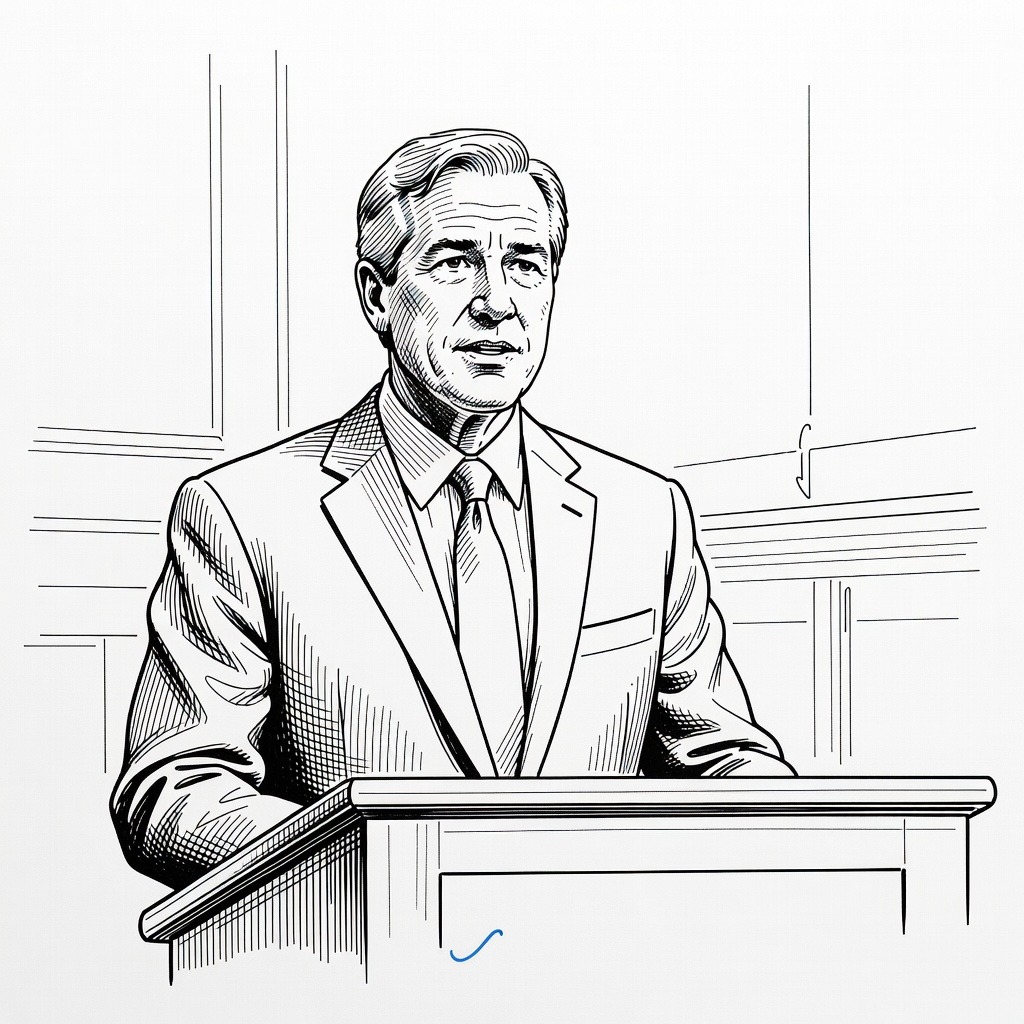
Illustration for: Bank Executives Warn of Market Leverage Following Hedge Fund Liquidation
AI-generated illustration. Visual interpretation does not represent real individuals or scenes.

THE BARE STORY

The recent near-collapse and public equity liquidation of the artificial intelligence-focused hedge fund Situational Awareness has drawn warnings from the chief executives of JPMorgan Chase and Bank of America regarding high leverage in financial markets. The fund experienced heavy losses on its leveraged technology investments, triggering margin calls from its prime brokers and forcing a liquidation of its public equity portfolio.

Bank of America Chief Executive Brian Moynihan described the fund's struggles as a warning shot for leveraged markets driven by high valuations and borrowed funds. Moynihan stated that major prime brokers, including Bank of America, Goldman Sachs, and JPMorgan Chase, are reviewing their exposure to highly leveraged investment firms and may slightly tighten underwriting standards. He added that Bank of America would have remained stable even without a transaction involving Citadel, which provided the capital for Situational Awareness to settle its debts with prime brokers.

JPMorgan Chase Chief Executive Jamie Dimon also warned that leverage across financial markets remains elevated, noting that margin debt has reached record levels. Speaking in Carlisle, Pennsylvania, on July 15, 2026, Dimon highlighted that hidden borrowing through prime brokerages, hedge funds, and exchange-traded funds could exacerbate market disruptions. However, Dimon stated that this leverage does not represent a systemic threat comparable to the 2008 financial crisis, noting that the market successfully absorbed the liquidation of Situational Awareness. He anticipated that banks and clearing houses would likely adjust to changing conditions by demanding additional collateral from participants.

Same Facts. Different Perspectives.

Two AI models. Two viewpoints. One factual foundation.

• Validate Market Absorption Capacity Financial stability is best preserved through market efficiency and the system's natural capacity to absorb localized shocks. The successful liquidation of Situational Awareness’s public equity portfolio, as noted by Jamie Dimon, demonstrates that modern capital markets are highly resilient and fully capable of handling high-profile failures. This successful resolution proves that current capital structures are robust, refuting the need for heavy-handed regulatory interventions that stifle financial innovation.

• Champion Private Liquidity Solutions Systemic health is maintained when private capital, rather than public intervention, resolves institutional distress. The intervention of Citadel to provide the necessary settlement capital, combined with Brian Moynihan's assurance of Bank of America’s inherent stability, highlights the strength of private-sector mechanisms. This self-correcting dynamic ensures that risk remains internalized within the financial sector, sparing taxpayers from the burden of bailouts and preserving market discipline.

• Trust Dynamic Risk Calibration Long-term prosperity relies on flexible risk management where banks and clearing houses dynamically adjust collateral requirements based on evolving market conditions. When prime brokers like JPMorgan Chase and Goldman Sachs review exposure and demand additional collateral, they demonstrate that market-driven self-regulation is far superior to rigid statutory caps. This agile calibration protects institutional solvency while ensuring that capital can still flow efficiently to high-growth sectors like artificial intelligence.

How it may affect me

As a U.S. reader:

• You may experience tighter underwriting standards or higher collateral requirements if you participate in financial markets, as major banks review their leverage exposure.

• You face potential exposure to localized market disruptions or volatility in exchange-traded funds due to elevated levels of hidden borrowing and margin debt.

• You are spared from taxpayer-funded bailout costs because private-sector entities settled the collapsing fund's debts and absorbed the liquidation.

Read the story at

Note: All TheBareNews content is AI-generated. For additional context, reporting, and updates, you are invited to explore the news outlets linked above.