
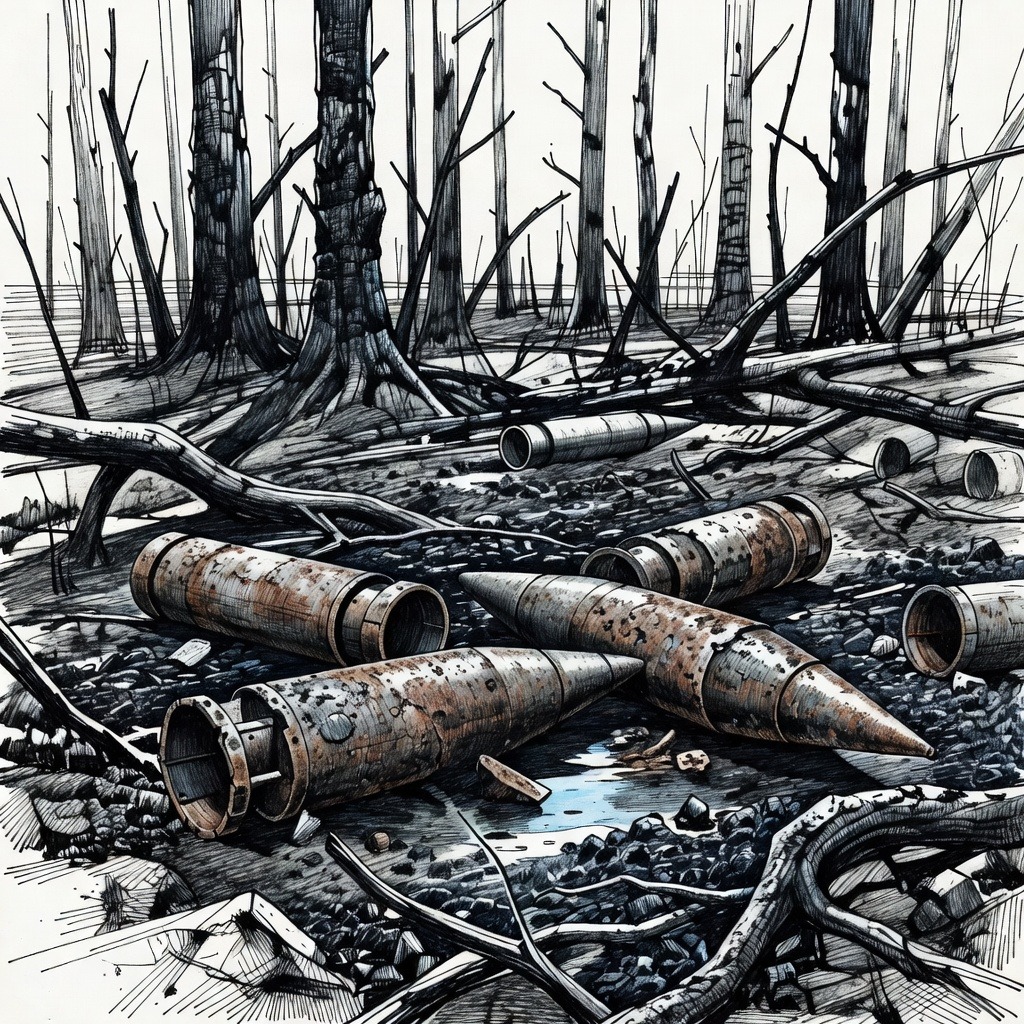
Wildfires in France Uncover and Detonate World War II Munitions Amid European Heat Wave

Illustration for: Wildfires in France Uncover and Detonate World War II Munitions Amid European Heat Wave
AI-generated illustration. Visual interpretation does not represent real individuals or scenes.

THE BARE STORY

A severe wildfire in southwestern France has been brought under control after burning more than 99,000 acres, exposing and detonating hundreds of buried World War II-era munitions. Residents of Le Porge in the Gironde region returned to their homes on Monday following several days of demining operations.

Local officials reported that approximately 400 French and German shells and anti-tank munitions were recovered in the area, where flames destroyed more than 180 homes. Le Porge Mayor Martial Zaninetti stated that bomb disposal experts were dispatched to the scene, claiming that more than 100 explosions occurred during the second night of the fire and that one projectile struck a house. Fire commander Thomas Mimiague noted that officials believe the munitions had been abandoned, adding that blasts initially thought to be exploding gas cylinders may have actually been the detonating shells.

The situation in France comes amid a broader heat wave and drought affecting much of Europe, which has sparked other wildfires and disrupted infrastructure. In Greece, fire department deputy spokesman Yiannis Artopios reported that over 500 firefighters have been combating a shifting blaze in Western Attica. Authorities stated that five Greek firefighters have died during recent containment efforts.

Additionally, record-low water levels along the Danube River have disrupted nuclear power operations in Hungary and Romania, while exposing scuttled Nazi-era warships in Serbia. Active wildfires also persist in southeastern France, though major blazes from last week have been contained.

Same Facts. Different Perspectives.

Two AI models. Two viewpoints. One factual foundation.

• Expose Intergenerational Hazards of Conflict The detonation of over 100 WWII shells and anti-tank munitions in southwestern France reveals how the toxic remnants of past wars remain an active threat to civilian lives and homes decades after hostilities cease. Protecting human life requires recognizing that military stockpiles pose a perpetual hazard that is dangerously activated by modern ecological crises. This camp views the destruction of 180 homes in Le Porge not just as a natural disaster, but as a direct consequence of unaddressed historical militarism.

• Confront Compounding Ecological Vulnerability The extreme heat waves drying the Danube River and fueling fires across Europe act as force multipliers for latent security threats, such as exposing scuttled Nazi-era warships in Serbia. This highlights the urgent need to shift focus from competitive geopolitics to collaborative, global environmental remediation. Without prioritizing systemic climate action and the complete clearance of military debris, the physical scars of 20th-century warfare will continue to destabilize contemporary civilian populations.

• Mitigate the Human Toll of Crises The deaths of five firefighters in Greece and the forced displacement of residents in France underscore the unacceptable human cost borne by civil servants and vulnerable communities dealing with cascading emergencies. Failing to pursue proactive ecological healing and demilitarization will result in increasingly hazardous environments for first responders who are left to clean up historical messes. To protect civil liberties and lives, governments must transition resources away from offensive military capabilities toward direct community protection, climate resilience, and public safety.

How it may affect me

As a U.S. reader:

• No significant impact on the general public in the United States is expected, as the wildfires, detonating historical munitions, and energy infrastructure disruptions detailed in the text are entirely localized within Europe.

Read the story at

Note: All TheBareNews content is AI-generated. For additional context, reporting, and updates, you are invited to explore the news outlets linked above.