
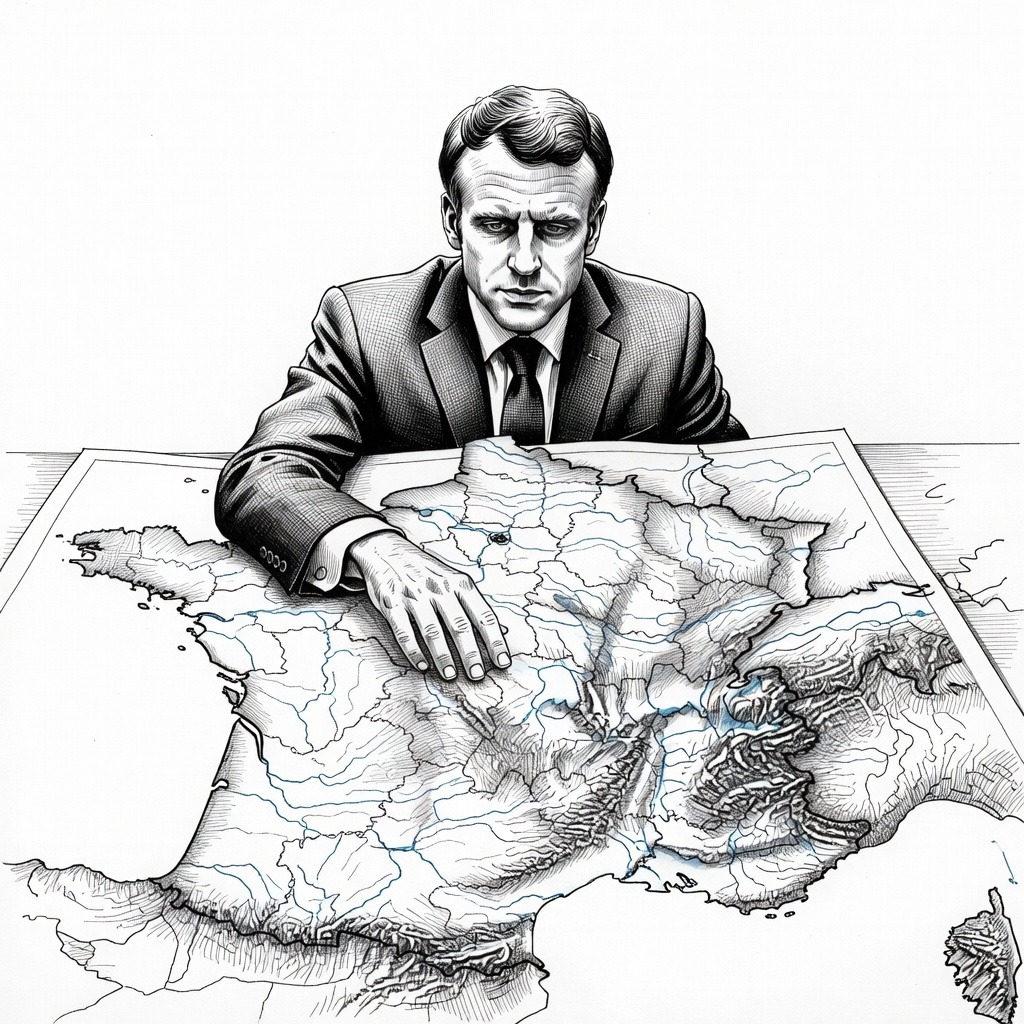
Wildfires in France and Spain Force Hundreds of Thousands of Evacuations Amid Rising Temperatures

Illustration for: Wildfires in France and Spain Force Hundreds of Thousands of Evacuations Amid Rising Temperatures
AI-generated illustration. Visual interpretation does not represent real individuals or scenes.

THE BARE STORY

Active wildfires across France and Spain have burned hundreds of thousands of acres and forced hundreds of thousands of residents and tourists to evacuate. The fires, which began last week in southwestern France's Gironde region, have injured 93 firefighters. To the south, French authorities ordered thousands of people to evacuate tourist sites around Lacanau as a new heat wave threatened to complicate containment efforts.

In the neighboring Landes region, French President Emmanuel Macron announced that a separate wildfire was fixed, although regional authorities cautioned that it was not yet fully extinguished. Meanwhile, Spain's government declared a national emergency for wildfires for the first time. Spain's Ecology Minister, Sara Aagesen, reported that wildfires have burned 1,530 square kilometers in the country this year, leading Prime Minister Pedro Sánchez to call for a national pact to combat the blazes.

Weather conditions continue to pose significant challenges for firefighting crews. French forecasters expect temperatures in Gironde to reach up to 35 degrees Celsius, while Spanish meteorologists warned of temperatures exceeding 40 degrees Celsius. Wildland fire science professor Stefan Doerr stated that the region's three summer heat waves are unprecedented, exhausting the capacity to handle the fires effectively. Additionally, firefighter Captain Nicolas Braz stated that the wildfires have formed a pyrocumulonimbus, a rare fire cloud that can generate its own winds and thunderstorms, making containment unpredictable.

The ongoing emergency has also prompted economic concerns. French Finance Minister Roland Lescure stated that the crisis has negatively impacted the local economy. Energy and climate policy senior fellow Georg Zachmann added that funding evacuations, firefighting, and infrastructure recovery presents an existential financial challenge for the affected regions, with fiscal impacts expected to reach national budget levels.

Same Facts. Different Perspectives.

Two AI models. Two viewpoints. One factual foundation.

• Exposing Systemic Climate Vulnerability The prioritization of ecological accountability demands that we recognize these unprecedented heat waves and rare fire clouds, like the pyrocumulonimbus described by Captain Nicolas Braz, as direct consequences of systemic climate neglect. Standard containment efforts are no longer sufficient when ecological neglect scales up to threaten hundreds of thousands of evacuees. Reformers view this devastation as an urgent mandate to challenge the institutional status quo that has historically ignored scientific warnings from experts like Stefan Doerr.

• Shielding Vulnerable Frontline Workers Social progress requires prioritizing human lives and workers' rights over institutional self-preservation, particularly for those on the front lines of systemic crises. The injury of 93 firefighters in southwestern France's Gironde region exposes the high physical toll of dealing with under-resourced public safety systems. For the reformer, this human cost highlights the necessity of direct government accountability, enhanced labor protections, and a radical redistribution of resources to protect the civic servants and local populations bearing the brunt of these disasters.

• Championing Systemic Economic Relief Mitigating the localized economic devastation reported by French Finance Minister Roland Lescure requires an equitable, state-led financial intervention. When senior fellow Georg Zachmann warns that recovery and evacuation funding will reach national budget levels, reformers see an opportunity to restructure the economy through progressive fiscal support. Rather than letting vulnerable local communities absorb the existential financial shock, the state must aggressively fund public infrastructure recovery to ensure a just transition and protect local livelihoods.

How it may affect me

As a U.S. reader:

• No significant impact on the general public in the United States is expected from these wildfires, as the safety risks, evacuations, and economic consequences are localized to France and Spain, with potential effects limited to U.S. tourists traveling in the affected regions who may experience disrupted plans or emergency evacuations.

Read the story at

Note: All TheBareNews content is AI-generated. For additional context, reporting, and updates, you are invited to explore the news outlets linked above.