
• Combusting Capital in Speculative Loops Prioritizing financial equity requires a skeptical view of circular economic arrangements where suppliers fund their own buyers to artificially inflate demand. Nvidia’s potential $250 billion backstop for OpenAI, following a prior $30 billion investment, creates a closed-loop system of hyper-valuation that hides true market risks. This financial engineering leaves everyday retail investors highly vulnerable to sudden corrections, as demonstrated by the subsequent 4% drop in Nvidia and semiconductor stocks. By prioritizing private corporate growth over stable market fundamentals, this structure extracts wealth from the public market to prop up artificial balance sheets.
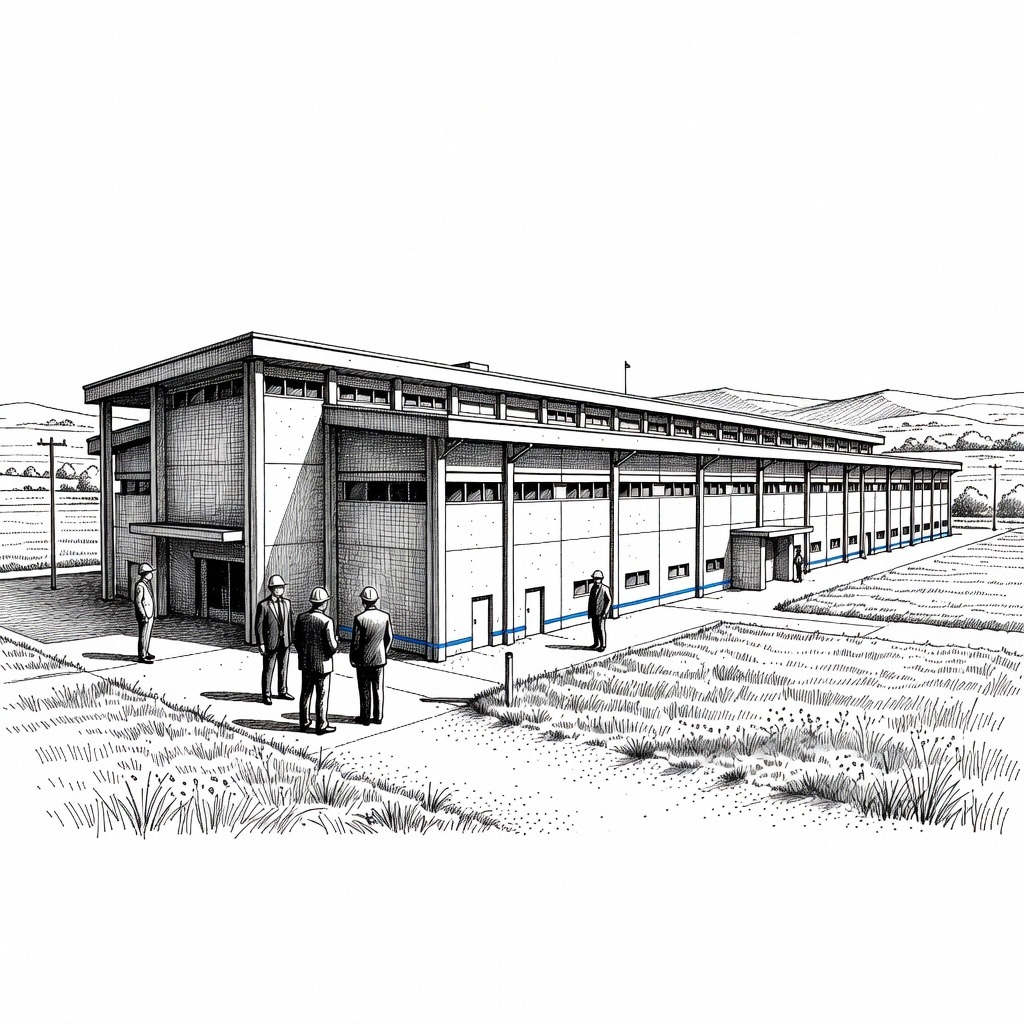
• Exploiting Public Assets for Monopoly Protecting public interest demands rigorous scrutiny of how state resources are leveraged to build highly concentrated private power. Establishing this massive 10-gigawatt facility in Pike County, Ohio—at a site previously utilized as a federal uranium-enrichment plant—under a partnership involving the U.S. Department of Energy represents the privatization of public infrastructure. While the federal government and SoftBank’s SB Energy help underwrite the project's physical and regulatory footprint, the long-term profits of the $500 billion campus will flow to corporate executives and private shareholders. This dynamic socializes the risks of massive energy and land development while centralizing the economic gains of the artificial intelligence revolution.
• Recreating the Speculative Dot-Com Bubble Safeguarding systemic economic stability requires learning from historical structural failures driven by unchecked corporate debt. The comparison of this massive backstop to the late-1990s telecom agreements, which triggered the dot-com crash, highlights the severe danger of excessive capital expenditure built on speculative future earnings. If OpenAI, which filed confidentially for an IPO in June, fails to generate sufficient cash flow, the highly interconnected supply chain faces systemic risk. This debt-fueled gamble exposes the broader technology sector and the wider economy to catastrophic vulnerabilities just to sustain short-term stock valuations.
How it may affect me
As a U.S. reader:
• You may experience short-term volatility in your investment or retirement portfolio if you hold technology or semiconductor stocks, which recently fell in response to market anxieties over the massive deal.
• You could see a former federal uranium-enrichment site in Pike County, Ohio, successfully repurposed into a massive domestic computing hub using private capital rather than direct taxpayer funding.
• You may face long-term systemic economic risks if this highly interconnected, debt-funded venture fails to generate sufficient cash, potentially triggering a broader technology sector downturn.